
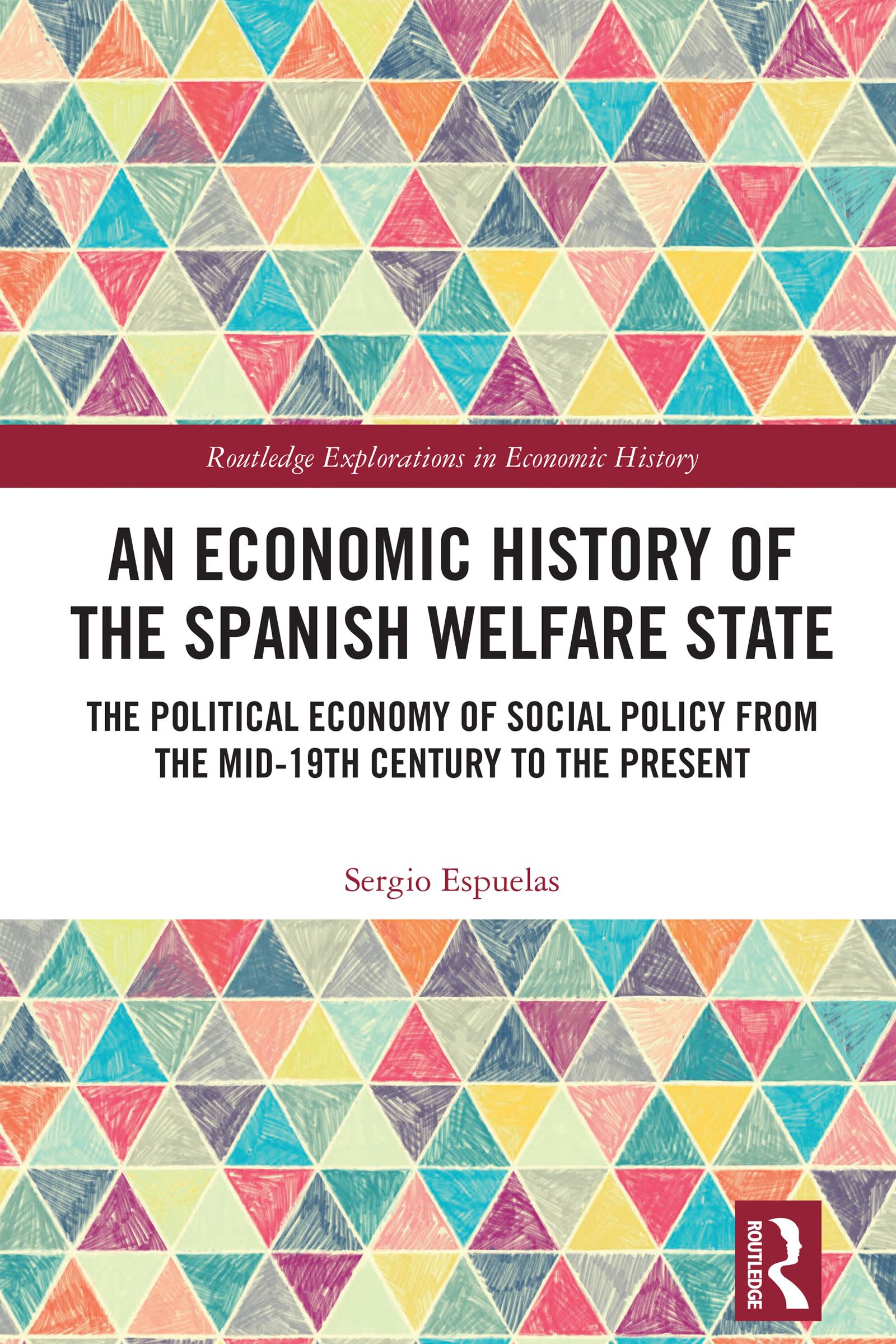
This monograph analyses the evolution of the welfare state in Spain from qualitative and quantitative perspectives. It basically relies on estimates of public social spending from 1850 to the present and offers comparisons with the rest of Europe.
As a whole, the volume sheds light on the historical, political, and economic conditions at play during the relatively late development of the Spanish welfare state. Three key driving factors are explored: the political regime, social inequality, and Spain’s exposure to international markets. While economic backwardness and demographic factors explain part of the story, Espuelas demonstrates that inequality explains much of the pre-1936 gap; the lack of democracy and the Franco dictatorship were crucial up to the 1970s, and globalization, rather than having a clear positive or negative effect, has mainly influenced the way social policy is financed.
This volume will be of interest to advanced students and researchers of economic history, welfare states, European history, and social policy.
Maksa helposti kortilla, Klarnalla, Apple Paylla tai Google Paylla. Etkö ole tyytyväinen? Sinulla on aina 14 päivän palautusoikeus. Lue lisää ehdoistamme. Jos sinulla on kysyttävää, lähetä meille sähköpostia osoitteeseen hello@memmo.org.
Memmo tekee opiskelusta helpompaa – missä päin maailmaa ikinä oletkin. Meillä yhdistät kurssikirjat ja fiksut opiskelutyökalut yhteen paikkaan: tiivistelmät, visat, podcastit ja muistikortit. Ja sitten Ted, opiskelukaverisi, joka vastaa kaikkeen, mitä ikinä mietitkin. Yli 50 000 opiskelijaa opiskelee jo täällä – rakennettu auttamaan sinua oppimaan nopeammin ja stressaamaan vähemmän.