
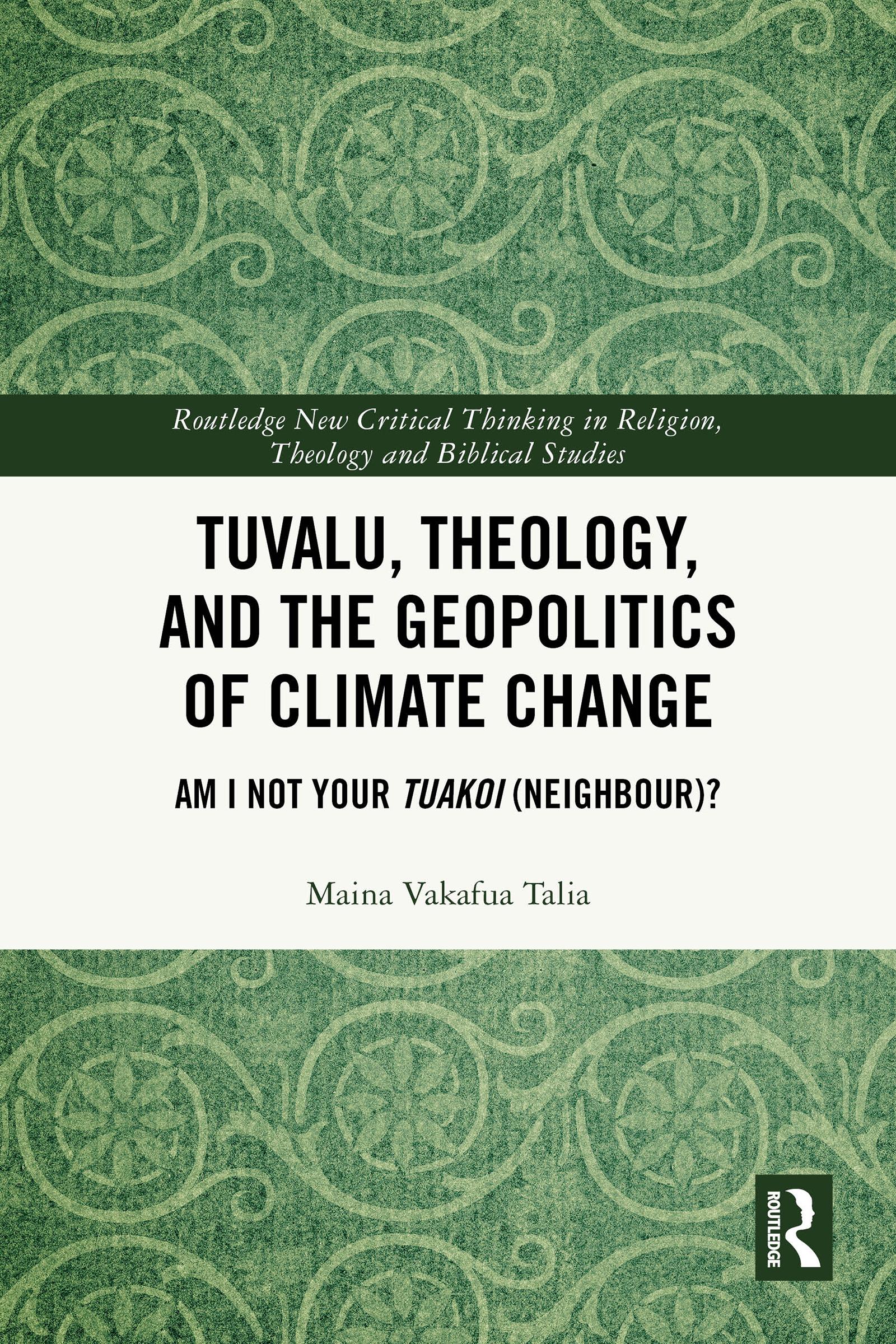
This book examines the threat posed by climate change to the low-lying islands of Tuvalu through a lens of what it means to be a neighbour. Those who live on Tuvalu are among the most vulnerable in the world to threats of rising sea levels and global climate change. Their carbon emissions are miniscule and they are ‘weak actors’ in terms of the geopolitics of climate change. The task in Tuvalu is to take seriously the prospect of the submergence of islands and the potential for cultural extinction. This prospect raises a network of interconnected questions to do with the rights of climate displaced persons and sovereignty over lands lost to climate change. In this volume, the author draws upon Indigenous knowledge, the ethics of climate justice, insights from climate science and familiarity with discourses surrounding the Anthropocene to explore the implications of the parable of the Good Samaritan. The rhetoric of the question ‘am I not your tuakoi (neighbour)?’ inserts a theological and moral dimension into the complex politics of climate change. The book will be of particular interest to scholars of theology, ethics, ecology and environment, as well as those working in Pacific studies, development studies, and politics.
Maksa helposti kortilla, Klarnalla, Apple Paylla tai Google Paylla. Etkö ole tyytyväinen? Sinulla on aina 14 päivän palautusoikeus. Lue lisää ehdoistamme. Jos sinulla on kysyttävää, lähetä meille sähköpostia osoitteeseen hello@memmo.org.
Memmo tekee opiskelusta helpompaa – missä päin maailmaa ikinä oletkin. Meillä yhdistät kurssikirjat ja fiksut opiskelutyökalut yhteen paikkaan: tiivistelmät, visat, podcastit ja muistikortit. Ja sitten Ted, opiskelukaverisi, joka vastaa kaikkeen, mitä ikinä mietitkin. Yli 50 000 opiskelijaa opiskelee jo täällä – rakennettu auttamaan sinua oppimaan nopeammin ja stressaamaan vähemmän.