
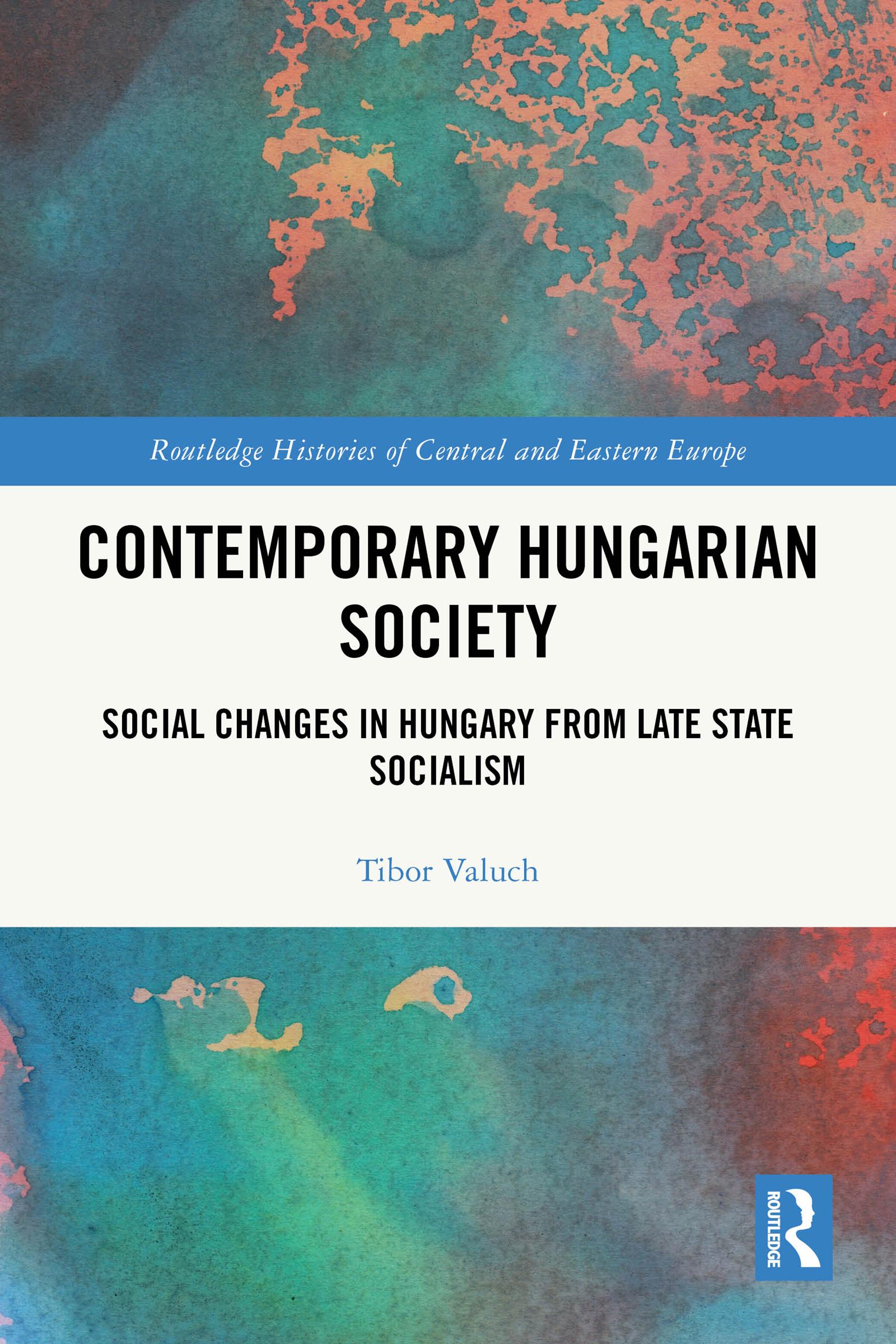
This book examines social change in Hungary, commencing with the period of late-stage socialism, the country’s immediate post-communist transition, its subsequent consolidation, and the emergence of authoritarian leadership since 2010. The volume seeks to employ a longitudinal and comparative perspective and provides comparison to other central and East European states that emerged from state socialism.
The Hungarian regime change of 1989–1990 led to previously unimaginable social and economic transition. In recent decades, regime change and socioeconomic transition in Central and Eastern Europe have produced a library of literature, and transition studies has periodically become a discipline in its own right. The author uses an interdisciplinary approach – drawing from social history, sociology, statistics, and contemporary history – in order to understand and analyse social change in all its complexity.
The book will be of interest to undergraduate and postgraduate students, social scientists, historians, experts, and those interested in Hungarian and Central and Eastern European history and social change.
Maksa helposti kortilla, Klarnalla, Apple Paylla tai Google Paylla. Etkö ole tyytyväinen? Sinulla on aina 14 päivän palautusoikeus. Lue lisää ehdoistamme. Jos sinulla on kysyttävää, lähetä meille sähköpostia osoitteeseen hello@memmo.org.
Memmo tekee opiskelusta helpompaa – missä päin maailmaa ikinä oletkin. Meillä yhdistät kurssikirjat ja fiksut opiskelutyökalut yhteen paikkaan: tiivistelmät, visat, podcastit ja muistikortit. Ja sitten Ted, opiskelukaverisi, joka vastaa kaikkeen, mitä ikinä mietitkin. Yli 50 000 opiskelijaa opiskelee jo täällä – rakennettu auttamaan sinua oppimaan nopeammin ja stressaamaan vähemmän.