
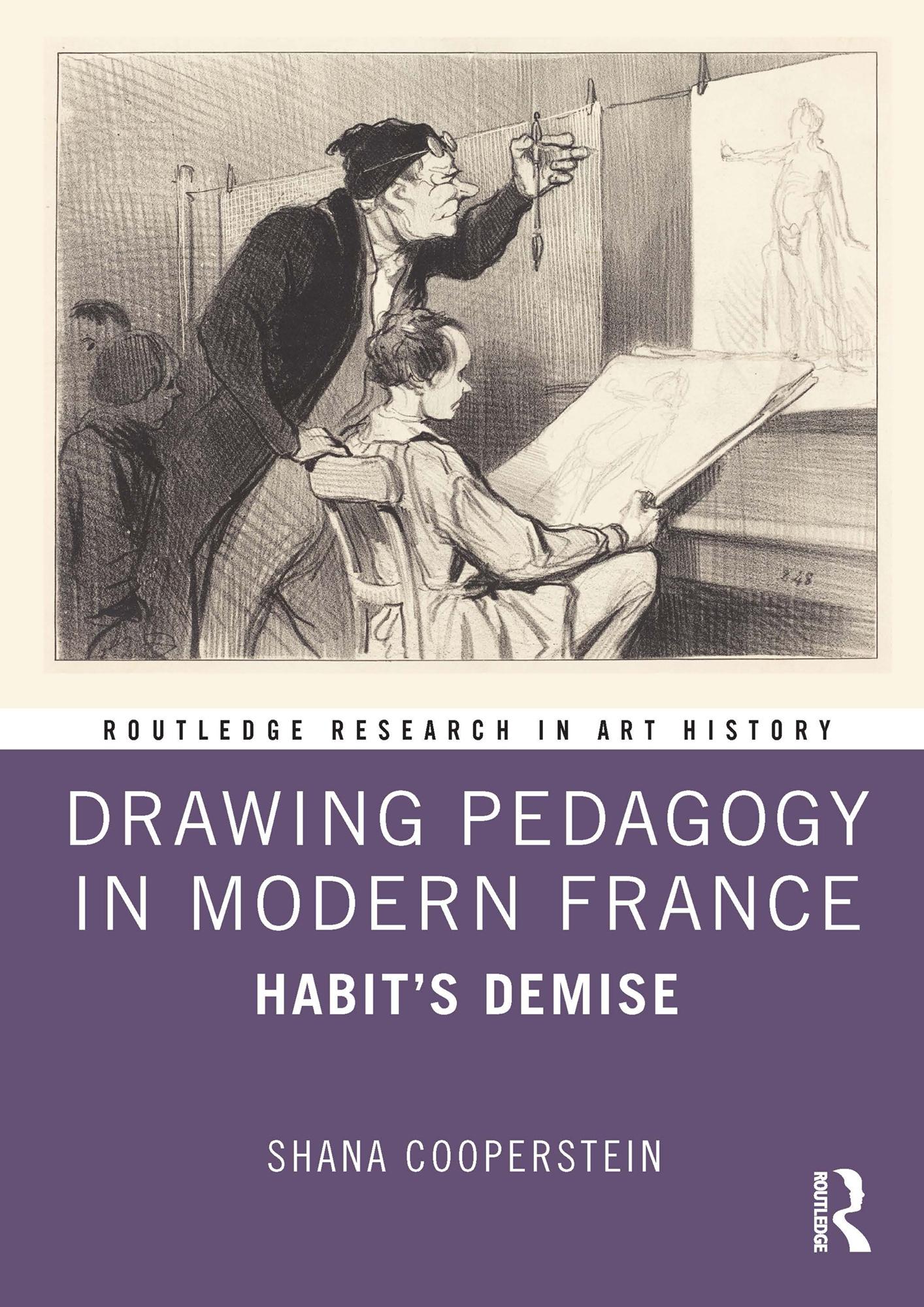
This study uncovers the plethora of new, innovative drawing strategies that shaped French visual arts at the height of France’s imperial power.
Horace Lecoq de Boisbaudran, Eugene Guillaume, and Félix Ravaisson, among others, designed new drawing procedures that responded to leading concerns of modern art and the exigencies of modern life: landscape painting and picturesque tourism, industrial design, and the use of drawing as vehicles of knowledge production and in social control. From graphic regimes that were “purement mathématique” and demanded the practice of orthographic projection, to those that privileged the articulation of proportions and the cultivation of an internal measuring system, fin de siècle educators in the fine and applied arts radically transformed drawing strategies and its history. The shifting parameters of drawing pedagogy and practice unfold onto a wider set of theoretical concerns central to humanistic inquiry and art-making today: the philosophy and cultural history of habit-based learning, the relation between industrialization and drawing, and the relation between art and mathematics.
The book will be of interest to scholars working in art history, French studies, history of art education, history of philosophy, and history of science.
Maksa helposti kortilla, Klarnalla, Apple Paylla tai Google Paylla. Etkö ole tyytyväinen? Sinulla on aina 14 päivän palautusoikeus. Lue lisää ehdoistamme. Jos sinulla on kysyttävää, lähetä meille sähköpostia osoitteeseen hello@memmo.org.
Memmo tekee opiskelusta helpompaa – missä päin maailmaa ikinä oletkin. Meillä yhdistät kurssikirjat ja fiksut opiskelutyökalut yhteen paikkaan: tiivistelmät, visat, podcastit ja muistikortit. Ja sitten Ted, opiskelukaverisi, joka vastaa kaikkeen, mitä ikinä mietitkin. Yli 50 000 opiskelijaa opiskelee jo täällä – rakennettu auttamaan sinua oppimaan nopeammin ja stressaamaan vähemmän.