
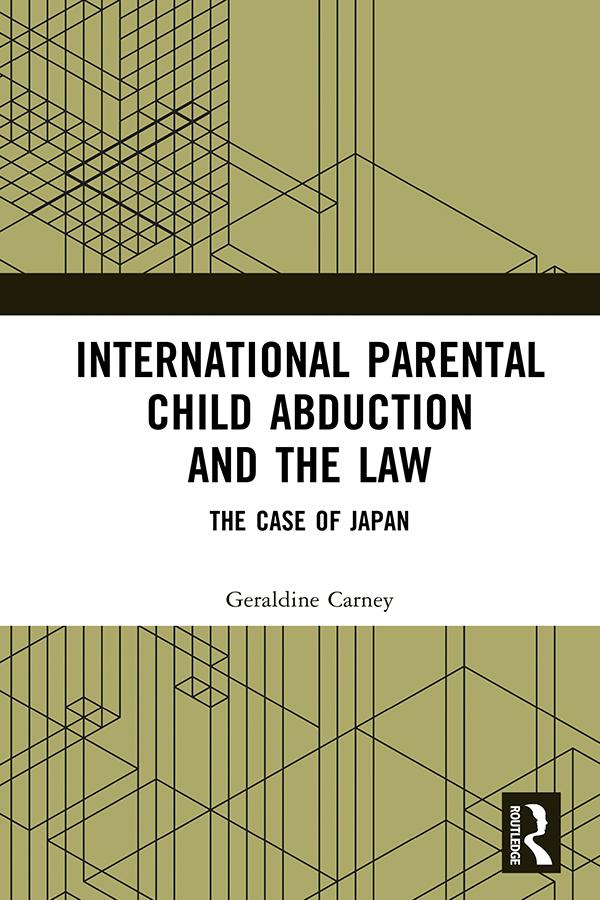
Japan has faced widespread scrutiny for failing to properly address international parental child abduction involving its citizens. This book examines how and why Japan has come to have this tarnished image, its response, and how it might manage these disputes in the future. In particular, the book explores how Japan engages with international legal frameworks to manage international parental child abduction and what this means, in reality, for Japanese people and others who come under its wide umbrella. A focus of this examination is how the key international treaty, the Hague Convention of 25 October 1980 on the Civil Aspects of International Child Abduction, has fared since being introduced in Japan in 2014. Case studies of parental child abduction involving Japan are used throughout to illustrate the legal and social concepts discussed in the book. The struggles of both abducting and left-behind parents across fluid international borders reveal seismic social and philosophical shifts in Japan that continue to shape its legal landscape. This book will be a useful resource for students of Japanese Studies, Sociolegal Studies, Comparative Law and International Law.
Maksa helposti kortilla, Klarnalla, Apple Paylla tai Google Paylla. Etkö ole tyytyväinen? Sinulla on aina 14 päivän palautusoikeus. Lue lisää ehdoistamme. Jos sinulla on kysyttävää, lähetä meille sähköpostia osoitteeseen hello@memmo.org.
Memmo tekee opiskelusta helpompaa – missä päin maailmaa ikinä oletkin. Meillä yhdistät kurssikirjat ja fiksut opiskelutyökalut yhteen paikkaan: tiivistelmät, visat, podcastit ja muistikortit. Ja sitten Ted, opiskelukaverisi, joka vastaa kaikkeen, mitä ikinä mietitkin. Yli 50 000 opiskelijaa opiskelee jo täällä – rakennettu auttamaan sinua oppimaan nopeammin ja stressaamaan vähemmän.