
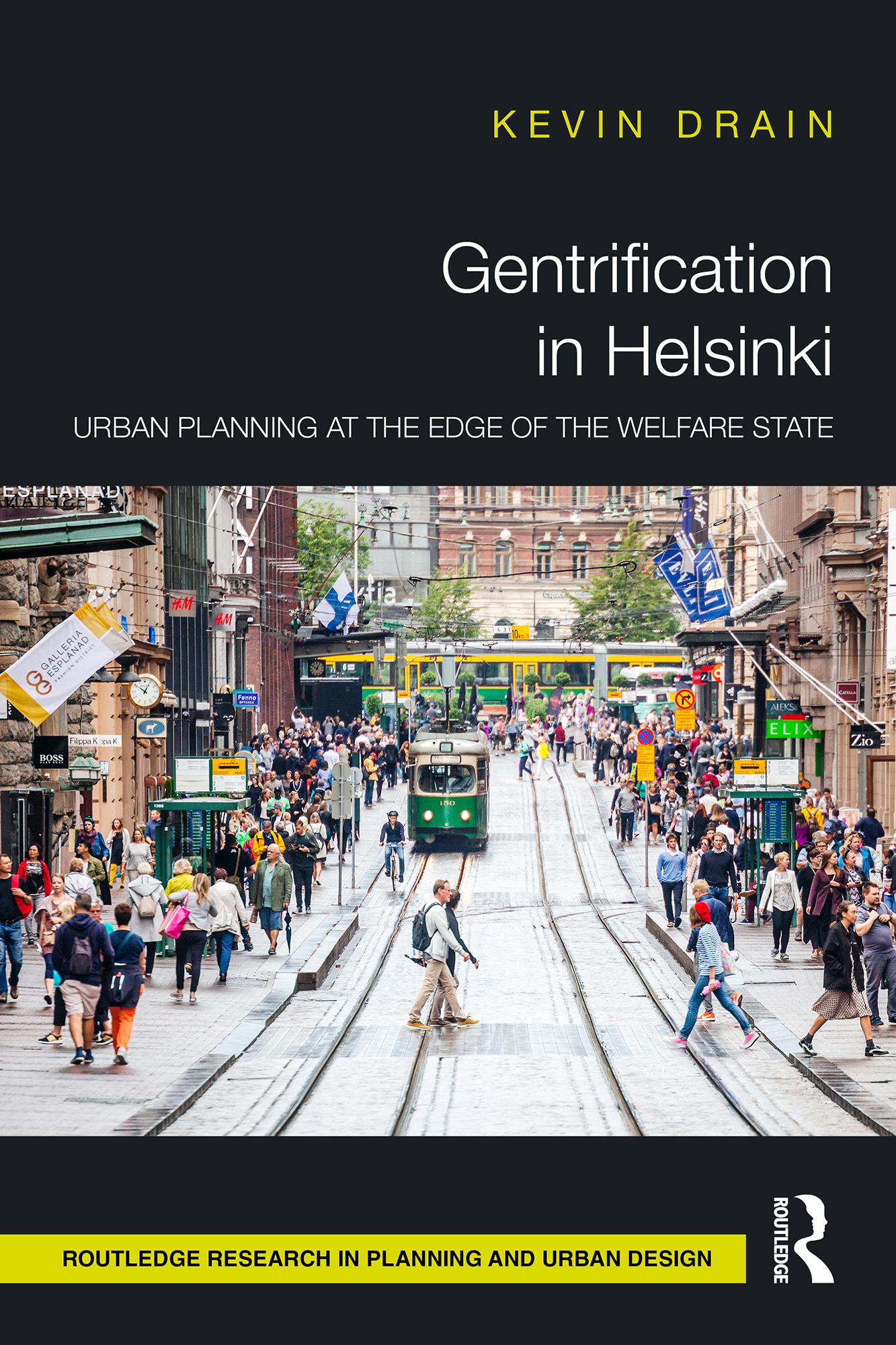
This book unravels the paradox of gentrification in Helsinki, Finland. Here, housing and welfare policies work well under certain conditions to prevent the worst outcomes of residential gentrification. Yet other forms of gentrification have proliferated in recent years, and local urban planning has gained a momentum in efforts to remake the urban landscape for business and tourism.
Through a range of methods, each chapter approaches a different aspect of gentrification: the effectiveness of welfare policies against residential gentrification, the importance of retail gentrification and symbolic changes, the role of media and state-led tourism campaigns in promoting gentrification, the rise of vibrancy and sustainability as concepts driving regeneration, and the question of planning principles like participation in confronting gentrification. The reader will find a state system that supports a delicate balance in housing, but a local planning regime related to a more “generalized” gentrification. The results raise questions about the limits of the welfare state in an age of global competition.
While new readers of gentrification will benefit from a deep engagement with the literature, the case of Helsinki is relevant to all students of planning, social sciences, and urban studies, as well as professionals in related fields.
Maksa helposti kortilla, Klarnalla, Apple Paylla tai Google Paylla. Etkö ole tyytyväinen? Sinulla on aina 14 päivän palautusoikeus. Lue lisää ehdoistamme. Jos sinulla on kysyttävää, lähetä meille sähköpostia osoitteeseen hello@memmo.org.
Memmo tekee opiskelusta helpompaa – missä päin maailmaa ikinä oletkin. Meillä yhdistät kurssikirjat ja fiksut opiskelutyökalut yhteen paikkaan: tiivistelmät, visat, podcastit ja muistikortit. Ja sitten Ted, opiskelukaverisi, joka vastaa kaikkeen, mitä ikinä mietitkin. Yli 50 000 opiskelijaa opiskelee jo täällä – rakennettu auttamaan sinua oppimaan nopeammin ja stressaamaan vähemmän.