
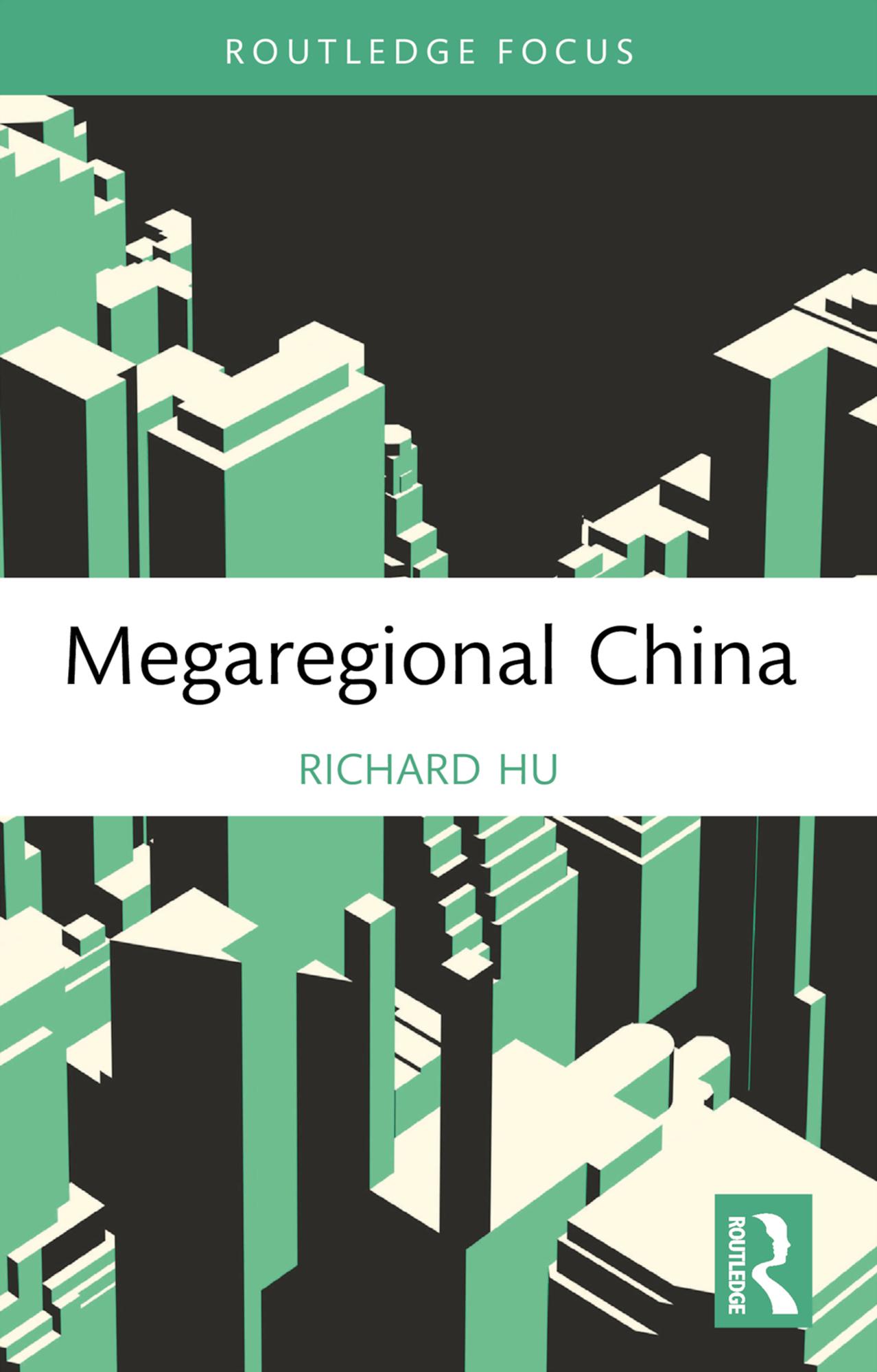
This book unravels China’s new megaregional structure, new megaregional planning and development, new megaregional governance, and new regional planning system. It draws upon a diversity of megaregional cases: city clusters of the Beijing–Tianjin–Hebei region, Yangtze River delta region, and Greater Bay Area; and metropolitan circles of Chengdu, Hangzhou, Hong Kong, Shanghai, Shenzhen, and Zhengzhou.
Megaregions are the new form of Chinese-style urbanisation. China’s new discourse of ‘high-quality development’ and ‘new-type urbanisation’ is reshaping its megaregional strategy. Imbalance and fragmentation characterise the diversity of megaregions - developed or developing, coastal or inland. The central goal of megaregional planning and governance is to achieve integrated, balanced development of them. Hu challenges the official notion of ‘top-level design’ that dominates the planning, governance, and development of China’s megaregions. Instead, he argues for the importance of engaging nongovernmental stakeholders, rebalancing the government-market relationality, encouraging bottom-up initiatives, and enabling grassroots ingenuity.
The volume offers the first and most comprehensive study of megaregional China in the new contexts of both national development and urban development. It will be of interest to anyone looking into urban and regional development, and Chinese studies.
Maksa helposti kortilla, Klarnalla, Apple Paylla tai Google Paylla. Etkö ole tyytyväinen? Sinulla on aina 14 päivän palautusoikeus. Lue lisää ehdoistamme. Jos sinulla on kysyttävää, lähetä meille sähköpostia osoitteeseen hello@memmo.org.
Memmo tekee opiskelusta helpompaa – missä päin maailmaa ikinä oletkin. Meillä yhdistät kurssikirjat ja fiksut opiskelutyökalut yhteen paikkaan: tiivistelmät, visat, podcastit ja muistikortit. Ja sitten Ted, opiskelukaverisi, joka vastaa kaikkeen, mitä ikinä mietitkin. Yli 50 000 opiskelijaa opiskelee jo täällä – rakennettu auttamaan sinua oppimaan nopeammin ja stressaamaan vähemmän.