
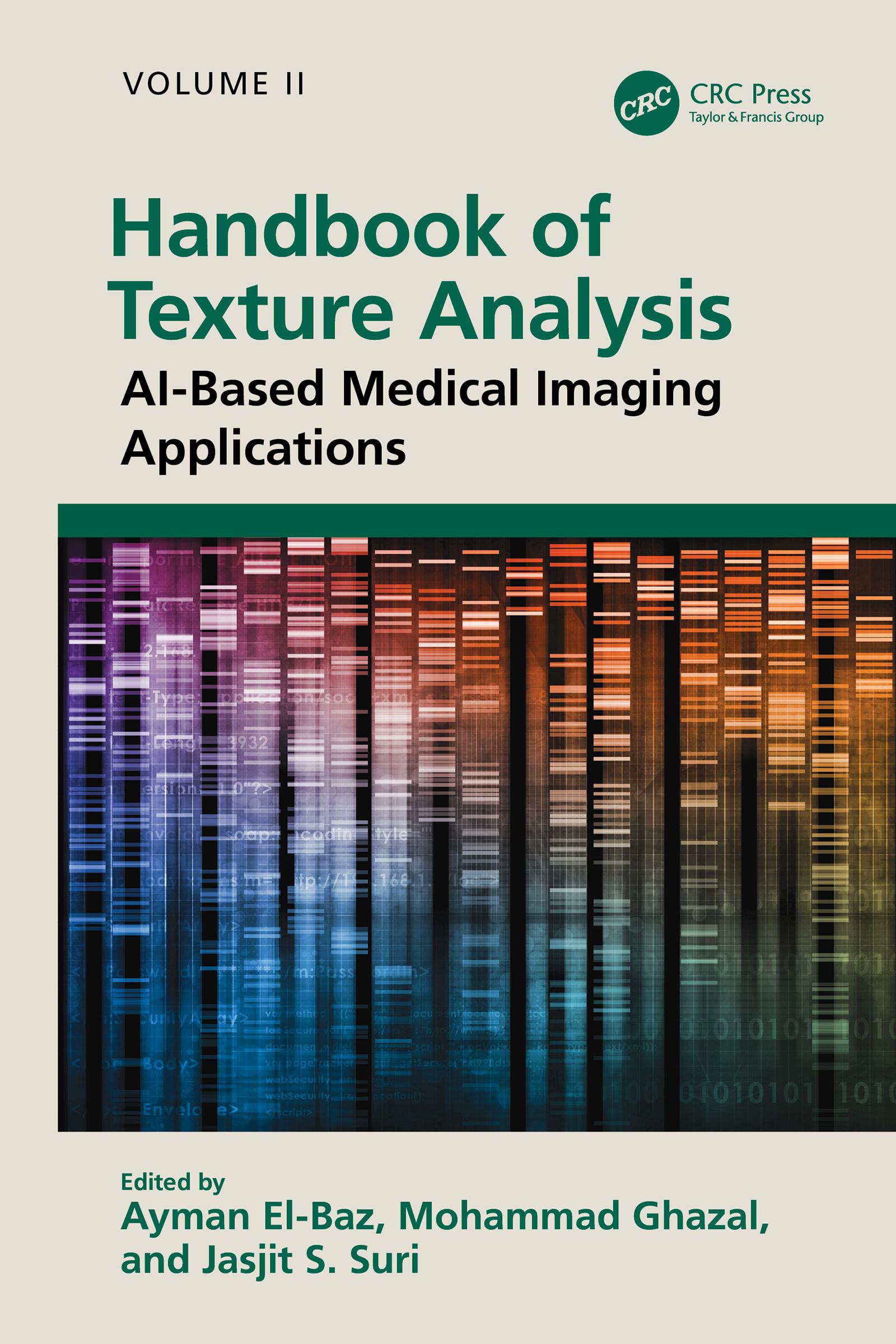
The major goals of texture research in computer vision are to understand, model, and process texture and, ultimately, to simulate the human visual learning process using computer technologies. In the last decade, artificial intelligence has been revolutionized by machine learning and big data approaches, outperforming human prediction on a wide range of problems. In particular, deep learning convolutional neural networks (CNNs) are particularly well suited to texture analysis. This volume presents important branches of texture analysis methods which find a proper application in AI-based medical image analysis. This book:
- Discusses first-order, second-order statistical methods, local binary pattern (LBP) methods, and filter bank-based methods
- Covers spatial frequency-based methods, Fourier analysis, Markov random fields, Gabor filters, and Hough transformation
- Describes advanced textural methods based on DL as well as BD and advanced applications of texture to medial image segmentation
- Is aimed at researchers, academics, and advanced students in biomedical engineering, image analysis, cognitive science, and computer science and engineering
This is an essential reference for those looking to advance their understanding in this applied and emergent field.
Maksa helposti kortilla, Klarnalla, Apple Paylla tai Google Paylla. Etkö ole tyytyväinen? Sinulla on aina 14 päivän palautusoikeus. Lue lisää ehdoistamme. Jos sinulla on kysyttävää, lähetä meille sähköpostia osoitteeseen hello@memmo.org.
Memmo tekee opiskelusta helpompaa – missä päin maailmaa ikinä oletkin. Meillä yhdistät kurssikirjat ja fiksut opiskelutyökalut yhteen paikkaan: tiivistelmät, visat, podcastit ja muistikortit. Ja sitten Ted, opiskelukaverisi, joka vastaa kaikkeen, mitä ikinä mietitkin. Yli 50 000 opiskelijaa opiskelee jo täällä – rakennettu auttamaan sinua oppimaan nopeammin ja stressaamaan vähemmän.