
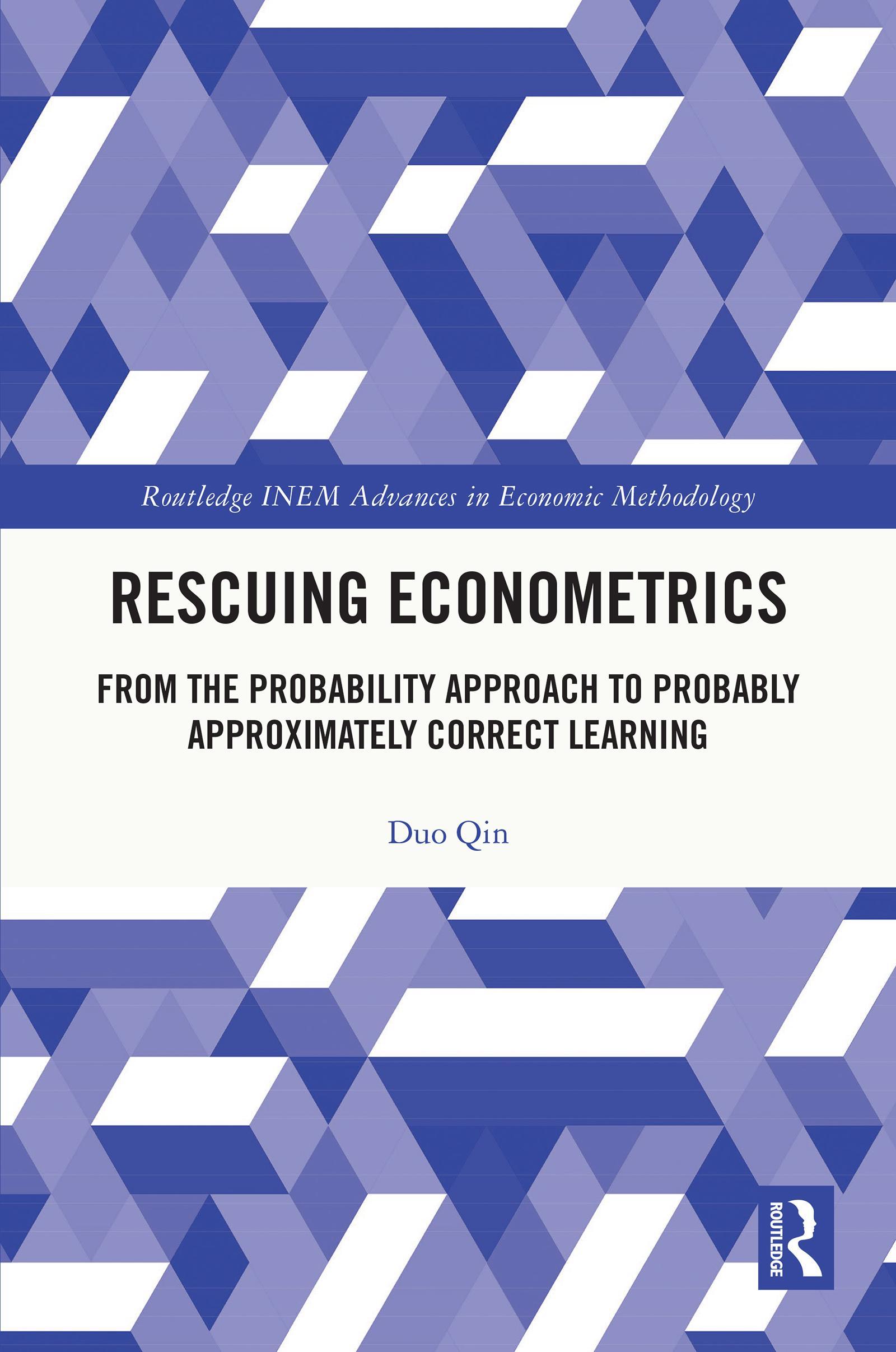
Haavelmo’s 1944 monograph, The Probability Approach in Econometrics, is widely acclaimed as the manifesto of econometrics. This book challenges Haavelmo’s probability approach, shows how its use is delivering defective and inefficient results, and argues for a paradigm shift in econometrics towards a full embrace of machine learning, with its attendant benefits.
Machine learning has only come into existence over recent decades, whereas the universally accepted and current form of econometrics has developed over the past century. A comparison between the two is, however, striking. The practical achievements of machine learning significantly outshine those of econometrics, confirming the presence of widespread inefficiencies in current econometric research. The relative efficiency of machine learning is based on its theoretical foundation, and particularly on the notion of Probably Approximately Correct (PAC) learning. Careful examination reveals that PAC learning theory delivers the goals of applied economic modelling research far better than Haavelmo’s probability approach. Econometrics should therefore renounce its outdated foundation, and rebuild itself upon PAC learning theory so as to unleash its pent-up research potential. The book is catered for applied economists, econometricians, economists specialising in the history and methodology of economics, advanced students, philosophers of social sciences.
Maksa helposti kortilla, Klarnalla, Apple Paylla tai Google Paylla. Etkö ole tyytyväinen? Sinulla on aina 14 päivän palautusoikeus. Lue lisää ehdoistamme. Jos sinulla on kysyttävää, lähetä meille sähköpostia osoitteeseen hello@memmo.org.
Memmo tekee opiskelusta helpompaa – missä päin maailmaa ikinä oletkin. Meillä yhdistät kurssikirjat ja fiksut opiskelutyökalut yhteen paikkaan: tiivistelmät, visat, podcastit ja muistikortit. Ja sitten Ted, opiskelukaverisi, joka vastaa kaikkeen, mitä ikinä mietitkin. Yli 50 000 opiskelijaa opiskelee jo täällä – rakennettu auttamaan sinua oppimaan nopeammin ja stressaamaan vähemmän.