
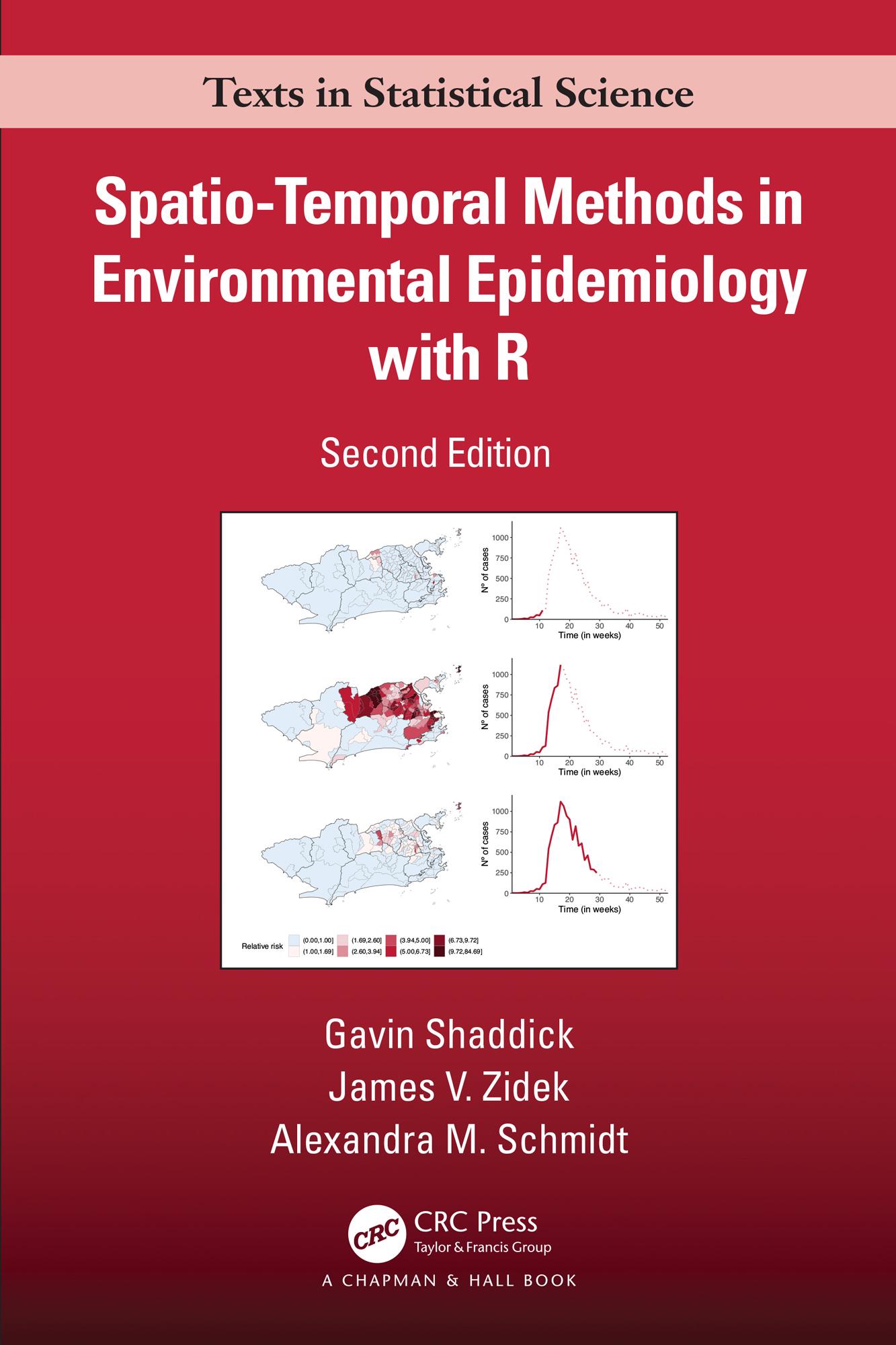
Spatio-Temporal Methods in Environmental Epidemiology with R, like its First Edition, explores the interface between environmental epidemiology and spatio-temporal modeling. It links recent developments in spatio-temporal theory with epidemiological applications. Drawing on real-life problems, it shows how recent advances in methodology can assess the health risks associated with environmental hazards. The book's clear guidelines enable the implementation of the methodology and estimation of risks in practice.
New additions to the Second Edition include: a thorough exploration of the underlying concepts behind knowledge discovery through data; a new chapter on extracting information from data using R and the tidyverse; additional material on methods for Bayesian computation, including the use of NIMBLE and Stan; new methods for performing spatio-temporal analysis and an updated chapter containing further topics. Throughout the book there are new examples, and the presentation of R code for examples has been extended. Along with these additions, the book now has a GitHub site (https://spacetime-environ.github.io/stepi2) that contains data, code and further worked examples.
Features:
• Explores the interface between environmental epidemiology and spatio-temporal modeling
• Incorporates examples that show how spatio-temporal methodology can inform societal concerns about the effects of environmental hazards on health
• Uses a Bayesian foundation on which to build an integrated approach to spatio-temporal modeling and environmental epidemiology
• Discusses data analysis and topics such as data visualization, mapping, wrangling and analysis
• Shows how to design networks for monitoring hazardous environmental processes and the ill effects of preferential sampling
• Through the listing and application of code, shows the power of R, tidyverse, NIMBLE and Stan and other modern tools in performing complex data analysis and modeling
Representing a continuing important direction in environmental epidemiology, this book – in full color throughout – underscores the increasing need to consider dependencies in both space and time when modeling epidemiological data. Readers will learn how to identify and model patterns in spatio-temporal data and how to exploit dependencies over space and time to reduce bias and inefficiency when estimating risks to health.
Maksa helposti kortilla, Klarnalla, Apple Paylla tai Google Paylla. Etkö ole tyytyväinen? Sinulla on aina 14 päivän palautusoikeus. Lue lisää ehdoistamme. Jos sinulla on kysyttävää, lähetä meille sähköpostia osoitteeseen hello@memmo.org.
Memmo tekee opiskelusta helpompaa – missä päin maailmaa ikinä oletkin. Meillä yhdistät kurssikirjat ja fiksut opiskelutyökalut yhteen paikkaan: tiivistelmät, visat, podcastit ja muistikortit. Ja sitten Ted, opiskelukaverisi, joka vastaa kaikkeen, mitä ikinä mietitkin. Yli 50 000 opiskelijaa opiskelee jo täällä – rakennettu auttamaan sinua oppimaan nopeammin ja stressaamaan vähemmän.