
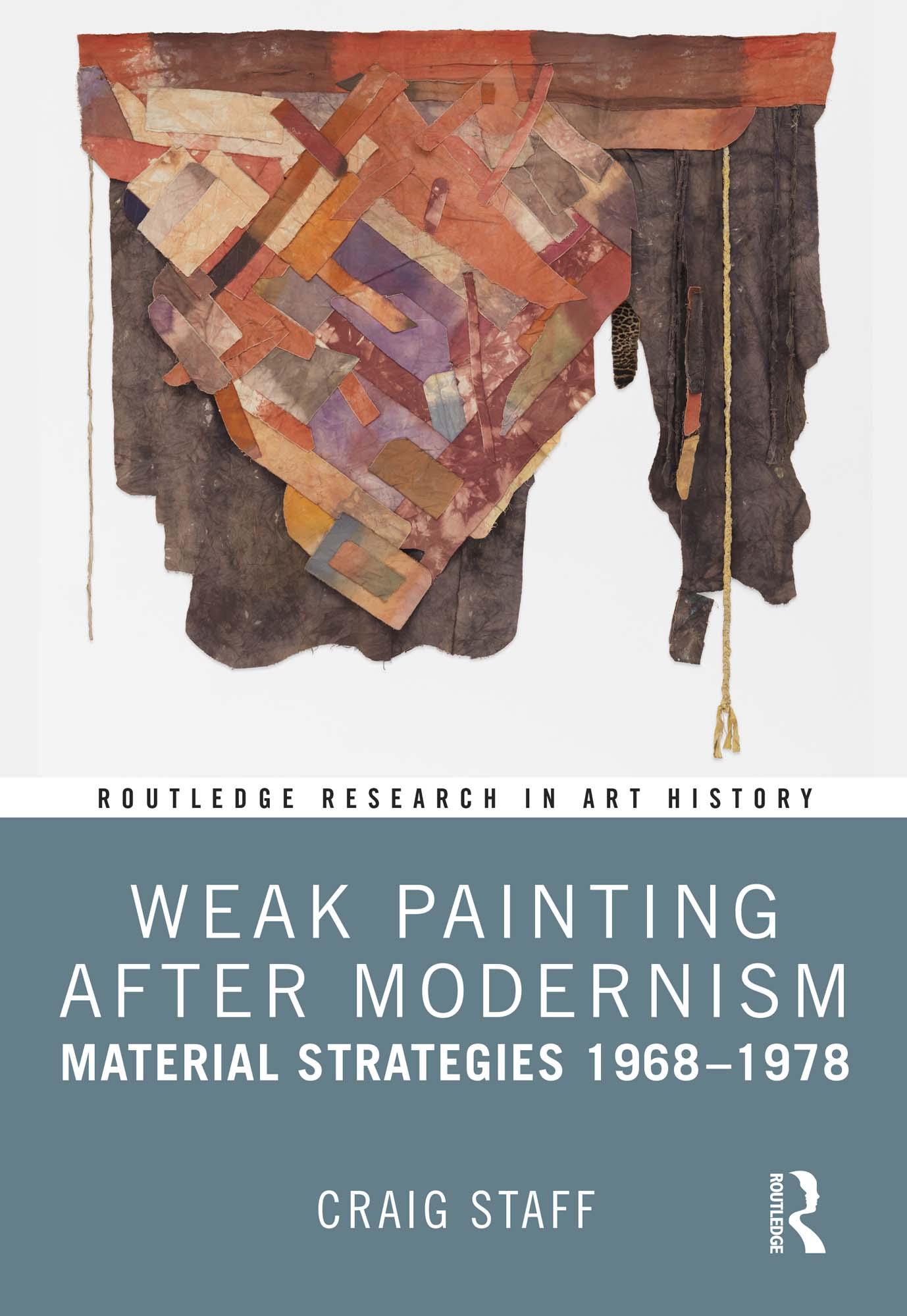
This book examines the terms upon which painting in the United States sought to negotiate with the legacy of American formalist aesthetics and by extension, the understanding of modernist painting it had become most readily associated with. In so doing, a separate set of possibilities for painting gradually began to emerge.
The salient debates and practices that collectively worked to establish such a response are approached through the philosopher Gianni Vattimo’s idea of pensiero debole or so-called weak thought. To this end, the proposed study both identifies and seeks to examine a type of "weak" painting which, like Vattimo’s idea, took as its critical point of departure “the exhaustion – but not the vanishing – of the project of modernism (the belief in reason, progress, history, the nation-state, etc.).” Craig Staff explores particular instances wherein artists sought to extend the parameters of the object beyond what had been called into question, namely the proclivity for modernist painting’s "strength" to be understood as denoting, amongst other things, a perceived set of universal essences.
This book will be of interest to scholars working in art history, fine art, cultural studies, critical theory, curatorial studies and philosophy.
Maksa helposti kortilla, Klarnalla, Apple Paylla tai Google Paylla. Etkö ole tyytyväinen? Sinulla on aina 14 päivän palautusoikeus. Lue lisää ehdoistamme. Jos sinulla on kysyttävää, lähetä meille sähköpostia osoitteeseen hello@memmo.org.
Memmo tekee opiskelusta helpompaa – missä päin maailmaa ikinä oletkin. Meillä yhdistät kurssikirjat ja fiksut opiskelutyökalut yhteen paikkaan: tiivistelmät, visat, podcastit ja muistikortit. Ja sitten Ted, opiskelukaverisi, joka vastaa kaikkeen, mitä ikinä mietitkin. Yli 50 000 opiskelijaa opiskelee jo täällä – rakennettu auttamaan sinua oppimaan nopeammin ja stressaamaan vähemmän.