
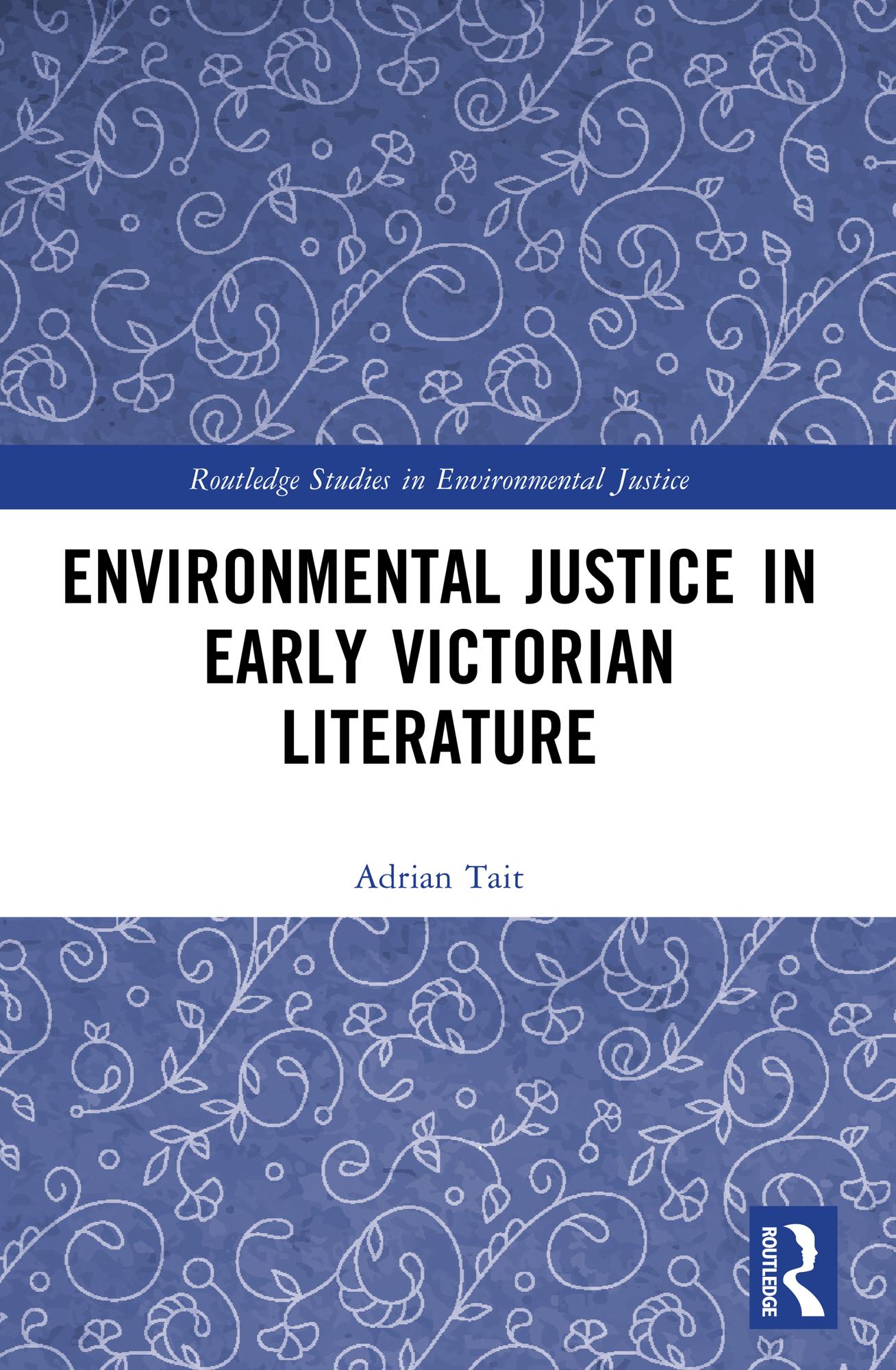
This innovative new book combines environmental justice scholarship with a material ecocriticism to explore the way in which early Victorian literature (1837–1860) responded to the growing problem of environmental injustice.
As this book emphasises, environmental injustice – simply, the convergence of poverty and pollution – was not an isolated phenomenon, but a structural form of inequality; a product of industrial modernity’s radical reformation of British society, it particularly affected the working classes. As each chapter reveals in detail, this form of environmental inequality (or ‘classism’) drew sharply critical reactions from figures as diverse as Thomas Carlyle, Friedrich Engels, Charles Dickens, and John Ruskin, and from within the Chartist movement, as working-class writers themselves reacted to the hazardous realities of a divided society. But as this book also reveals, these writers recognised that a truly just society respects the needs of the nonhuman and takes account of the material world in all its own aliveness; even if only tentatively, they reached for a more inclusive, emergent form of justice that might address the social and ecological impacts of industrial modernity, an idea which is no less relevant today.
This book represents an indispensable resource for scholars and students working in the fields of Victorian literature, environmental justice, and ecocriticism.
Maksa helposti kortilla, Klarnalla, Apple Paylla tai Google Paylla. Etkö ole tyytyväinen? Sinulla on aina 14 päivän palautusoikeus. Lue lisää ehdoistamme. Jos sinulla on kysyttävää, lähetä meille sähköpostia osoitteeseen hello@memmo.org.
Memmo tekee opiskelusta helpompaa – missä päin maailmaa ikinä oletkin. Meillä yhdistät kurssikirjat ja fiksut opiskelutyökalut yhteen paikkaan: tiivistelmät, visat, podcastit ja muistikortit. Ja sitten Ted, opiskelukaverisi, joka vastaa kaikkeen, mitä ikinä mietitkin. Yli 50 000 opiskelijaa opiskelee jo täällä – rakennettu auttamaan sinua oppimaan nopeammin ja stressaamaan vähemmän.