
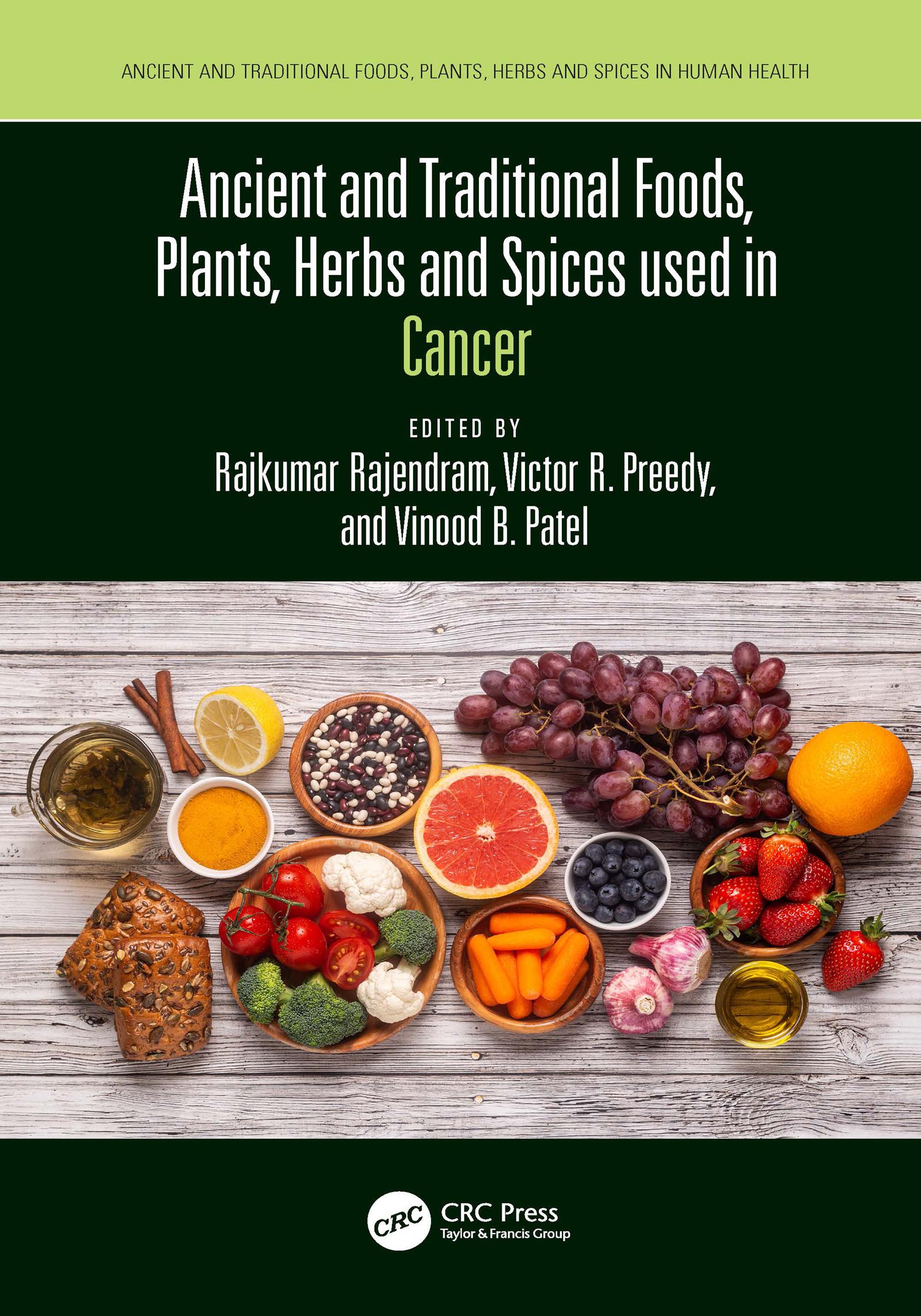
The use of different foods, herbs, and spices to treat or prevent disease has been recorded for thousands of years. Egyptian papyrus, hieroglyphics and ancient texts from the Middle East have described the cultivation and preparations of herbs and botanicals to “cure the sick.” There are even older records from China and India. Some ancient scripts describe the use of medicinal plants which have never been seen within European cultures. Indeed, all ancient civilizations have pictorial records of different foods, herbs, and spices being used for medical purposes. However, there are fundamental questions pertaining to the scientific evidence for the use of these agents or their extracts in modern medicine.
There have been considerable advances in scientific techniques over the last few decades. These have been used to examine the composition and applications of traditional cures. Modern science has also seen the investigation of herbs, spices and botanicals beyond their traditional usage. For example, plants which have been used for “digestion” or “medical ills” since time immemorial are now being investigated for anti-cancer properties or their toxicity, using high throughput screening. Techniques also include molecular biology, cellular biochemistry, physiology, endocrinology and even medical imaging. However, much of the material relating to the scientific basis or applications of traditional foods, herbs, spices and botanicals is scattered among various sources. The widespread applicability of foods or botanicals is rarely described and cautionary notes on toxicity are often ignored. These questions are explored in Ancient and Traditional Foods, Plants, Herbs and Spices used in Cancer.
Features
- Provides an evidenced-based approach in describing usage and applications of traditional foods and botanicals in prevention and treatment of cancer
- Contains chapters on biomedical research related to cancer studies
- Discusses extraction and analysis of active agents, in vitro studies, pre-clinical investigations in animals, and clinical studies
- Bridges modern day sciences with historical backgrounds related to foods and plants
With contributions from leading international experts including those from world renowned institutions, this book is a reference for oncologists, physicians, health scientists, healthcare workers, pharmacologists, and research scientists.
Maksa helposti kortilla, Klarnalla, Apple Paylla tai Google Paylla. Etkö ole tyytyväinen? Sinulla on aina 14 päivän palautusoikeus. Lue lisää ehdoistamme. Jos sinulla on kysyttävää, lähetä meille sähköpostia osoitteeseen hello@memmo.org.
Memmo tekee opiskelusta helpompaa – missä päin maailmaa ikinä oletkin. Meillä yhdistät kurssikirjat ja fiksut opiskelutyökalut yhteen paikkaan: tiivistelmät, visat, podcastit ja muistikortit. Ja sitten Ted, opiskelukaverisi, joka vastaa kaikkeen, mitä ikinä mietitkin. Yli 50 000 opiskelijaa opiskelee jo täällä – rakennettu auttamaan sinua oppimaan nopeammin ja stressaamaan vähemmän.