
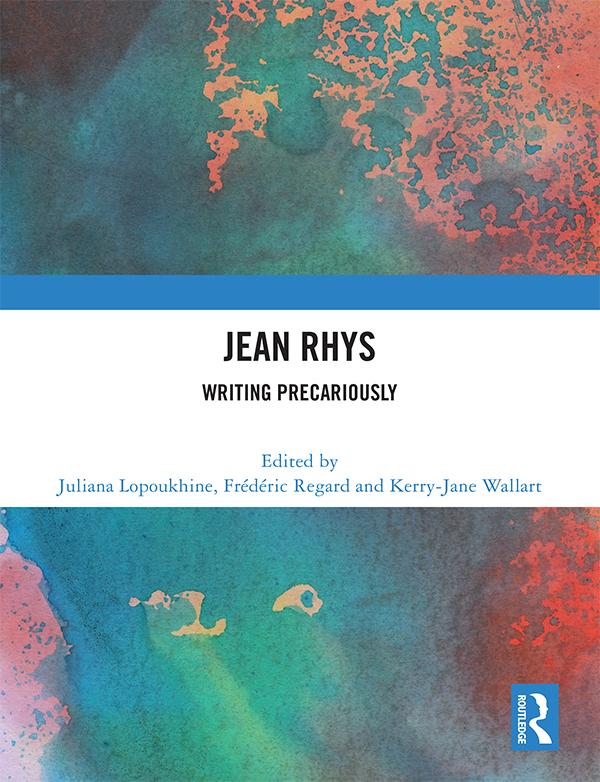
Jean Rhys' position upon the literary map of the 20th century remains unstable, even after Wide Sargasso Sea (1966). She shunned public exposure and yet, desperately sought acknowledgement by her own peers; she stood away from the modernist circles of Montparnasse, in Paris, and yet, explored a radically avant-garde writing which retrospectively makes her rank among them, while her always problematic authority places her in the marginalized position of the postcolonial author.
'Writing precariously', in the case of Jean Rhys, reaches far beyond a mere posture of submission or a necessity to cope with a lack of money or a 'room of one’s own'. Rather, it becomes an ethical and political stance that engages with forms of minimal resistance to forms of subjection just as the very precariousness of her writing thwarts any efforts to 'place' her or her work, to frame her characters or label her style. With Jean Rhys, precariousness is the site where voices silenced and bodies dismissed by a gendered or imperialistic power may be retrieved, until their vulnerability becomes a dislodging force that makes the power structures precarious in turn.
This book reassesses the precariousness of Jean Rhys as a distinct positionality eliciting an isolated voice which insists and persists. It was originally published as a special issue of the journal, Women: A Cultural Review.
Maksa helposti kortilla, Klarnalla, Apple Paylla tai Google Paylla. Etkö ole tyytyväinen? Sinulla on aina 14 päivän palautusoikeus. Lue lisää ehdoistamme. Jos sinulla on kysyttävää, lähetä meille sähköpostia osoitteeseen hello@memmo.org.
Memmo tekee opiskelusta helpompaa – missä päin maailmaa ikinä oletkin. Meillä yhdistät kurssikirjat ja fiksut opiskelutyökalut yhteen paikkaan: tiivistelmät, visat, podcastit ja muistikortit. Ja sitten Ted, opiskelukaverisi, joka vastaa kaikkeen, mitä ikinä mietitkin. Yli 50 000 opiskelijaa opiskelee jo täällä – rakennettu auttamaan sinua oppimaan nopeammin ja stressaamaan vähemmän.