
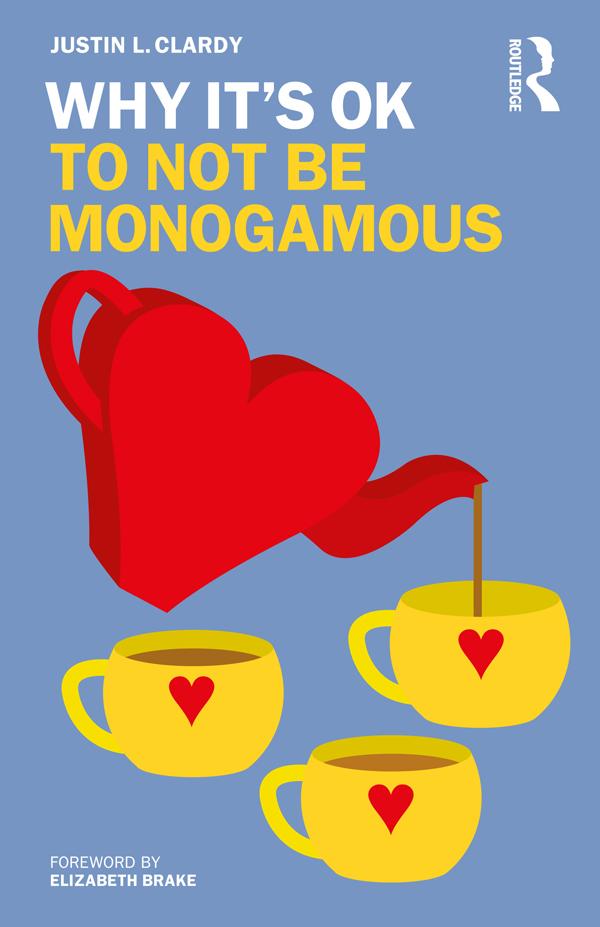
The downsides of monogamy are felt by most people engaged in long-term relationships, including restrictions on self-discovery, limits on friendship, sexual boredom, and a circumscribed understanding of intimacy. Yet, a "happily ever after" monogamy is assumed to be the ideal form of romantic love in many modern societies: a relationship that is morally ideal and will bring the most happiness to its two partners.
In Why It’s OK to Not Be Monogamous, Justin L. Clardy deeply questions these assumptions. He rejects the claim that non-monogamy among honest, informed and consenting adults is morally impermissible. He shows instead how polyamorous relationships can actually be exemplars of moral virtue. The book discusses how social and political forces sustain and reward monogamous relationships. The book defines non-monogamy as a privative concept; a negation of monogamy. Looking at its prevalence in the United States, the book explains how common criticisms of non-monogamy come up short. Clardy argues, as some researchers have recently shown—monogamy relies on continually demonizing non-monogamy to sustain its moral status. Finally, the book concludes with a focus on equality, asking what justice for polyamorous individuals might look like.
Maksa helposti kortilla, Klarnalla, Apple Paylla tai Google Paylla. Etkö ole tyytyväinen? Sinulla on aina 14 päivän palautusoikeus. Lue lisää ehdoistamme. Jos sinulla on kysyttävää, lähetä meille sähköpostia osoitteeseen hello@memmo.org.
Memmo tekee opiskelusta helpompaa – missä päin maailmaa ikinä oletkin. Meillä yhdistät kurssikirjat ja fiksut opiskelutyökalut yhteen paikkaan: tiivistelmät, visat, podcastit ja muistikortit. Ja sitten Ted, opiskelukaverisi, joka vastaa kaikkeen, mitä ikinä mietitkin. Yli 50 000 opiskelijaa opiskelee jo täällä – rakennettu auttamaan sinua oppimaan nopeammin ja stressaamaan vähemmän.