
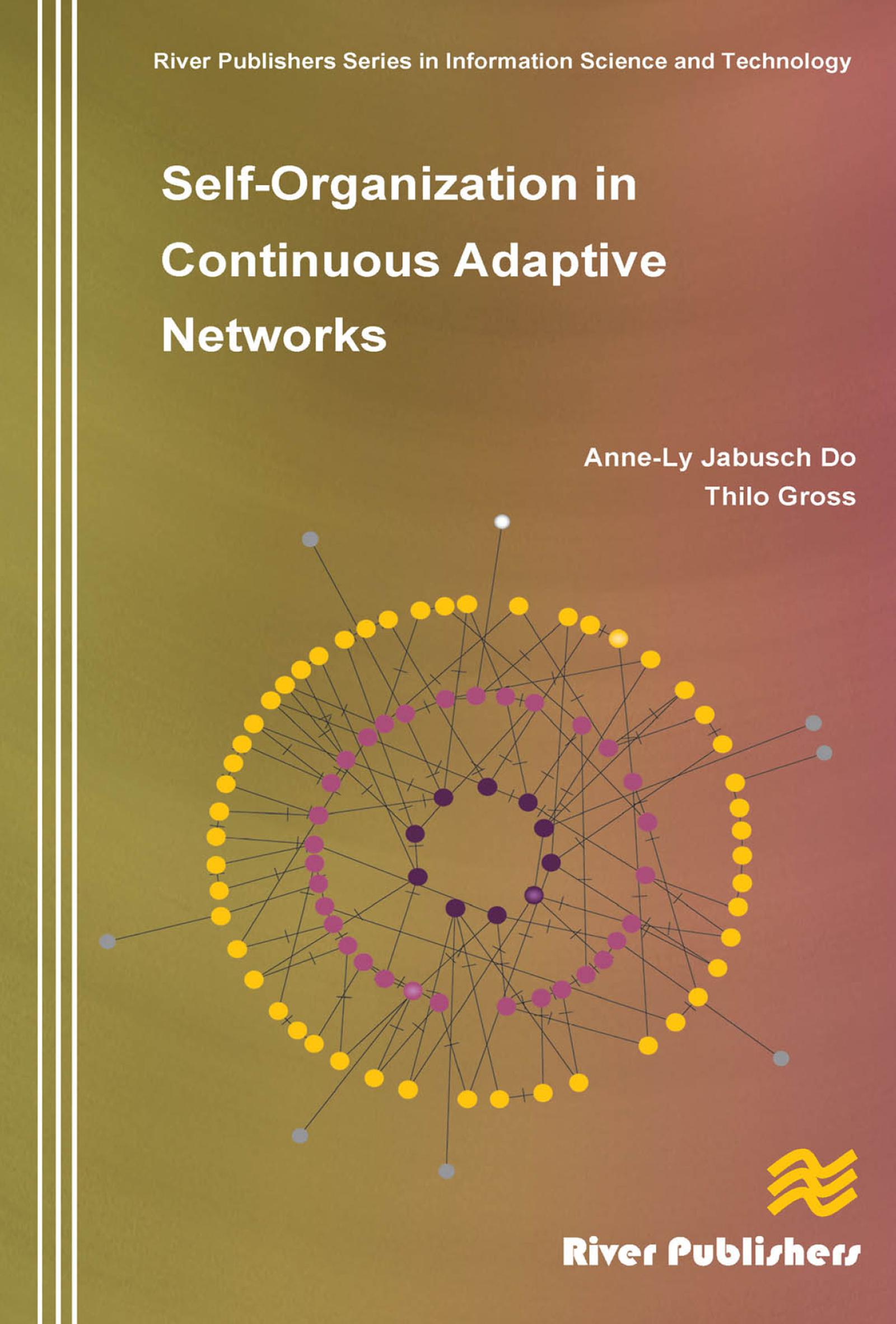
In the last years, adaptive networks have been discovered simultaneously in different fields as a universal framework for the study of self-organization phenomena. Understanding the mechanisms behind these phenomena is hoped to bring forward not only empirical disciplines such as biology, sociology, ecology, and economy, but also engineering disciplines seeking to employ controlled emergence in future technologies. This volume presents new analytical approaches, which combine tools from dynamical systems theory and statistical physics with tools from graph theory to address the principles behind adaptive self-organization. It is the first class of approaches that is applicable to continuous networks. The volume discusses the mechanisms behind three emergent phenomena that are prominently discussed in the context of biological and social sciences:• synchronization,• spontaneous diversification, and• self-organized criticality.Self-organization in continuous adaptive networks contains extended research papers. It can serve as both, a review of recent results on adaptive self-organization as well as a tutorial of new analytical methodsSelf-organization in continuous adaptive networks is ideal for academic staff and master/research students in complexity and network sciences, in engineering, physics and maths.
Maksa helposti kortilla, Klarnalla, Apple Paylla tai Google Paylla. Etkö ole tyytyväinen? Sinulla on aina 14 päivän palautusoikeus. Lue lisää ehdoistamme. Jos sinulla on kysyttävää, lähetä meille sähköpostia osoitteeseen hello@memmo.org.
Memmo tekee opiskelusta helpompaa – missä päin maailmaa ikinä oletkin. Meillä yhdistät kurssikirjat ja fiksut opiskelutyökalut yhteen paikkaan: tiivistelmät, visat, podcastit ja muistikortit. Ja sitten Ted, opiskelukaverisi, joka vastaa kaikkeen, mitä ikinä mietitkin. Yli 50 000 opiskelijaa opiskelee jo täällä – rakennettu auttamaan sinua oppimaan nopeammin ja stressaamaan vähemmän.
Saatat pitää myös näistä
Osta kirja0