
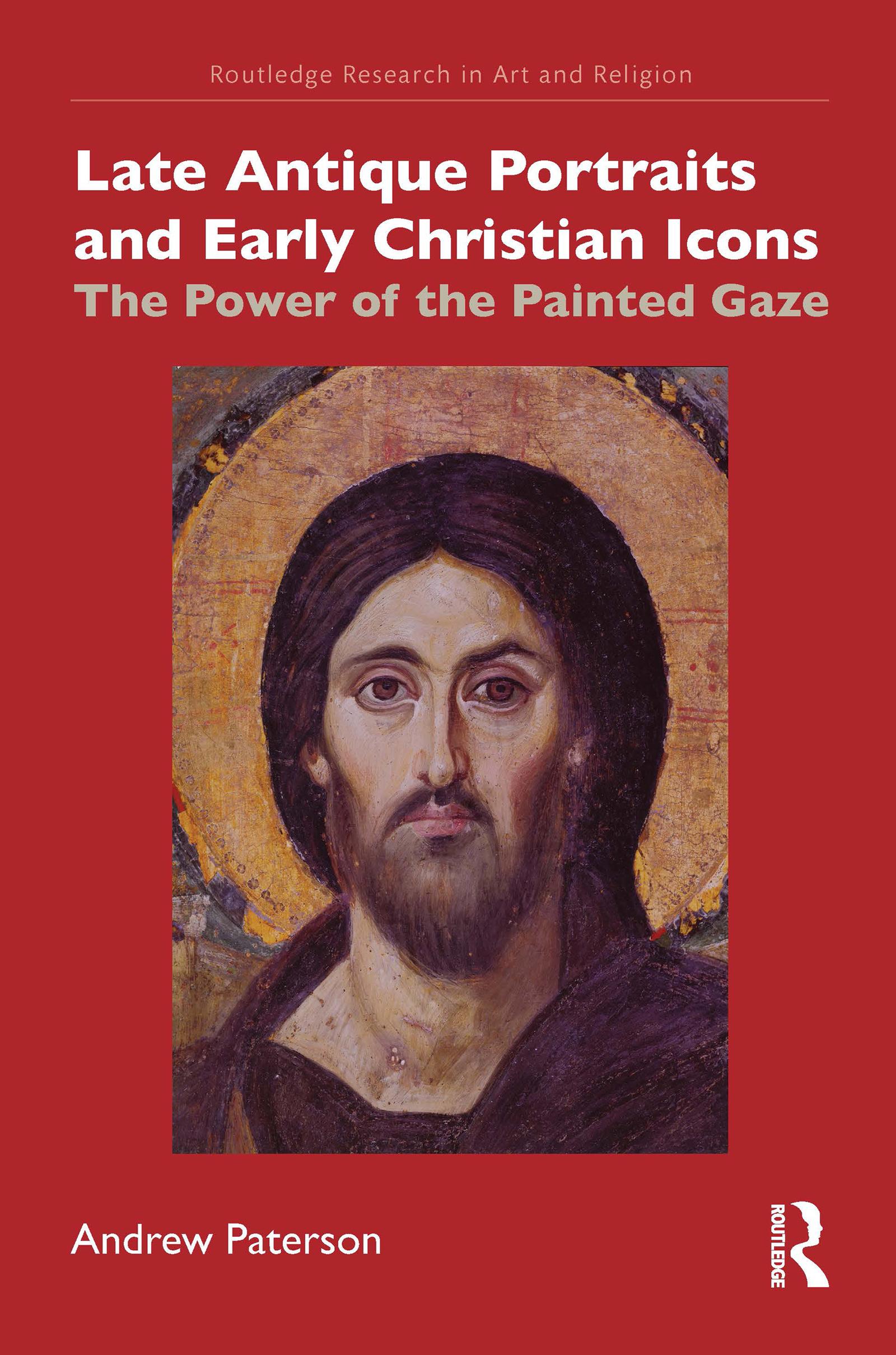
This book focuses on the earliest surviving Christian icons, dated to the sixth and seventh centuries, which bear many resemblances to three other well-established genres of ‘sacred portrait’ also produced during late antiquity, namely Roman imperial portraiture, Graeco-Egyptian funerary portraiture and panel paintings depicting non-Christian deities.
Andrew Paterson addresses two fundamental questions about devotional portraiture – both Christian and non-Christian – in the late antique period. Firstly, how did artists visualise and construct these images of divine or sanctified figures? And secondly, how did their intended viewers look at, respond to, and even interact with these images? Paterson argues that a key factor of many of these portrait images is the emphasis given to the depicted gaze, which invites an intensified form of personal encounter with the portrait’s subject.
The book will be of interest to scholars working in art history, theology, religion and classical studies.
Maksa helposti kortilla, Klarnalla, Apple Paylla tai Google Paylla. Etkö ole tyytyväinen? Sinulla on aina 14 päivän palautusoikeus. Lue lisää ehdoistamme. Jos sinulla on kysyttävää, lähetä meille sähköpostia osoitteeseen hello@memmo.org.
Memmo tekee opiskelusta helpompaa – missä päin maailmaa ikinä oletkin. Meillä yhdistät kurssikirjat ja fiksut opiskelutyökalut yhteen paikkaan: tiivistelmät, visat, podcastit ja muistikortit. Ja sitten Ted, opiskelukaverisi, joka vastaa kaikkeen, mitä ikinä mietitkin. Yli 50 000 opiskelijaa opiskelee jo täällä – rakennettu auttamaan sinua oppimaan nopeammin ja stressaamaan vähemmän.