
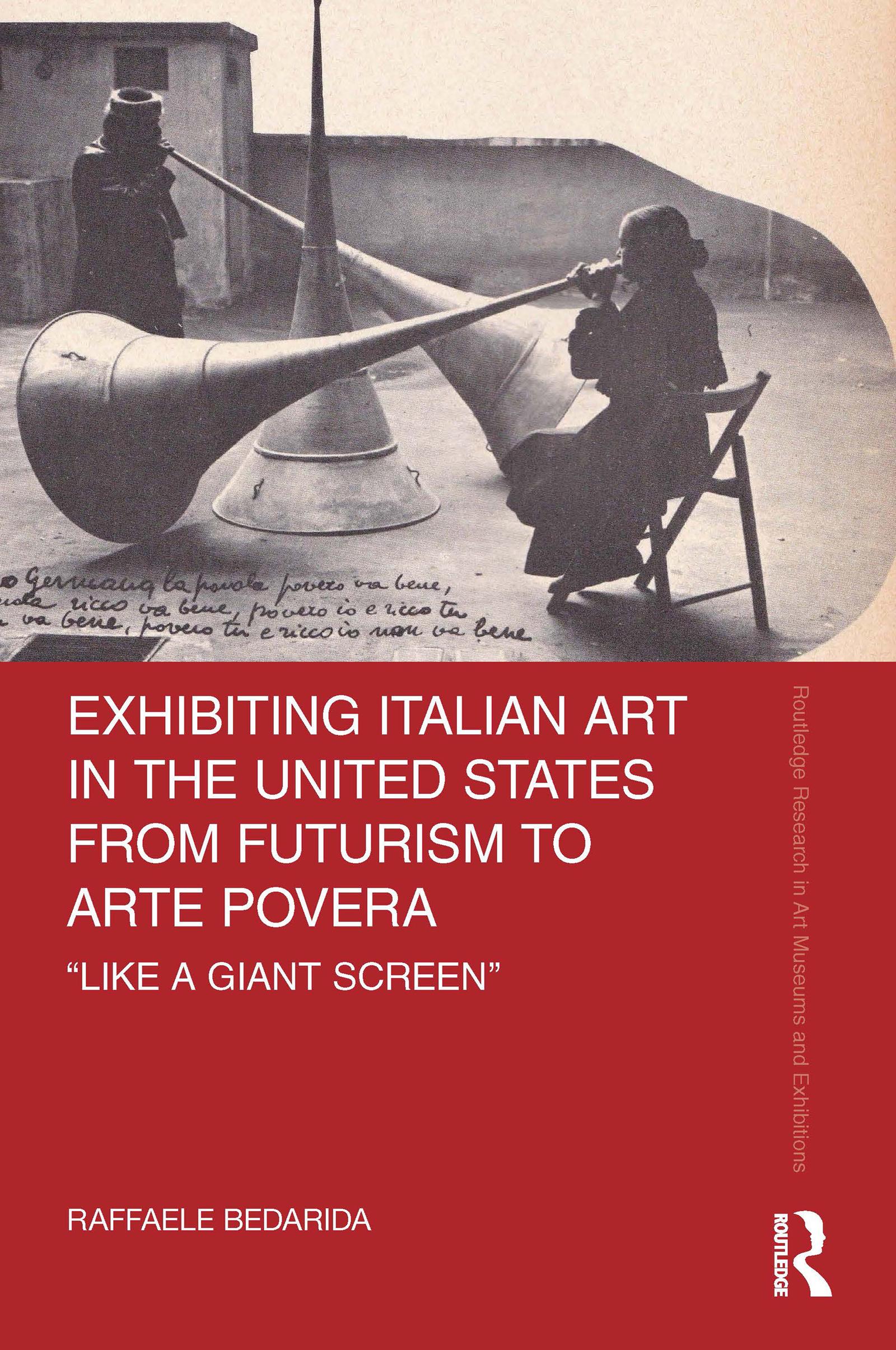
This volume explores how Italian institutions, dealers, critics, and artists constructed a modern national identity for Italy by exporting – literally and figuratively – contemporary art to the United States in key moments between 1929 and 1969.
From artist Fortunato Depero opening his Futurist House in New York City to critic Germano Celant launching Arte Povera in the United States, Raffaele Bedarida examines the thick web of individuals and cultural environments beyond the two more canonical movements that shaped this project. By interrogating standard narratives of Italian Fascist propaganda on the one hand and American Cold War imperialism on the other, this book establishes a more nuanced transnational approach. The central thesis is that, beyond the immediate aims of political propaganda and conquering a new market for Italian art, these art exhibitions, publications, and the critical discourse aimed at American audiences all reflected back on their makers: they forced and helped Italians define their own modernity in relation to the world’s new dominant cultural and economic power.
The book will be of interest to scholars working in art history, social history, exhibition history, and Italian studies.
Maksa helposti kortilla, Klarnalla, Apple Paylla tai Google Paylla. Etkö ole tyytyväinen? Sinulla on aina 14 päivän palautusoikeus. Lue lisää ehdoistamme. Jos sinulla on kysyttävää, lähetä meille sähköpostia osoitteeseen hello@memmo.org.
Memmo tekee opiskelusta helpompaa – missä päin maailmaa ikinä oletkin. Meillä yhdistät kurssikirjat ja fiksut opiskelutyökalut yhteen paikkaan: tiivistelmät, visat, podcastit ja muistikortit. Ja sitten Ted, opiskelukaverisi, joka vastaa kaikkeen, mitä ikinä mietitkin. Yli 50 000 opiskelijaa opiskelee jo täällä – rakennettu auttamaan sinua oppimaan nopeammin ja stressaamaan vähemmän.