
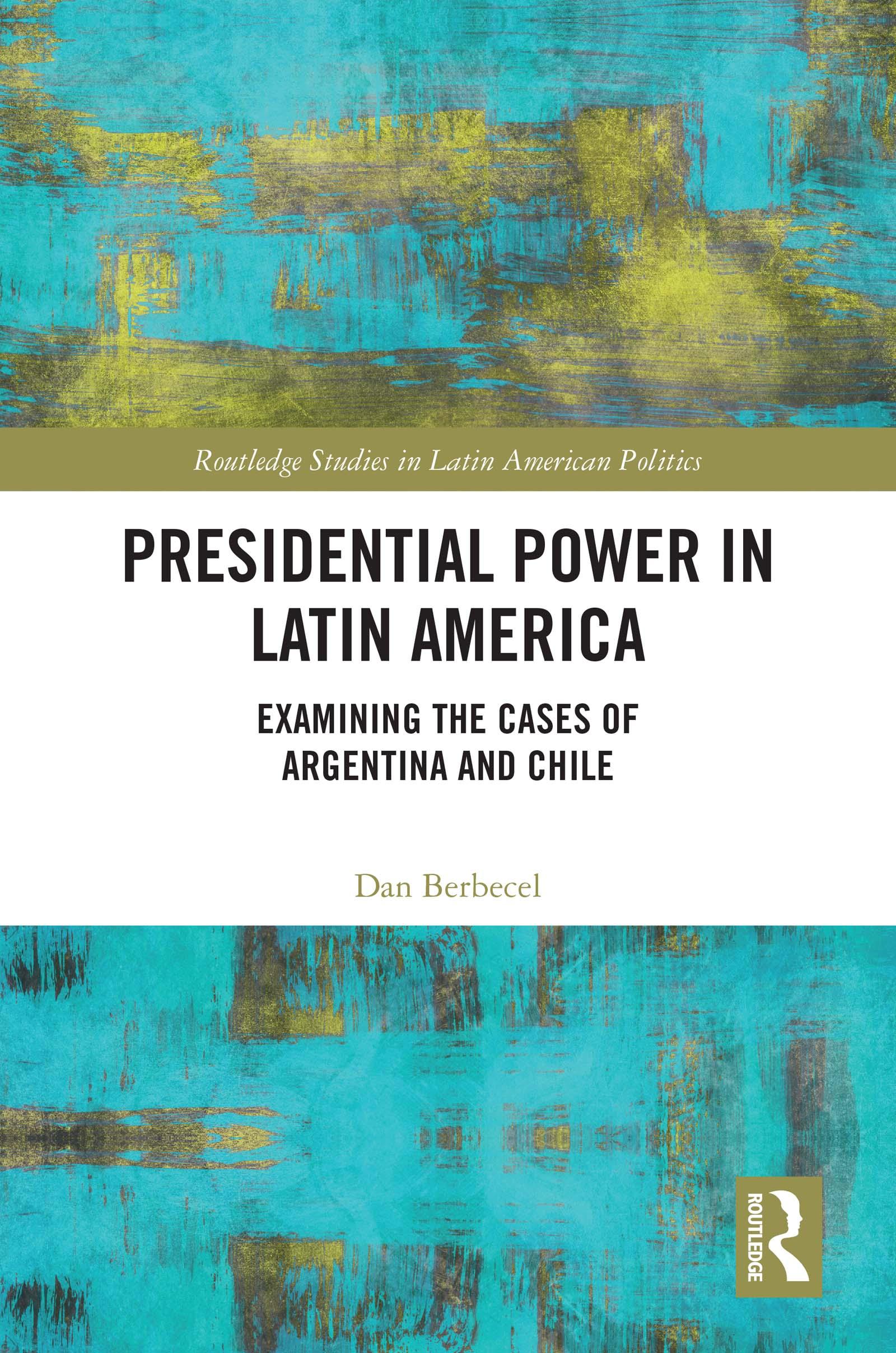
What explains variance in presidential power between countries? In Presidential Power in Latin America, Dan Berbecel provides a general, systematic theory for explaining presidential power in practice as opposed to presidential power in theory.
Using expert survey data from Varieties of Democracy (V-Dem) alongside interviews with high-level figures in politics, the judiciary, the public administration, NGOs, and academia in Argentina and Chile, Berbecel argues that constitutional presidential power (formal power) is a very poor predictor of presidential power in practice (informal power). Given the poor predictive value of formal rules, he provides an explanation why hyperpresidentialism emerges in some countries but not in others. Berbecel attributes the root causes of hyperpresidentialism to three independent variables (the strength of state institutions, the size of the president’s party in congress, and whether or not the country has a history of economic crises) which together determine how likely it is that a president will be able to concentrate power.
Presidential Power in Latin America will be of key interest to scholars and students of executive politics, Latin American politics, and more broadly, comparative politics.
Maksa helposti kortilla, Klarnalla, Apple Paylla tai Google Paylla. Etkö ole tyytyväinen? Sinulla on aina 14 päivän palautusoikeus. Lue lisää ehdoistamme. Jos sinulla on kysyttävää, lähetä meille sähköpostia osoitteeseen hello@memmo.org.
Memmo tekee opiskelusta helpompaa – missä päin maailmaa ikinä oletkin. Meillä yhdistät kurssikirjat ja fiksut opiskelutyökalut yhteen paikkaan: tiivistelmät, visat, podcastit ja muistikortit. Ja sitten Ted, opiskelukaverisi, joka vastaa kaikkeen, mitä ikinä mietitkin. Yli 50 000 opiskelijaa opiskelee jo täällä – rakennettu auttamaan sinua oppimaan nopeammin ja stressaamaan vähemmän.