
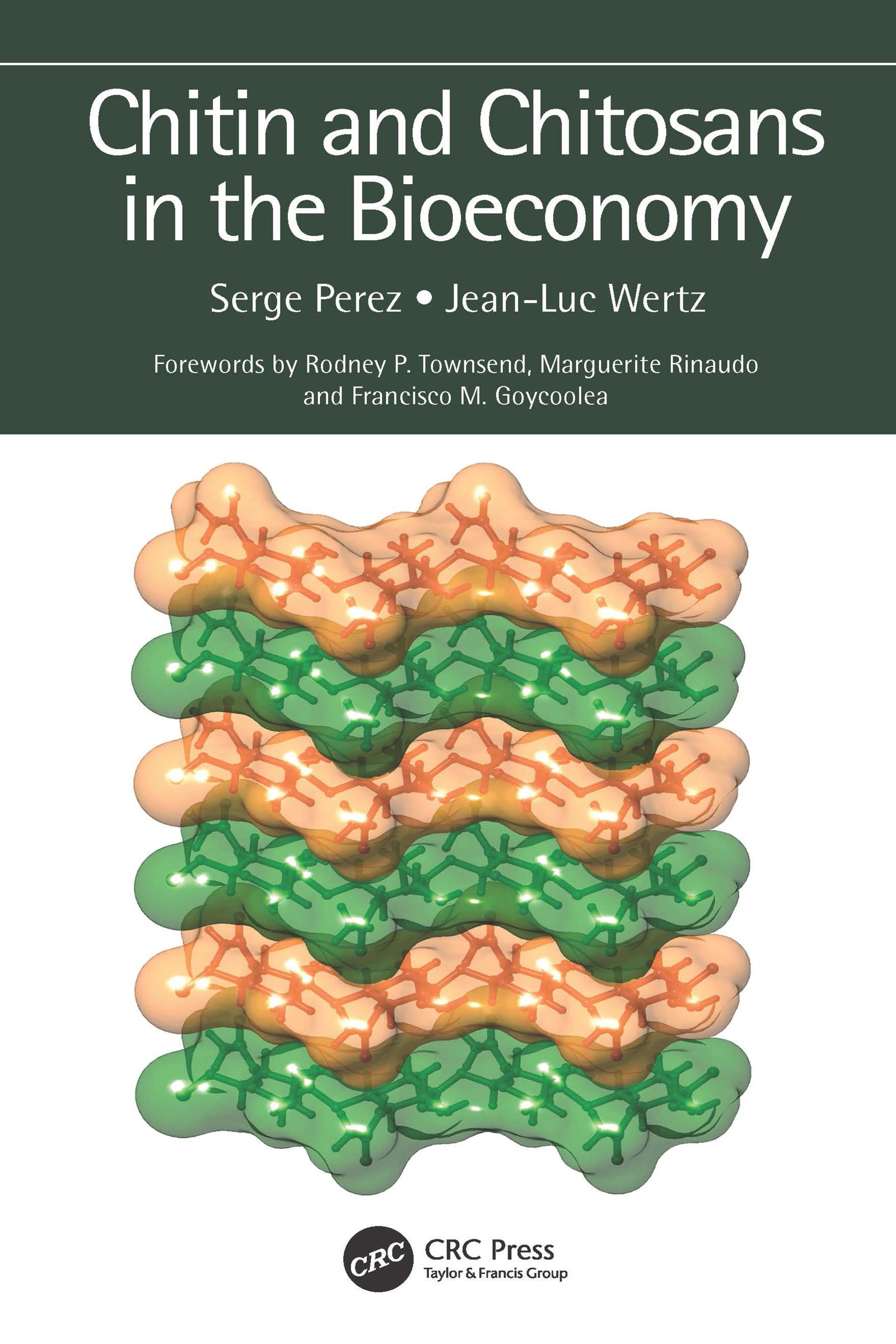
Chitin is the second most abundant natural polymer in the world after cellulose, mainly derived from the food waste of shrimp and crabs. Chitosan is the most important derivative of chitin. Thanks to their biodegradability, non-toxicity, biocompatibility, bioactivity, and versatile chemical and physical properties, chitin and chitosan derivatives are used in a wide variety of applications, including water treatment, cosmetics and toiletries, food and beverages, healthcare/medical, and agrochemicals. Chitin and Chitosans in the Bioeconomy covers all major aspects of chitin and chitosan, including structure, biosynthesis, biodegradation, properties of chitin and derivatives, applications, and market. It offers a special focus on the bioeconomy, which is the renewable segment of the circular economy.
- Describes the structure, biosynthesis, and biodegradation of chitin and chitosan
- Covers chitin- and chitosan-based products
- Details valorization of these materials
- Presents information on shell biorefineries
Chitin and Chitosans in the Bioeconomy serves as a reference for polymer scientists and engineers and is also accessible to economists and advanced students.
Maksa helposti kortilla, Klarnalla, Apple Paylla tai Google Paylla. Etkö ole tyytyväinen? Sinulla on aina 14 päivän palautusoikeus. Lue lisää ehdoistamme. Jos sinulla on kysyttävää, lähetä meille sähköpostia osoitteeseen hello@memmo.org.
Memmo tekee opiskelusta helpompaa – missä päin maailmaa ikinä oletkin. Meillä yhdistät kurssikirjat ja fiksut opiskelutyökalut yhteen paikkaan: tiivistelmät, visat, podcastit ja muistikortit. Ja sitten Ted, opiskelukaverisi, joka vastaa kaikkeen, mitä ikinä mietitkin. Yli 50 000 opiskelijaa opiskelee jo täällä – rakennettu auttamaan sinua oppimaan nopeammin ja stressaamaan vähemmän.