
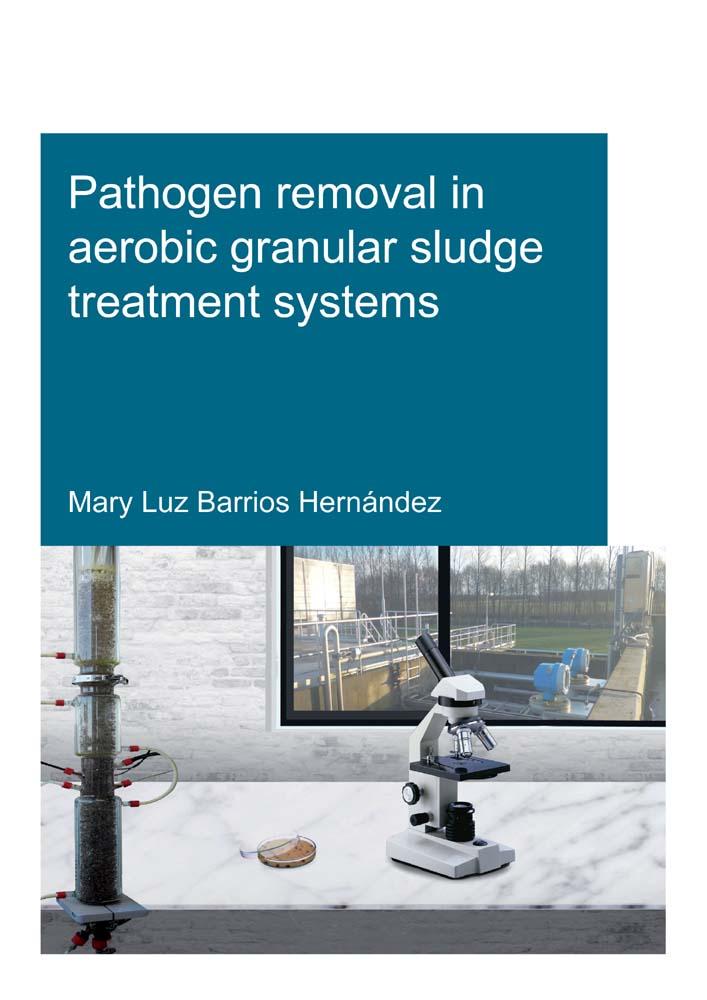
This book describes pathogen removal processes in aerobic granular sludge (AGS) wastewater treatment systems. Faecal indicators (E. coli, Enterococci, coliforms and bacteriophages) were tracked in full-scale AGS facilities and compared to parallel activated sludge (CAS) systems. AGS showed similar removals as the more complex CAS configurations. Removal mechanisms investigated in laboratory-scale reactors showed that the AGS morphology contributes to the removal processes. By tracking E. coli and MS2, it was observed that organisms not attached to the granules are predated by protozoa during aeration. 18S RNA gene analyses confirmed the occurrence of bacterivorous organisms (e.g., Epistylis, Vorticella, Rhogostoma) in the system. Particulate material in the feeding stimulated their development, and a protozoa bloom arose when co-treating with (synthetic) faecal sludge (4 % v/v). An overview of the diverse eukaryotic community in laboratory reactors and real-life applications is also provided. The microbial diversity of the influent was different compared to AGS and CAS sludge samples. However, no clear differences were found between them on species level. This study contributes to a better understanding of the mechanisms behind pathogen removals in AGS systems.
Maksa helposti kortilla, Klarnalla, Apple Paylla tai Google Paylla. Etkö ole tyytyväinen? Sinulla on aina 14 päivän palautusoikeus. Lue lisää ehdoistamme. Jos sinulla on kysyttävää, lähetä meille sähköpostia osoitteeseen hello@memmo.org.
Memmo tekee opiskelusta helpompaa – missä päin maailmaa ikinä oletkin. Meillä yhdistät kurssikirjat ja fiksut opiskelutyökalut yhteen paikkaan: tiivistelmät, visat, podcastit ja muistikortit. Ja sitten Ted, opiskelukaverisi, joka vastaa kaikkeen, mitä ikinä mietitkin. Yli 50 000 opiskelijaa opiskelee jo täällä – rakennettu auttamaan sinua oppimaan nopeammin ja stressaamaan vähemmän.