
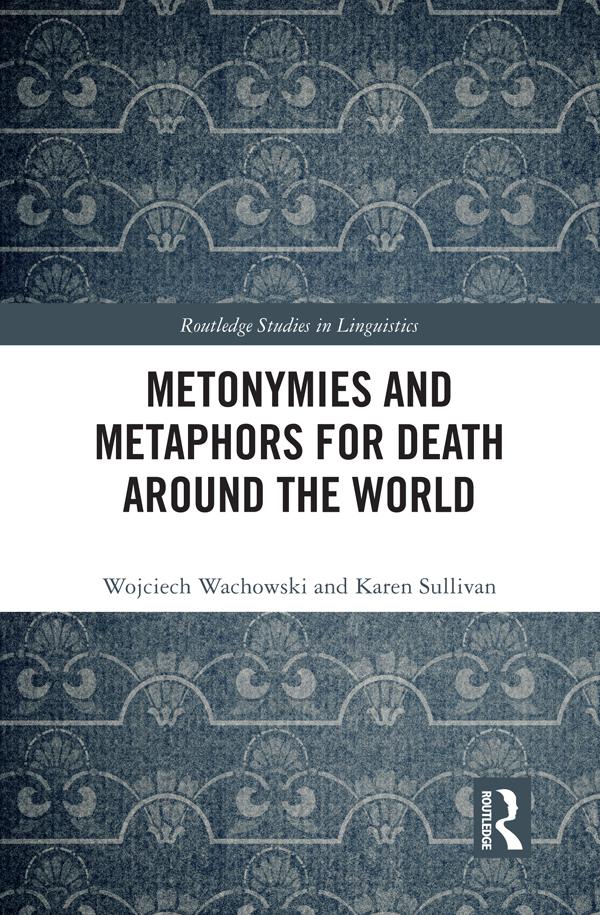
This book reflects on the ways in which metonymy and metaphor are used conceptually and linguistically to mitigate the more difficult dimensions of death and dying, setting out a unique line of research within Conceptual Metaphor Theory.
The volume argues that metonymic and metaphoric descriptions of death and dying reflect taboos, concealment, and other considerations not found in figurative descriptions of life, producing distinct forms of euphemism, frames, and mental spaces particular to conceptualizations of death.
The first part takes a closer look at metonymy to illuminate the ways in which it allows a person to zoom in on death’s more inoffensive dimensions or zoom out from its more troubling aspects. The second part focuses on the more palatable concepts which metaphorically structure and help to better understand death.
A wide range of classical and modern examples from European, Asian, Australian, and African languages and cultures showcase points of overlap and divergence.
Opening up new lines of inquiry into research on death and dying and offering a linguistically focused complement to anthropological and religious studies on the topic, this book will be of interest to scholars in cognitive linguistics, sociolinguistics, cross-cultural communication, and cultural studies.
Maksa helposti kortilla, Klarnalla, Apple Paylla tai Google Paylla. Etkö ole tyytyväinen? Sinulla on aina 14 päivän palautusoikeus. Lue lisää ehdoistamme. Jos sinulla on kysyttävää, lähetä meille sähköpostia osoitteeseen hello@memmo.org.
Memmo tekee opiskelusta helpompaa – missä päin maailmaa ikinä oletkin. Meillä yhdistät kurssikirjat ja fiksut opiskelutyökalut yhteen paikkaan: tiivistelmät, visat, podcastit ja muistikortit. Ja sitten Ted, opiskelukaverisi, joka vastaa kaikkeen, mitä ikinä mietitkin. Yli 50 000 opiskelijaa opiskelee jo täällä – rakennettu auttamaan sinua oppimaan nopeammin ja stressaamaan vähemmän.