
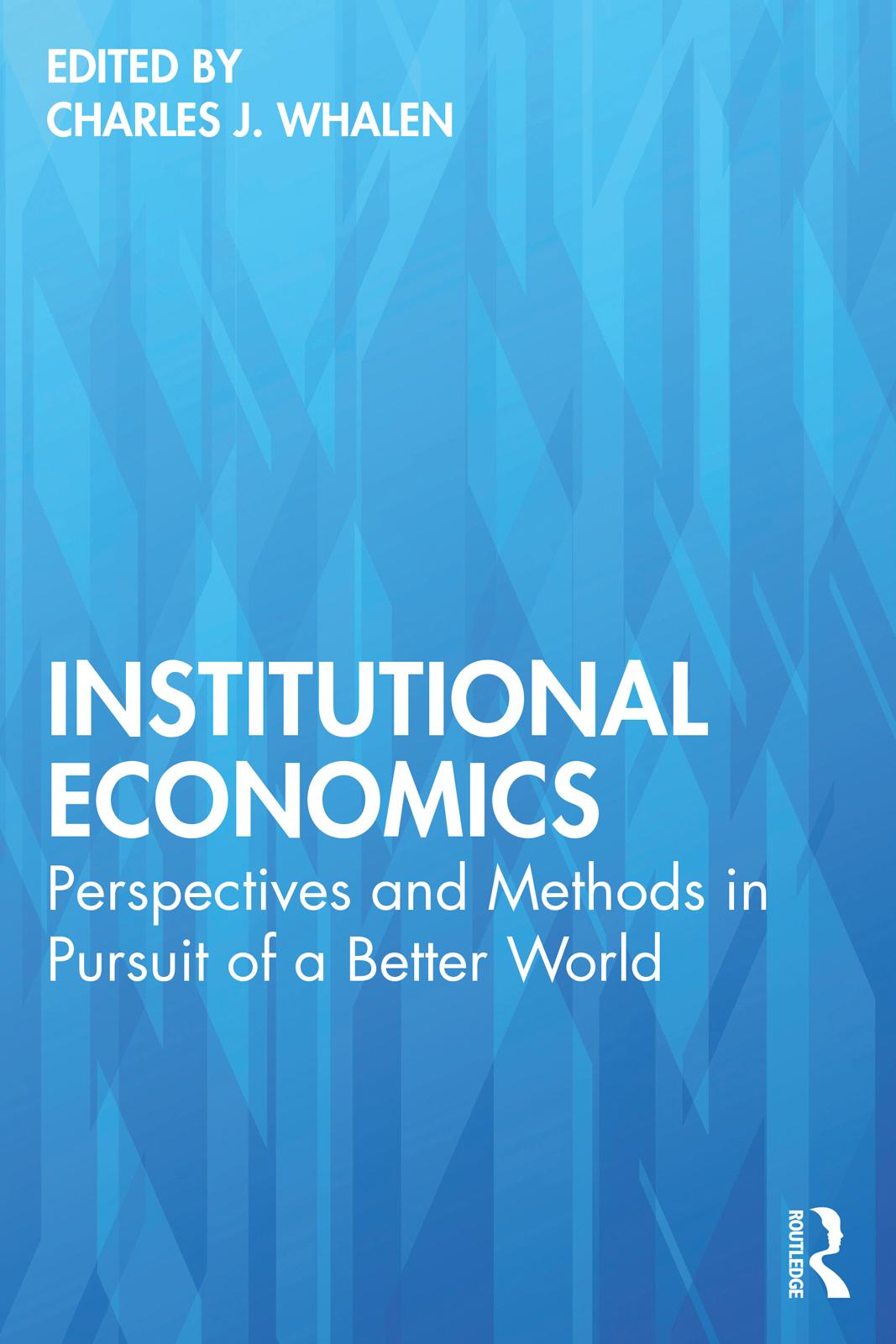
Institutional economics is a sociocultural discipline and policy science which draws on the idea that economies are best understood through an appreciation of history, real-world institutions, and socioeconomic interrelations. This book brings together leading institutionalists to examine the tradition’s most essential perspectives and methods.
The contributors to the book draw on a broad range of institutional thought from the classic work of Thorstein Veblen, John R. Commons, and Karl Polanyi, to the newer viewpoints of post-Keynesian institutionalism, feminist institutionalism, and environmental institutionalism. Methods range from frameworks used to analyze public policy and institutional change, to modes of analysis including myth busting, historically grounded narratives, and computer-based simulations. Each chapter surveys the origins, development, key features, applications, and frontiers of a particular viewpoint, framework, or mode of analysis. Due consideration is given to both strengths and weaknesses; and woven into the chapters is attention to core institutionalist concepts, including technology, institutions, culture, and complexity.
The book provides economists with promising starting points for new research, students with contributions refreshingly in touch with the real world, and policymakers and social scientists with compelling reasons for engaging further with the institutionalist tradition.
Maksa helposti kortilla, Klarnalla, Apple Paylla tai Google Paylla. Etkö ole tyytyväinen? Sinulla on aina 14 päivän palautusoikeus. Lue lisää ehdoistamme. Jos sinulla on kysyttävää, lähetä meille sähköpostia osoitteeseen hello@memmo.org.
Memmo tekee opiskelusta helpompaa – missä päin maailmaa ikinä oletkin. Meillä yhdistät kurssikirjat ja fiksut opiskelutyökalut yhteen paikkaan: tiivistelmät, visat, podcastit ja muistikortit. Ja sitten Ted, opiskelukaverisi, joka vastaa kaikkeen, mitä ikinä mietitkin. Yli 50 000 opiskelijaa opiskelee jo täällä – rakennettu auttamaan sinua oppimaan nopeammin ja stressaamaan vähemmän.