
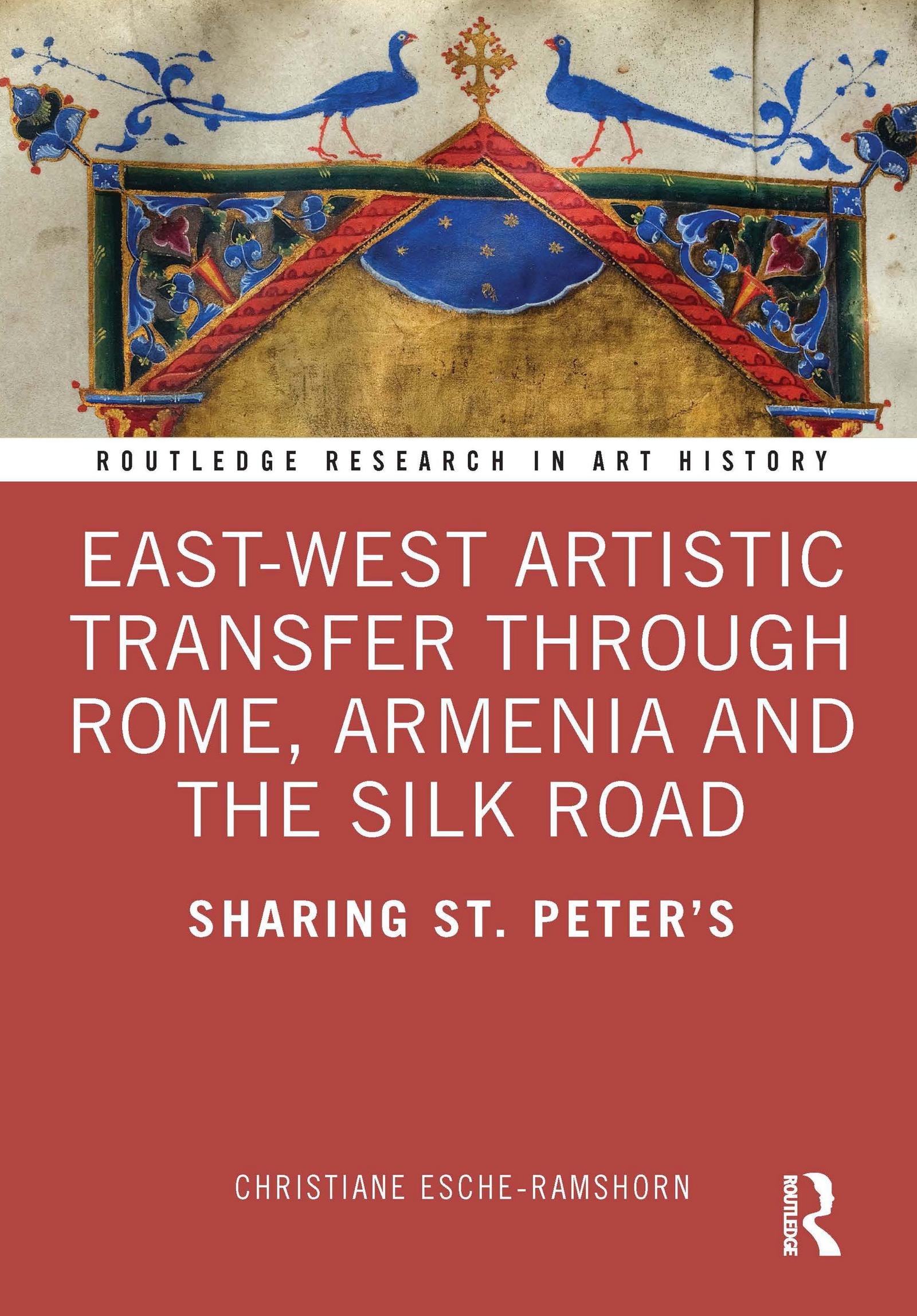
This book examines the arts and artistic exchanges at the ‘Christian Oriental’ fringes of Europe, especially Armenia.
It starts with the architecture, history and inhabitants of the lesser known pilgrim compounds at the Vatican in the Middle Ages and Renaissance, of Hungary, Germany, but namely those of the most ancient of Churches, the Churches of the Christian Orient Ethiopia and Armenia. Without taking an Eurocentric view, this book explores the role of missionaries, merchants, artists (for example Momik, Giotto, Minas, Domenico Veneziano, Duerer), and artefacts (such as fabrics, inscriptions and symbols) travelling into both directions along the western stretch of the Silk Road between Ayas (Cilicia), ancient Armenia and North-western Iran. This area was truly global before globalization, was a site of intense cultural exchanges and East-West cultural transmissions. This book opens a new research window into the culturally mixed landscapes in the Christian Orient, the Middle East and North-eastern Africa by taking into consideration their many indigenous and foreign artistic components and embeds Armenian arts into today’s wider art historical discourse.
This book will be of interest to scholars in art history, architectural history, missions, trade, Middle Eastern arts and the arts of the Southern Caucasus.
Maksa helposti kortilla, Klarnalla, Apple Paylla tai Google Paylla. Etkö ole tyytyväinen? Sinulla on aina 14 päivän palautusoikeus. Lue lisää ehdoistamme. Jos sinulla on kysyttävää, lähetä meille sähköpostia osoitteeseen hello@memmo.org.
Memmo tekee opiskelusta helpompaa – missä päin maailmaa ikinä oletkin. Meillä yhdistät kurssikirjat ja fiksut opiskelutyökalut yhteen paikkaan: tiivistelmät, visat, podcastit ja muistikortit. Ja sitten Ted, opiskelukaverisi, joka vastaa kaikkeen, mitä ikinä mietitkin. Yli 50 000 opiskelijaa opiskelee jo täällä – rakennettu auttamaan sinua oppimaan nopeammin ja stressaamaan vähemmän.