
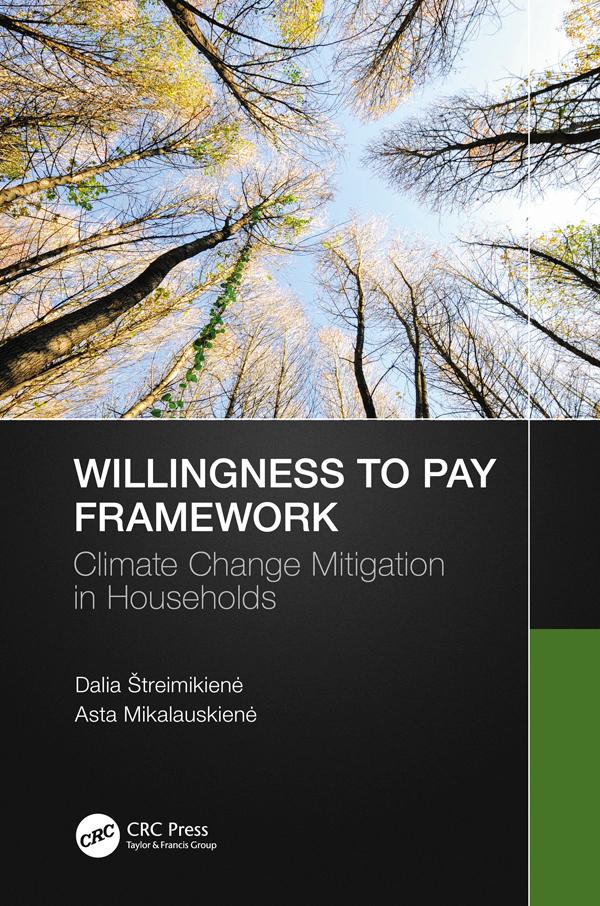
This book aims to develop a framework for the assessment of population ‘preferences in climate change mitigation policies by applying a Willingness to Pay (WTP) approach and presents the results from several case studies in Lithuania on renewable energy generation and renovation in different households. These analyses of climate change mitigation policies and measures, based on the assessment of their effectiveness, provide recommendations for developing innovative measures in other countries. Since public preferences are variable, climate change mitigation policies can change these preferences and allow to form new ones.
Features:
- Analyses social benefits of climate change mitigation measures and their integration methods based on assessment of public preferences.
- Presents several practical case studies on energy needs where the Willingness to Pay framework was applied.
- Discusses climate change mitigation barriers in energy sector and the effectiveness of climate change mitigation policies to overcome them.
- Provides a novel approach for climate change mitigation policies development in households.
- Includes useful information for evaluating and planning policies related to renewable energy investment.
This book is a useful reference for those in the academic, research, and business communities, policy makers, graduate students, and professionals involved with climate change mitigation projects.
Maksa helposti kortilla, Klarnalla, Apple Paylla tai Google Paylla. Etkö ole tyytyväinen? Sinulla on aina 14 päivän palautusoikeus. Lue lisää ehdoistamme. Jos sinulla on kysyttävää, lähetä meille sähköpostia osoitteeseen hello@memmo.org.
Memmo tekee opiskelusta helpompaa – missä päin maailmaa ikinä oletkin. Meillä yhdistät kurssikirjat ja fiksut opiskelutyökalut yhteen paikkaan: tiivistelmät, visat, podcastit ja muistikortit. Ja sitten Ted, opiskelukaverisi, joka vastaa kaikkeen, mitä ikinä mietitkin. Yli 50 000 opiskelijaa opiskelee jo täällä – rakennettu auttamaan sinua oppimaan nopeammin ja stressaamaan vähemmän.