
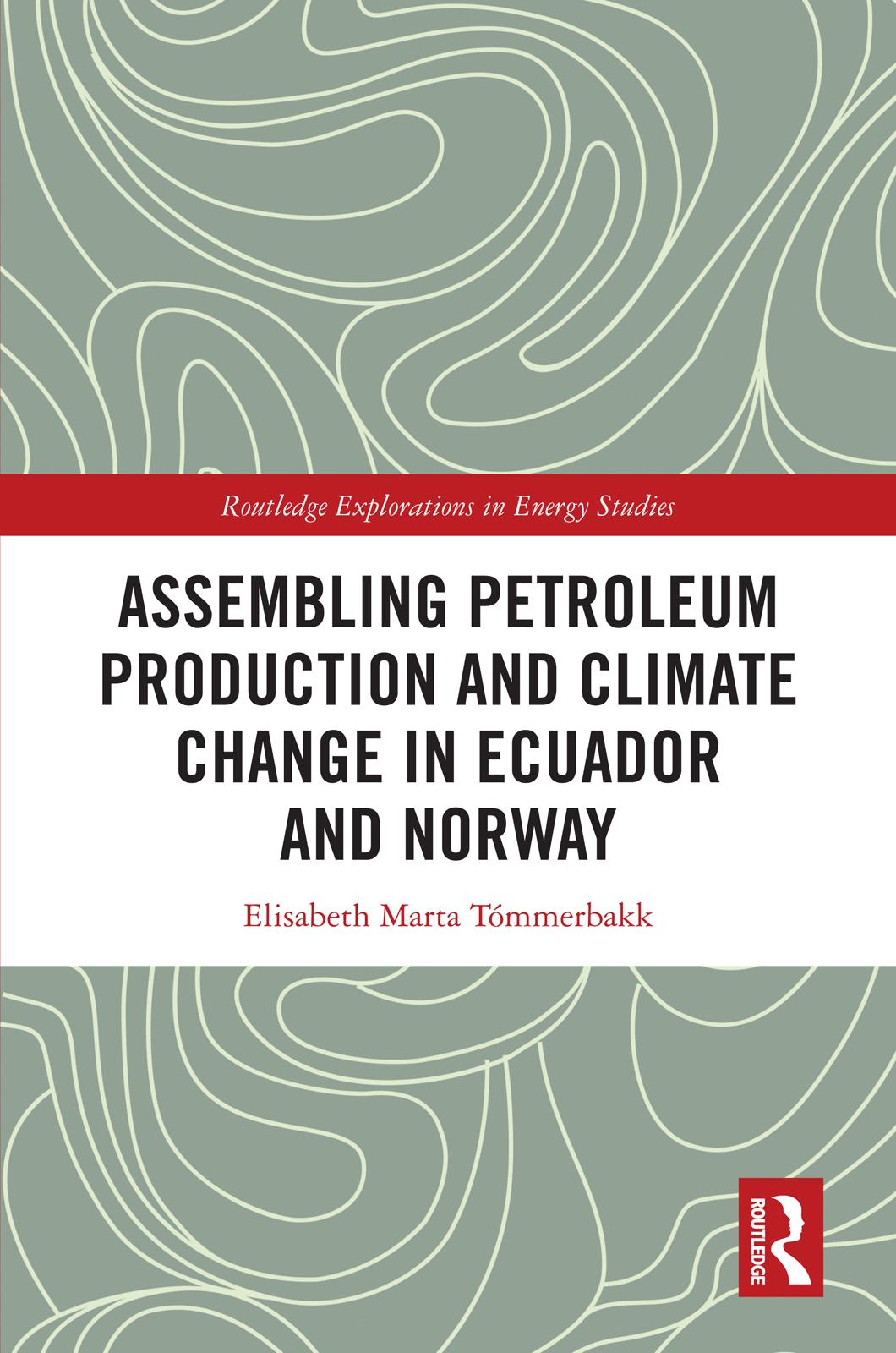
This book addresses some of the controversies and uncertainties associated with reducing the extensive exploitation of fossil fuels due to their role in global warming.
Elisabeth Marta Tómmerbakk explores why a transition towards a post-carbon society is so difficult to accomplish by examining how the relationship between petroleum production and climate change is politically framed and negotiated in contested cases. This question is approached through a process-oriented comparative case study of Lofoten, located in the Norwegian Sea above the Arctic Circle, and Yasuní-ITT (Ishpingo, Tambococha, and Tiputini) located in the Ecuadorian Amazon: regions that both belong to oil-exporting countries with highly oil-dependent economies. Tómmerbakk draws on rich empirical data that includes qualitative interviews with subjects in both countries and applies an Actor-Network Theory framework to show that oil and climate are intricately entangled in knowledge and policy practices. Overall, Assembling Petroleum Production and Climate Change in Ecuador and Norway provides an in-depth examination of how climate science and petroleum extraction are negotiated, adapted, assembled, and coordinated with other national policies and political aims.
This book will be of great interest to students and scholars of petroleum production, climate change, environmental policy, and environmental sociology.
Maksa helposti kortilla, Klarnalla, Apple Paylla tai Google Paylla. Etkö ole tyytyväinen? Sinulla on aina 14 päivän palautusoikeus. Lue lisää ehdoistamme. Jos sinulla on kysyttävää, lähetä meille sähköpostia osoitteeseen hello@memmo.org.
Memmo tekee opiskelusta helpompaa – missä päin maailmaa ikinä oletkin. Meillä yhdistät kurssikirjat ja fiksut opiskelutyökalut yhteen paikkaan: tiivistelmät, visat, podcastit ja muistikortit. Ja sitten Ted, opiskelukaverisi, joka vastaa kaikkeen, mitä ikinä mietitkin. Yli 50 000 opiskelijaa opiskelee jo täällä – rakennettu auttamaan sinua oppimaan nopeammin ja stressaamaan vähemmän.