
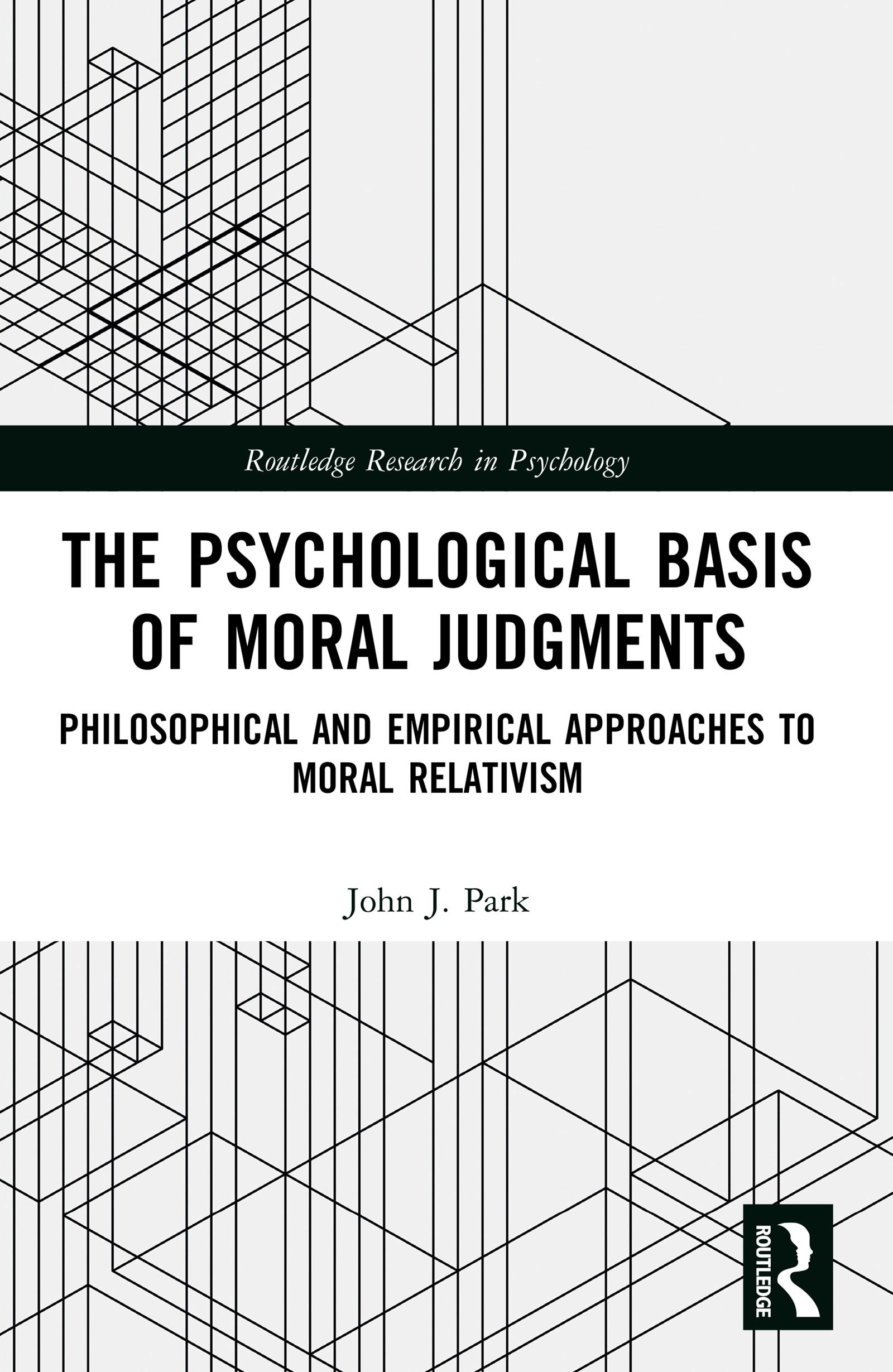
This volume examines the psychological basis of moral judgments and asks what theories of concepts apply to moral concepts. By combining philosophical reasoning and empirical insights from the fields of moral psychology, cognitive science, evolutionary psychology, and neuroscience, it considers what mental states not only influence, but also constitute our moral concepts and judgments. On this basis, Park proposes a novel pluralistic theory of moral concepts which includes three different cognitive structures and emotions. Thus, our moral judgments are shown to be a hybrid that express both cognitive and conative states.
In part through analysis of new empirical data on moral semantic intuitions, gathered via cross-cultural experimental research, Park reveals that the referents of individuals’ moral judgments and concepts vary across time, contexts, and groups. On this basis, he contends for moral relativism, where moral judgments cannot be universally true across time and location but only relative to groups.
This powerfully argued text will be of interest to researchers, academics, and educators with an interest in cognitive science, moral theory, philosophy of psychology, and moral psychology more broadly. Those interested in ethics, applied social psychology, and moral development will also benefit from the volume.
Maksa helposti kortilla, Klarnalla, Apple Paylla tai Google Paylla. Etkö ole tyytyväinen? Sinulla on aina 14 päivän palautusoikeus. Lue lisää ehdoistamme. Jos sinulla on kysyttävää, lähetä meille sähköpostia osoitteeseen hello@memmo.org.
Memmo tekee opiskelusta helpompaa – missä päin maailmaa ikinä oletkin. Meillä yhdistät kurssikirjat ja fiksut opiskelutyökalut yhteen paikkaan: tiivistelmät, visat, podcastit ja muistikortit. Ja sitten Ted, opiskelukaverisi, joka vastaa kaikkeen, mitä ikinä mietitkin. Yli 50 000 opiskelijaa opiskelee jo täällä – rakennettu auttamaan sinua oppimaan nopeammin ja stressaamaan vähemmän.