
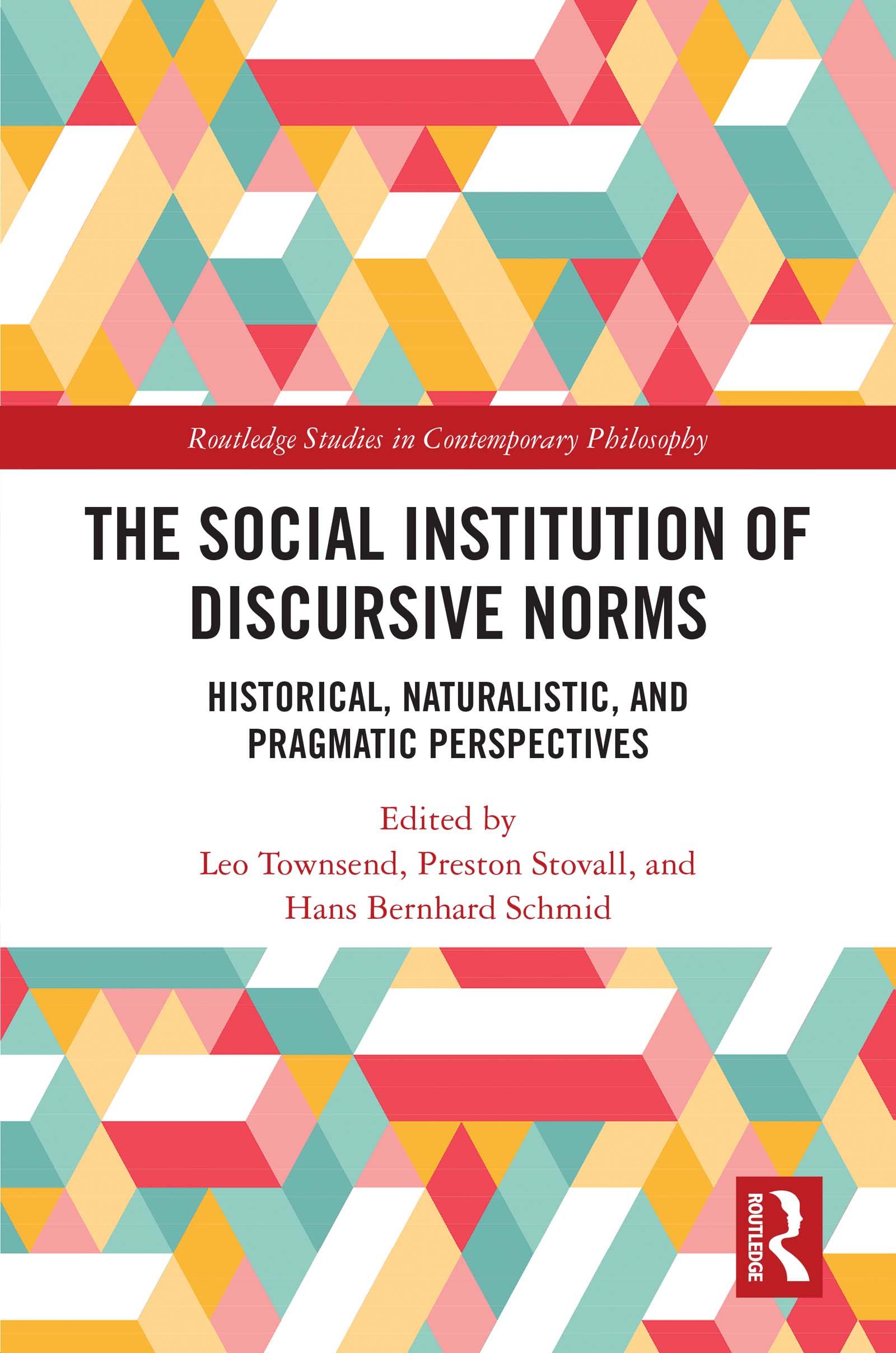
The essays in this collection explore the idea that discursive norms—the norms governing our thought and talk—are profoundly social. Not only do these norms govern and structure our social interactions, but they are sustained by a variety of social and institutional structures.
The chapters are divided into three thematic sections. The first offers historical perspectives on discursive norms, including a chapter by Robert Brandom on the way Hegel transformed Kant’s normativist approach to representation by adding both a social and a historicist dimension to it. Section II features four chapters that examine the sociality of normativity from within a broadly naturalistic framework. The third and final section focuses on the social dimension of linguistic phenomena such as online speech acts, oppressive speech, and assertions.
The Social Institution of Discursive Norms will be of interest to scholars and advanced students working in philosophy of language, philosophy of mind, and social philosophy.
Maksa helposti kortilla, Klarnalla, Apple Paylla tai Google Paylla. Etkö ole tyytyväinen? Sinulla on aina 14 päivän palautusoikeus. Lue lisää ehdoistamme. Jos sinulla on kysyttävää, lähetä meille sähköpostia osoitteeseen hello@memmo.org.
Memmo tekee opiskelusta helpompaa – missä päin maailmaa ikinä oletkin. Meillä yhdistät kurssikirjat ja fiksut opiskelutyökalut yhteen paikkaan: tiivistelmät, visat, podcastit ja muistikortit. Ja sitten Ted, opiskelukaverisi, joka vastaa kaikkeen, mitä ikinä mietitkin. Yli 50 000 opiskelijaa opiskelee jo täällä – rakennettu auttamaan sinua oppimaan nopeammin ja stressaamaan vähemmän.