
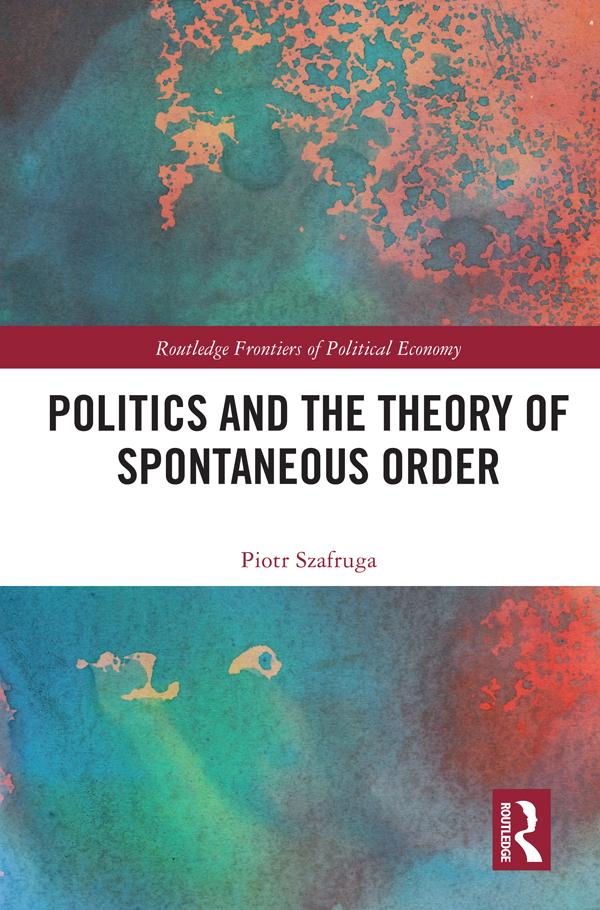
The theory of spontaneous order conceptualises and explains a number of institutional and social phenomena that are not an intended effect of either individual decisions or a collective consensus but an unplanned outcome of interactions between people pursuing their own aims. Drawing on these insights, this book demonstrates the utility of the theory of spontaneous order in explaining many phenomena in political economy and political science.
The book opens with a discussion of the history and development of the theory of spontaneous order, particularly in economics and the Austrian School. The epistemological premises of the theory are then explored including the formulation of the central idea of social individualism. Demonstrating the potential applications of the theory of spontaneous order to politics, core ideas are examined including democracy, fragile states and the concept of the veil of ignorance. Finally, the limitations and constraints of the theory of spontaneous order are also reviewed and discussed.
This book marks a valuable contribution to the literature on political economy, political science, public choice and political philosophy.
Maksa helposti kortilla, Klarnalla, Apple Paylla tai Google Paylla. Etkö ole tyytyväinen? Sinulla on aina 14 päivän palautusoikeus. Lue lisää ehdoistamme. Jos sinulla on kysyttävää, lähetä meille sähköpostia osoitteeseen hello@memmo.org.
Memmo tekee opiskelusta helpompaa – missä päin maailmaa ikinä oletkin. Meillä yhdistät kurssikirjat ja fiksut opiskelutyökalut yhteen paikkaan: tiivistelmät, visat, podcastit ja muistikortit. Ja sitten Ted, opiskelukaverisi, joka vastaa kaikkeen, mitä ikinä mietitkin. Yli 50 000 opiskelijaa opiskelee jo täällä – rakennettu auttamaan sinua oppimaan nopeammin ja stressaamaan vähemmän.