
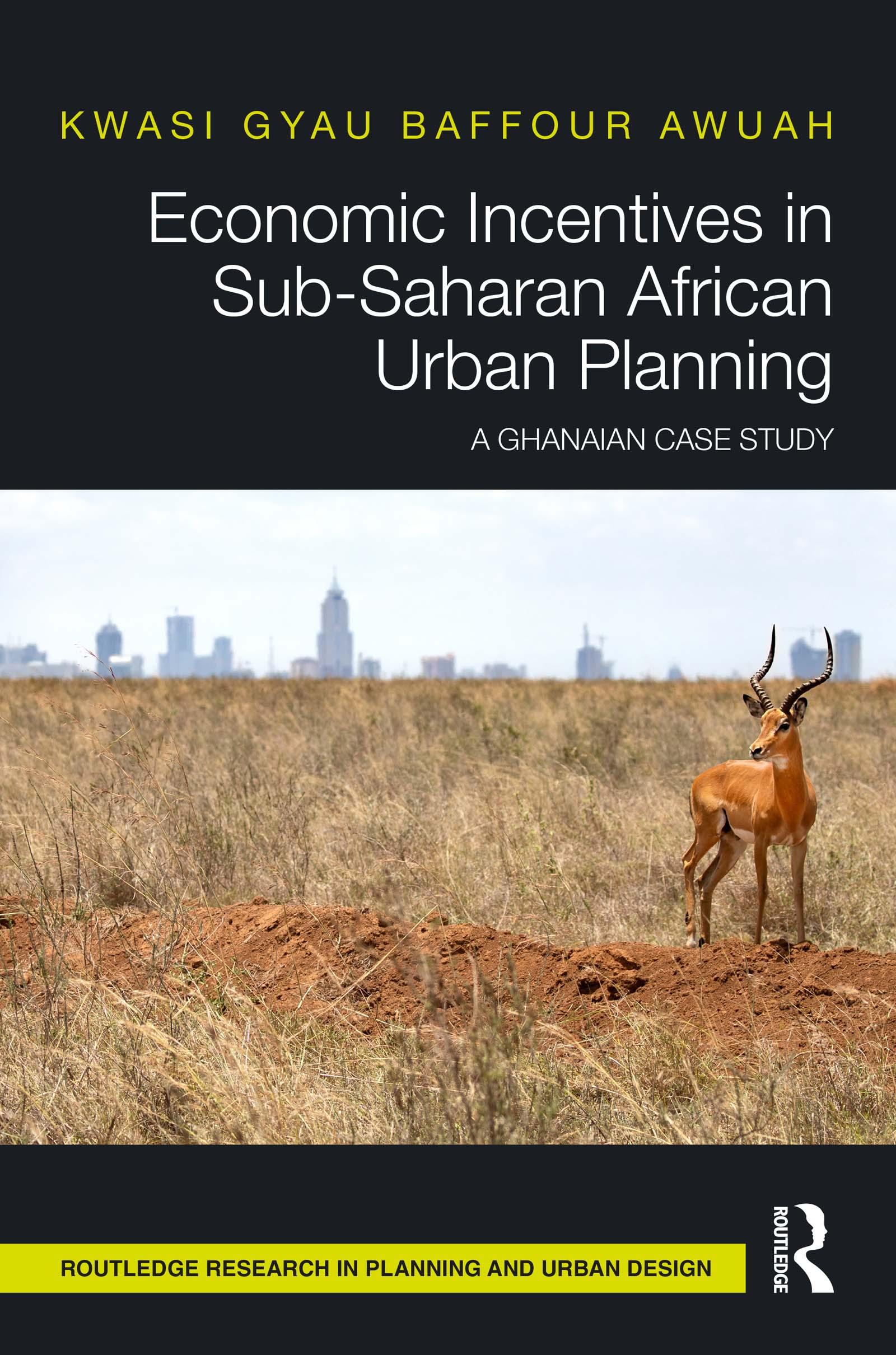
This book explores incentives capable of enhancing the effectiveness of urban planning systems in Sub-Saharan Africa using economic theory as a framework. It argues that urban planning is fundamental to the achievement of sustainable and resilient cities, but against the backdrop of rising levels of urbanisation and growth, poverty, informal development, and climate change, such systems are failing to be promoted and successfully maintained in the region.
Across ten chapters, it analyses the connection between urban planning and socio-economic development, indicators of effective urban planning systems, and the role and influence of incentives with real-world evidence. It develops quantitative models to estimate the costs and benefits of urban planning systems, focussing on the developing world where organised data is less accessible. Using Ghana as a case study, it demonstrates a step-by-step approach on how to implement the quantitative models discussed.
Economic Incentives in Sub-Saharan African Urban Planning will be useful reading for researchers, policy-makers, development agencies, and students in urban planning, sustainable development, and economics.
Maksa helposti kortilla, Klarnalla, Apple Paylla tai Google Paylla. Etkö ole tyytyväinen? Sinulla on aina 14 päivän palautusoikeus. Lue lisää ehdoistamme. Jos sinulla on kysyttävää, lähetä meille sähköpostia osoitteeseen hello@memmo.org.
Memmo tekee opiskelusta helpompaa – missä päin maailmaa ikinä oletkin. Meillä yhdistät kurssikirjat ja fiksut opiskelutyökalut yhteen paikkaan: tiivistelmät, visat, podcastit ja muistikortit. Ja sitten Ted, opiskelukaverisi, joka vastaa kaikkeen, mitä ikinä mietitkin. Yli 50 000 opiskelijaa opiskelee jo täällä – rakennettu auttamaan sinua oppimaan nopeammin ja stressaamaan vähemmän.