
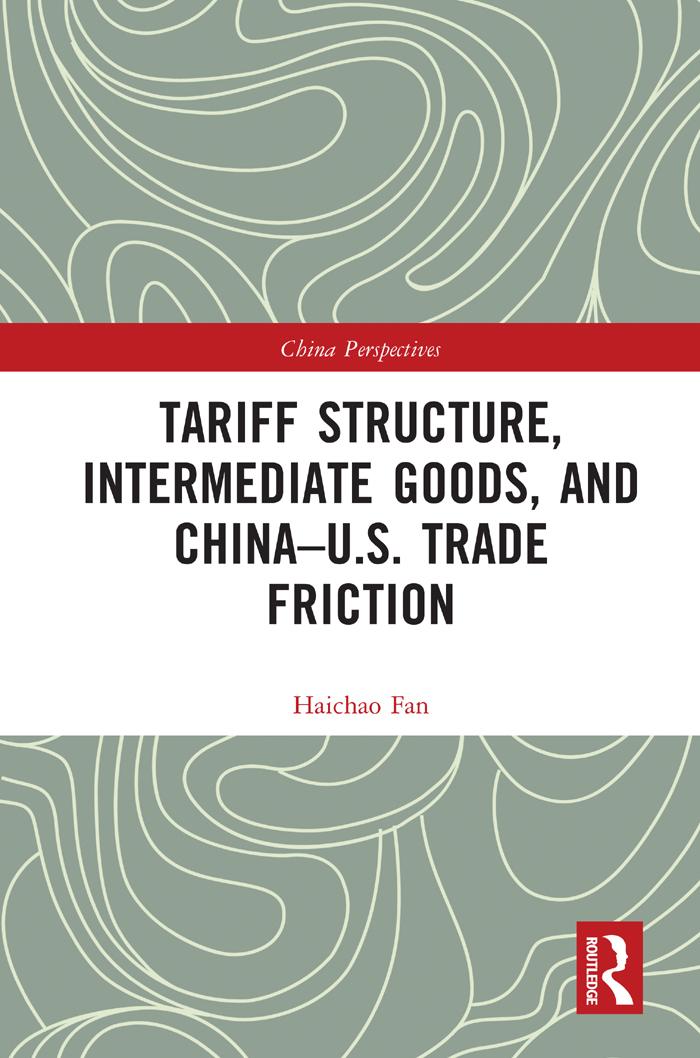
Focusing on the interconnection of tariff structure, international trade and welfare evaluation, the book investigates the characteristics of tariff structures of China and the U.S. in recent years and measures the impact of the Sino–U.S. trade friction that started in 2018. The first part of the book discusses levels and evolution trends of tariff systems of China and the U.S. from 2000 to 2014 and makes a comparison between the two countries' tariff structures. The second part centers on the Sino–U.S. trade friction in 2018, analyzing its development, overall impact on welfare, and relevant impact mechanisms. The author draws on the quantitative analysis method currently prevailing in the field of international trade, taking global value chains, intermediate goods, and variable markup into consideration. In contrast to the research conclusion applying standard trade theory, the result indicates that either unilateral imposition of additional tariffs or bilateral tariff friction will give rise to the deteriorated welfare level of both countries. The book will appeal to academics and policy makers interested in international trade, China–U.S. relation and the trade friction.
Maksa helposti kortilla, Klarnalla, Apple Paylla tai Google Paylla. Etkö ole tyytyväinen? Sinulla on aina 14 päivän palautusoikeus. Lue lisää ehdoistamme. Jos sinulla on kysyttävää, lähetä meille sähköpostia osoitteeseen hello@memmo.org.
Memmo tekee opiskelusta helpompaa – missä päin maailmaa ikinä oletkin. Meillä yhdistät kurssikirjat ja fiksut opiskelutyökalut yhteen paikkaan: tiivistelmät, visat, podcastit ja muistikortit. Ja sitten Ted, opiskelukaverisi, joka vastaa kaikkeen, mitä ikinä mietitkin. Yli 50 000 opiskelijaa opiskelee jo täällä – rakennettu auttamaan sinua oppimaan nopeammin ja stressaamaan vähemmän.