
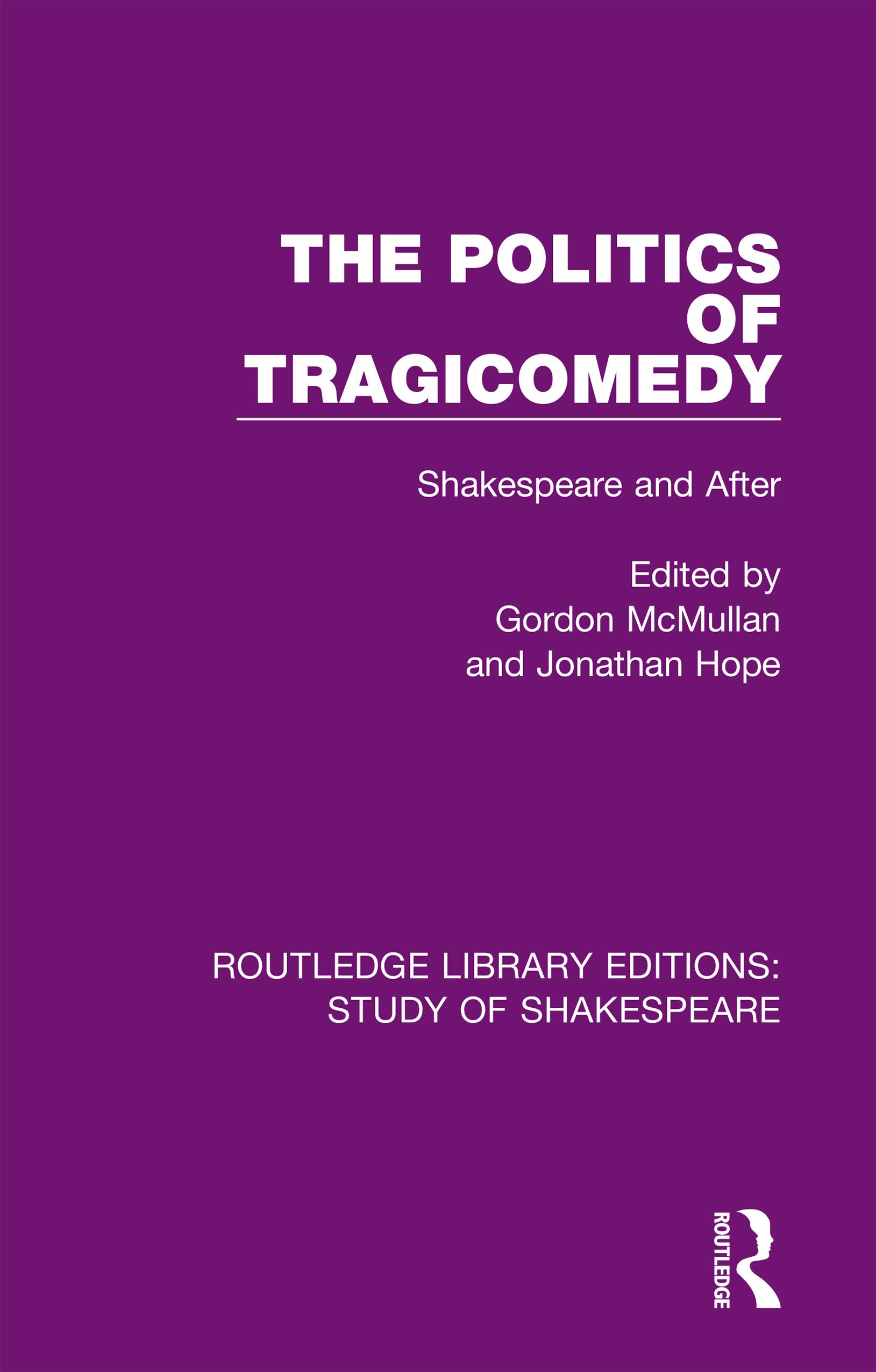
The Politics of Tragicomedy: Shakespeare and After offers a series of sophisticated and powerful readings of tragicomedy from Shakespeare’s late plays to the drama of the Interregnum. Rejecting both the customary chronological span bounded by the years 1603-42 (which presumes dramatic activity stopped with the closing of the theatres) and the negative critical attitudes that have dogged the study of tragicomedy, the essays in this collection examine a series of issues central to the possibility of a politics for the genre.
Individual essays offer important contributions to continuing debates over the role of the drama in the years preceding the Civil War, the colonial contexts of The Tempest, the political character of Jonson’s late plays, and the agency of women as public and theatre actors. The introduction presents a strong challenge to previous definitions of tragicomedy in the English context, and the collection as a whole is characterized by its rejection of absolutist strategies for reading tragicomedy.
This collection will prove essential reading for all with an interest in the politics of Renaissance drama; for specialists in the work of Shakespeare, Fletcher, and Jonson; for those interested in genre and dramatic forms; and for historians of early Stuart England.
Maksa helposti kortilla, Klarnalla, Apple Paylla tai Google Paylla. Etkö ole tyytyväinen? Sinulla on aina 14 päivän palautusoikeus. Lue lisää ehdoistamme. Jos sinulla on kysyttävää, lähetä meille sähköpostia osoitteeseen hello@memmo.org.
Memmo tekee opiskelusta helpompaa – missä päin maailmaa ikinä oletkin. Meillä yhdistät kurssikirjat ja fiksut opiskelutyökalut yhteen paikkaan: tiivistelmät, visat, podcastit ja muistikortit. Ja sitten Ted, opiskelukaverisi, joka vastaa kaikkeen, mitä ikinä mietitkin. Yli 50 000 opiskelijaa opiskelee jo täällä – rakennettu auttamaan sinua oppimaan nopeammin ja stressaamaan vähemmän.