
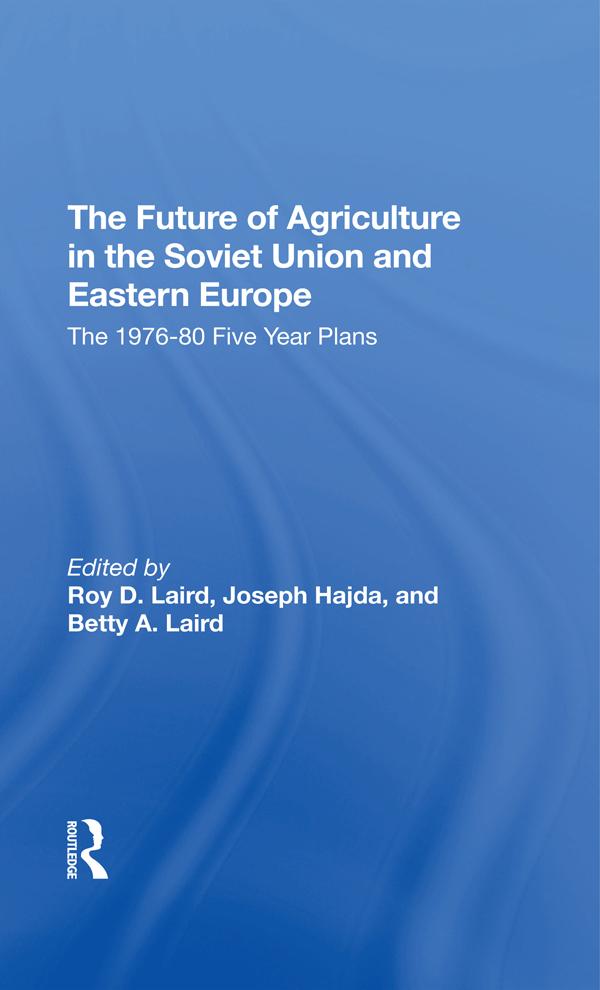
In the 1970s Eastern Europe and the Soviet Union have changed from being net grain exporters to major grain importers. Clearly, unfavorable weather has played a key role in this dramatic reversal. However, as several of the authors of this book argue, bad policies have played a key role. In the authors’ analyses of the new five-year plans, a serious question is raised as to whether the nations involved can meet their ambitious goals. Indeed, a strong case is made that the U.S.S.R. will not only continue to be an importer of grains, but that it will increase such imports over the years. Although the CMEA nations have made increases in food output in the last two decades, a point of diminishing returns seems to have been reached. Future demand for food imports may have an enormous impact on international affairs. Even if the nations involved were to collectively meet their ambitious production plans, which the authors doubt, there is no possibility that the area will be able to make any significant contribution to mounting world food demand in the foreseeable future. This fact alone is of great significance in a world facing a mounting food crisis.
Maksa helposti kortilla, Klarnalla, Apple Paylla tai Google Paylla. Etkö ole tyytyväinen? Sinulla on aina 14 päivän palautusoikeus. Lue lisää ehdoistamme. Jos sinulla on kysyttävää, lähetä meille sähköpostia osoitteeseen hello@memmo.org.
Memmo tekee opiskelusta helpompaa – missä päin maailmaa ikinä oletkin. Meillä yhdistät kurssikirjat ja fiksut opiskelutyökalut yhteen paikkaan: tiivistelmät, visat, podcastit ja muistikortit. Ja sitten Ted, opiskelukaverisi, joka vastaa kaikkeen, mitä ikinä mietitkin. Yli 50 000 opiskelijaa opiskelee jo täällä – rakennettu auttamaan sinua oppimaan nopeammin ja stressaamaan vähemmän.
Saatat pitää myös näistä
Osta kirja0