
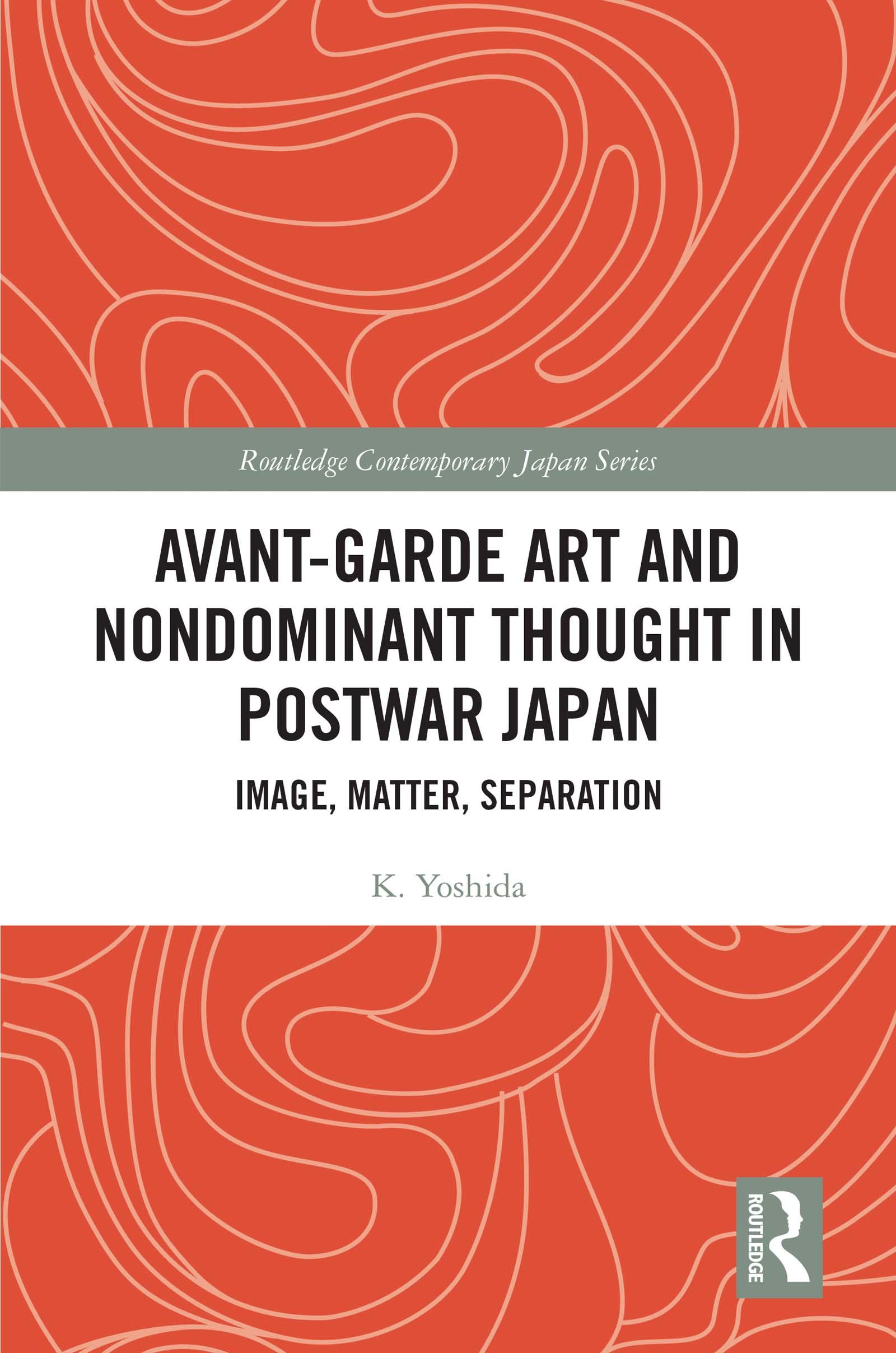
This book offers a reassessment of how "matter" – in the context of art history, criticism, and architecture – pursued a radical definition of "multiplicity", against the dominant and hierarchical tendencies underwriting post-fascist Japan.
Through theoretical analysis of works by artists and critics such as Okamoto Taro, Hanada Kiyoteru, Kawara On, Isozaki Arata, Kawaguchi Tatsuo, and Nakahira Takuma, this highly illustrated text identifies formal oppositions frequently evoked in the Japanese avant-garde, between cognition and image, self and other, human and thing, and one and many, in mediums ranging from painting and photography, to sculpture and architecture. In addition to an "aesthetics of separation" which refuses the integrationist implications of the human, the author proposes the "anthropofugal" – meaning fleeing the human – as an original concept through which to understand matter in the epistemic universe of the postwar Japanese avant-garde. Chapters in this publication offer critical insights into how artists and critics grounded their work in active disengagement, to advance an ethics of nondominance.
Avant-Garde Art and Nondominant Thought in Postwar Japan will appeal to students and scholars of Japanese studies, art history, and visual cultures more widely.
Maksa helposti kortilla, Klarnalla, Apple Paylla tai Google Paylla. Etkö ole tyytyväinen? Sinulla on aina 14 päivän palautusoikeus. Lue lisää ehdoistamme. Jos sinulla on kysyttävää, lähetä meille sähköpostia osoitteeseen hello@memmo.org.
Memmo tekee opiskelusta helpompaa – missä päin maailmaa ikinä oletkin. Meillä yhdistät kurssikirjat ja fiksut opiskelutyökalut yhteen paikkaan: tiivistelmät, visat, podcastit ja muistikortit. Ja sitten Ted, opiskelukaverisi, joka vastaa kaikkeen, mitä ikinä mietitkin. Yli 50 000 opiskelijaa opiskelee jo täällä – rakennettu auttamaan sinua oppimaan nopeammin ja stressaamaan vähemmän.