
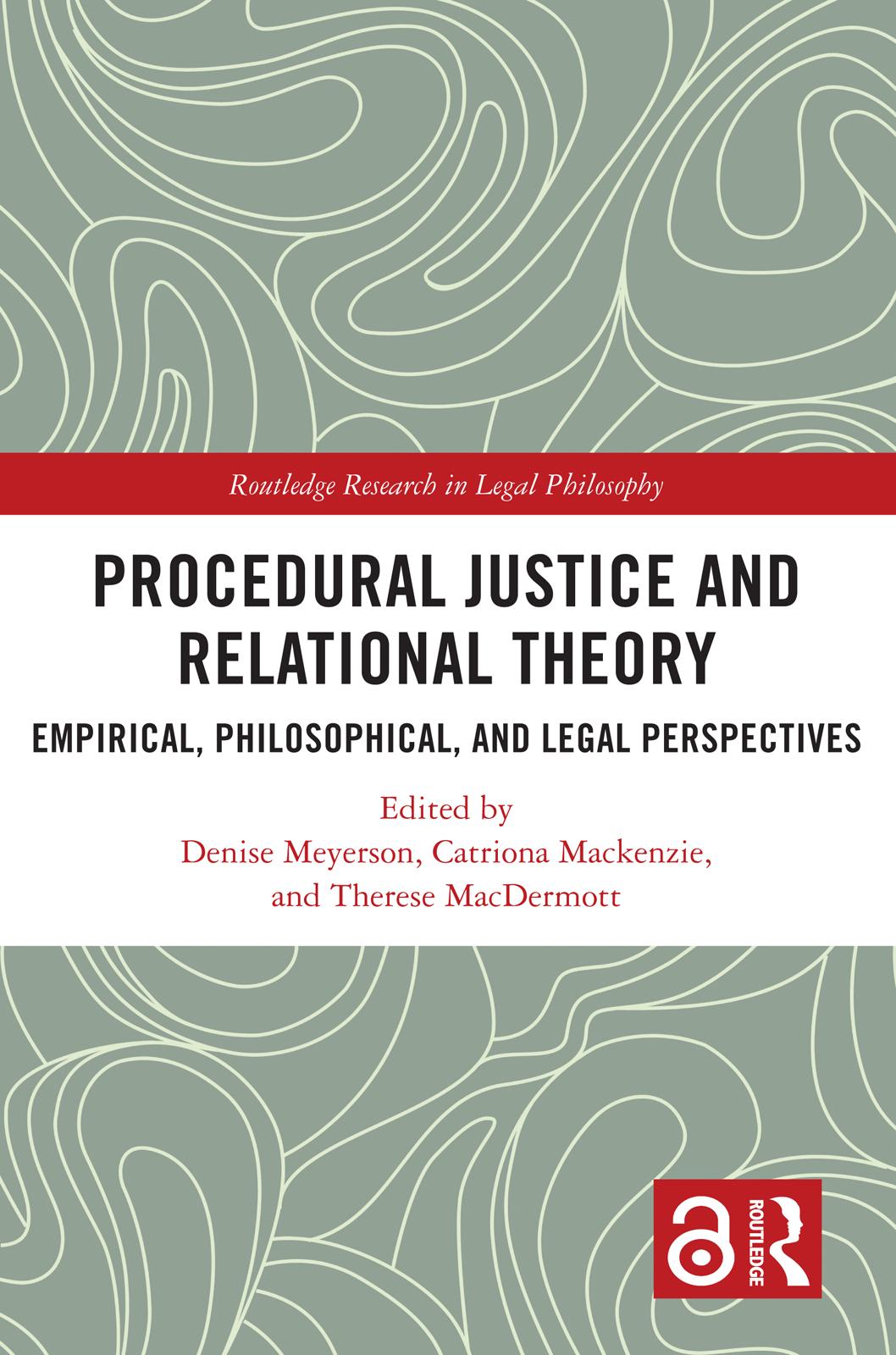
This book bridges a scholarly divide between empirical and normative theorizing about procedural justice in the context of relations of power between citizens and the state.
Empirical research establishes that people’s understanding of procedural justice is shaped by relational factors. A central premise of this volume is that this research is significant but needs to be complemented by normative theorizing that draws on relational theories of ethics and justice to explain the moral significance of procedures and make normative sense of people’s concerns about relational factors. The chapters in Part 1 provide comprehensive reviews of empirical studies of procedural justice in policing, courts and prisons. Part 2 explores empirical and normative perspectives on procedural justice and legitimacy. Part 3 examines philosophical approaches to procedural justice. Part 4 considers the implications of a relational perspective for the design of procedures in a range of legal contexts.
This collection will be of interest to a wide academic readership in philosophy, law, psychology and criminology.
Maksa helposti kortilla, Klarnalla, Apple Paylla tai Google Paylla. Etkö ole tyytyväinen? Sinulla on aina 14 päivän palautusoikeus. Lue lisää ehdoistamme. Jos sinulla on kysyttävää, lähetä meille sähköpostia osoitteeseen hello@memmo.org.
Memmo tekee opiskelusta helpompaa – missä päin maailmaa ikinä oletkin. Meillä yhdistät kurssikirjat ja fiksut opiskelutyökalut yhteen paikkaan: tiivistelmät, visat, podcastit ja muistikortit. Ja sitten Ted, opiskelukaverisi, joka vastaa kaikkeen, mitä ikinä mietitkin. Yli 50 000 opiskelijaa opiskelee jo täällä – rakennettu auttamaan sinua oppimaan nopeammin ja stressaamaan vähemmän.