
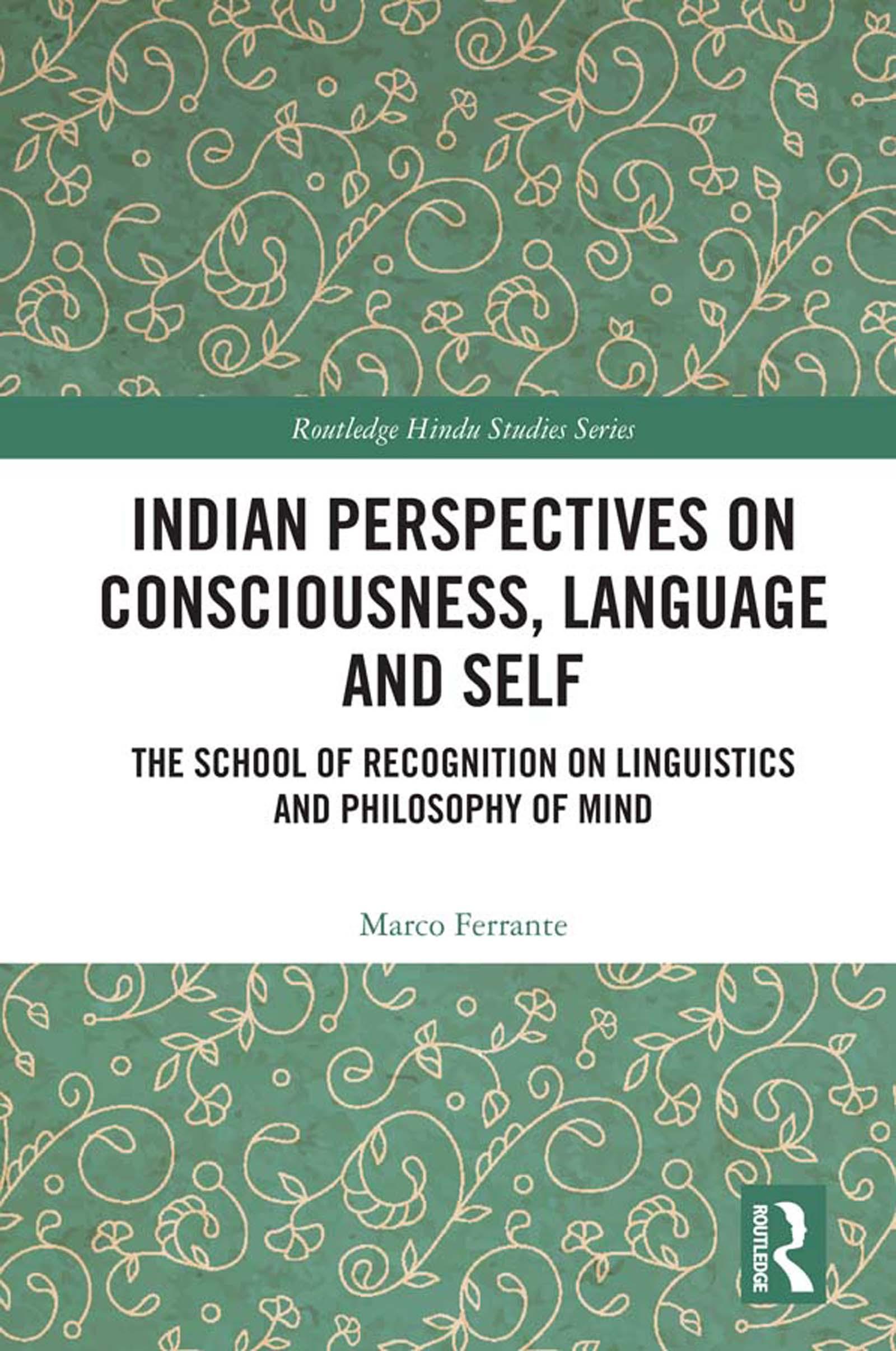
This book examines the theory of consciousness developed by the school of Recognition, an Indian philosophical tradition that thrived around the tenth c. CE in Kashmir, and argues that consciousness has a linguistic nature. It situates the doctrines of the tradition within the broader Indian philosophical context and establishes connections with the contemporary analytic debate.
The book focuses on Utpaladeva and Abhinavagupta (tenth c. CE), two Hindu intellectuals belonging to the school of Recognition, Pratyabhijñā in Sanskrit. It argues that these authors promoted ideas that bear a strong resemblance with contemporary ‘higher–order theories’ of consciousness. In addition, the book explores the relationship between the thinkers of the school of Recognition and the thought of the grammarian/philosopher Bhartṛhari (fifth c. CE). The book bridges a gap that still exists between scholars engaged with Western traditions and Sanskrit specialists focused on textual materials. In doing so, the author uses concepts from contemporary philosophy of mind to illustrate the Indian arguments and an interdisciplinary approach with abundant reference to the original sources.
Offering fresh information to historians of Indian thought, the book will also be of interest to academics working on Non-Western Philosophy, Comparative Philosophy, Indian Philosophy, Religion, Hinduism, Tantric Studies and South Asian Studies.
Maksa helposti kortilla, Klarnalla, Apple Paylla tai Google Paylla. Etkö ole tyytyväinen? Sinulla on aina 14 päivän palautusoikeus. Lue lisää ehdoistamme. Jos sinulla on kysyttävää, lähetä meille sähköpostia osoitteeseen hello@memmo.org.
Memmo tekee opiskelusta helpompaa – missä päin maailmaa ikinä oletkin. Meillä yhdistät kurssikirjat ja fiksut opiskelutyökalut yhteen paikkaan: tiivistelmät, visat, podcastit ja muistikortit. Ja sitten Ted, opiskelukaverisi, joka vastaa kaikkeen, mitä ikinä mietitkin. Yli 50 000 opiskelijaa opiskelee jo täällä – rakennettu auttamaan sinua oppimaan nopeammin ja stressaamaan vähemmän.