
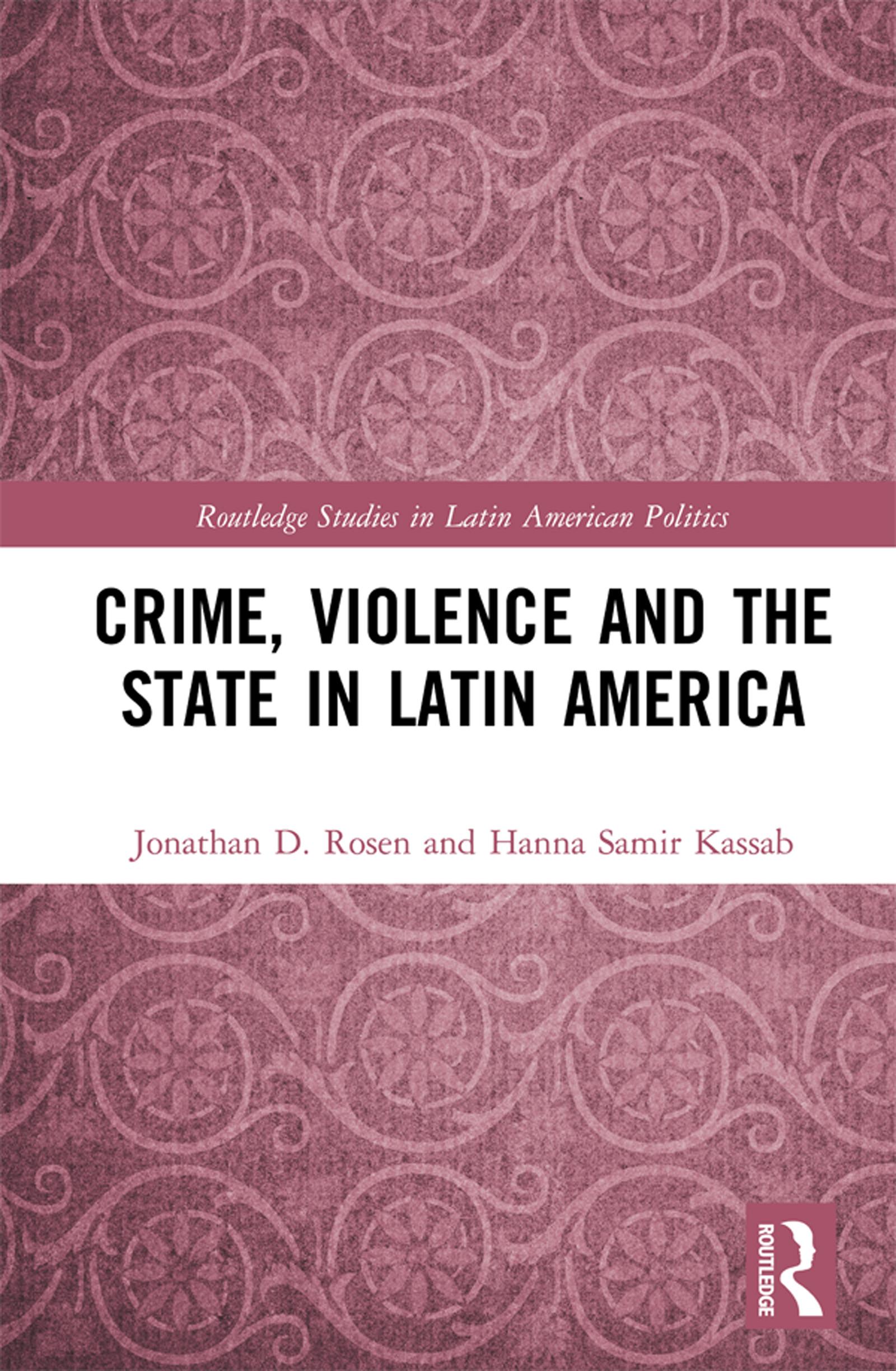
In this succinct text, Jonathan D. Rosen and Hanna Samir Kassab explore the linkage between weak institutions and government policies designed to combat drug trafficking, organized crime, and violence in Latin America.
Using quantitative analysis to examine criminal violence and publicly available survey data from the Latin American Public Opinion Project (LAPOP) to conduct regression analysis, individual case studies on Colombia, Mexico, El Salvador, and Nicaragua highlight the major challenges that governments face and how they have responded to various security issues. Rosen and Kassab later turn their attention to the role of external criminal actors in the region and offer policy recommendations and lessons learned. Questions explored include:
- What are the major trends in organized crime in this country?
- How has organized crime evolved over time?
- Who are the major criminal actors?
- How has state fragility contributed to organized crime and violence (and vice versa)?
- What has been the government’s response to drug trafficking and organized crime?
- Have such policies contributed to violence?
Crime, Violence and the State in Latin America is suitable to both undergraduate and graduate courses in criminal justice, international relations, political science, comparative politics, international political economy, organized crime, drug trafficking, and violence.
Maksa helposti kortilla, Klarnalla, Apple Paylla tai Google Paylla. Etkö ole tyytyväinen? Sinulla on aina 14 päivän palautusoikeus. Lue lisää ehdoistamme. Jos sinulla on kysyttävää, lähetä meille sähköpostia osoitteeseen hello@memmo.org.
Memmo tekee opiskelusta helpompaa – missä päin maailmaa ikinä oletkin. Meillä yhdistät kurssikirjat ja fiksut opiskelutyökalut yhteen paikkaan: tiivistelmät, visat, podcastit ja muistikortit. Ja sitten Ted, opiskelukaverisi, joka vastaa kaikkeen, mitä ikinä mietitkin. Yli 50 000 opiskelijaa opiskelee jo täällä – rakennettu auttamaan sinua oppimaan nopeammin ja stressaamaan vähemmän.