
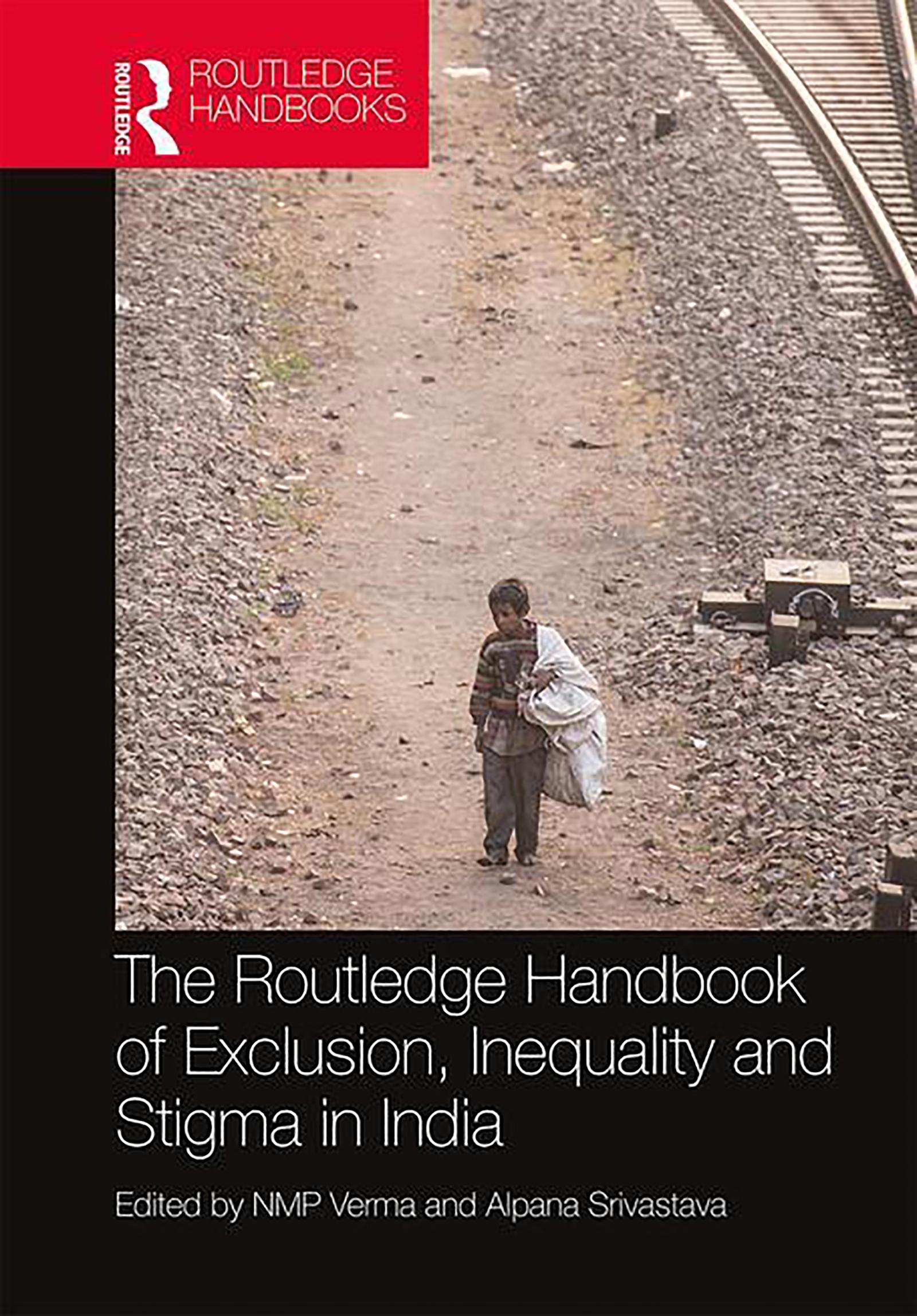
This handbook critically examines the three concepts of exclusion, inequality and stigma and their interrelationship in the Indian context. Divided into five parts, the volume deals with the issues of exclusion, inequality, gender discrimination, health and disability, and assault and violence. It discusses important topical themes such as caste and social exclusion in rural labour markets, impact of poverty and unemployment, discrimination in education and literacy, income inequality and financial inclusion, social security of street vendors, women social entrepreneurs, rural–urban digital divide, workplace inequality, women trafficking, acid attacks, inter-caste marriages, honour killings, health care and sanitation, discrimination faced by those with disabilities, and regional disparities in India.
The book traces rising socio-economic inequality and discrimination along with the severe lack of access to resources and opportunities, redressal instruments, legal provisions and implementation challenges, while also looking at deep-rooted causes responsible for their persistence in society. With emphasis on affirmative action, systemic mechanisms, and the role of state and citizens in bridging gaps, the volume presents several policies and strategies for development. It combines wide-ranging empirical case studies backed by relevant theoretical frameworks to map out a new agenda for research on socio-economic inequality in India with important implications for public policy.
Comprehensive and first of its kind, this handbook will serve as a key reference to scholars, researchers and teachers of exclusion and discrimination studies, social justice, political economy, sociology, anthropology, economics, political science, development studies, education and public administration. It will also be useful to policymakers, bureaucrats, civil society activists, non-governmental organisations and social entrepreneurs in the development sector, in addition to those interested in third world studies, developing economies and the global south.
Maksa helposti kortilla, Klarnalla, Apple Paylla tai Google Paylla. Etkö ole tyytyväinen? Sinulla on aina 14 päivän palautusoikeus. Lue lisää ehdoistamme. Jos sinulla on kysyttävää, lähetä meille sähköpostia osoitteeseen hello@memmo.org.
Memmo tekee opiskelusta helpompaa – missä päin maailmaa ikinä oletkin. Meillä yhdistät kurssikirjat ja fiksut opiskelutyökalut yhteen paikkaan: tiivistelmät, visat, podcastit ja muistikortit. Ja sitten Ted, opiskelukaverisi, joka vastaa kaikkeen, mitä ikinä mietitkin. Yli 50 000 opiskelijaa opiskelee jo täällä – rakennettu auttamaan sinua oppimaan nopeammin ja stressaamaan vähemmän.