
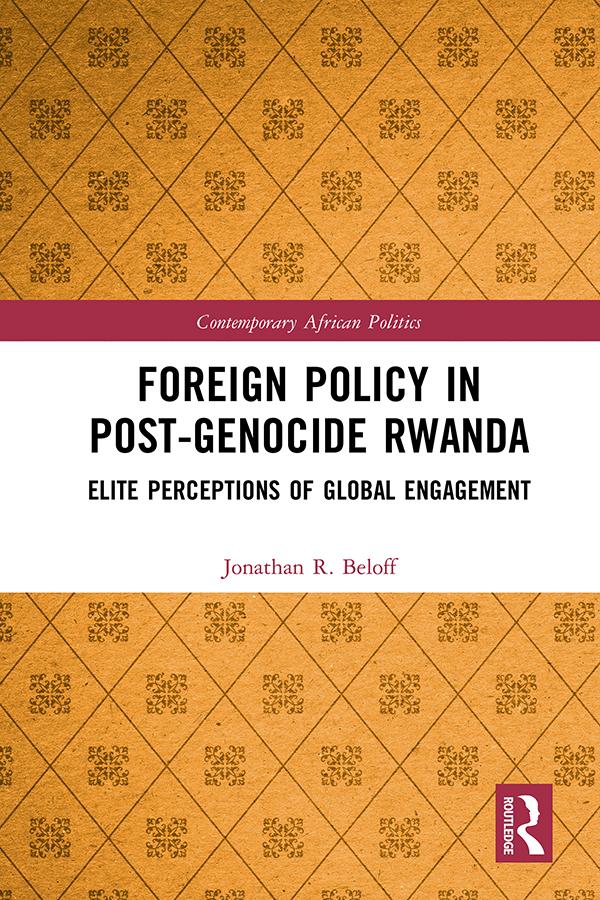
This book examines how Rwandan elites within the government, private sector and civil society perceive the nation’s political and economic relationship with the international community. Using testimonies and interviews of Rwandan political, military and economic leaders, and bureaucrats, this book examines the intersubjective beliefs that formulate how Rwanda engages with the international community. The book presents and analyses three primary intersubjective themes: historical and possible future abandonment of Rwanda; implementing an ideology of agaciro to promote self-respect, dignity and self-reliance for state security and economic development; and the belief in the government’s obligation to promote human security for those who identify as ‘Rwandan’. These perceptions help us understand how post-genocide Rwanda engages with the international community in the pursuit of state security, economic development and to prevent a future genocide. This book will be of interest to students and scholars of African politics and international relations as well as the politics of post-genocide states.
Maksa helposti kortilla, Klarnalla, Apple Paylla tai Google Paylla. Etkö ole tyytyväinen? Sinulla on aina 14 päivän palautusoikeus. Lue lisää ehdoistamme. Jos sinulla on kysyttävää, lähetä meille sähköpostia osoitteeseen hello@memmo.org.
Memmo tekee opiskelusta helpompaa – missä päin maailmaa ikinä oletkin. Meillä yhdistät kurssikirjat ja fiksut opiskelutyökalut yhteen paikkaan: tiivistelmät, visat, podcastit ja muistikortit. Ja sitten Ted, opiskelukaverisi, joka vastaa kaikkeen, mitä ikinä mietitkin. Yli 50 000 opiskelijaa opiskelee jo täällä – rakennettu auttamaan sinua oppimaan nopeammin ja stressaamaan vähemmän.