
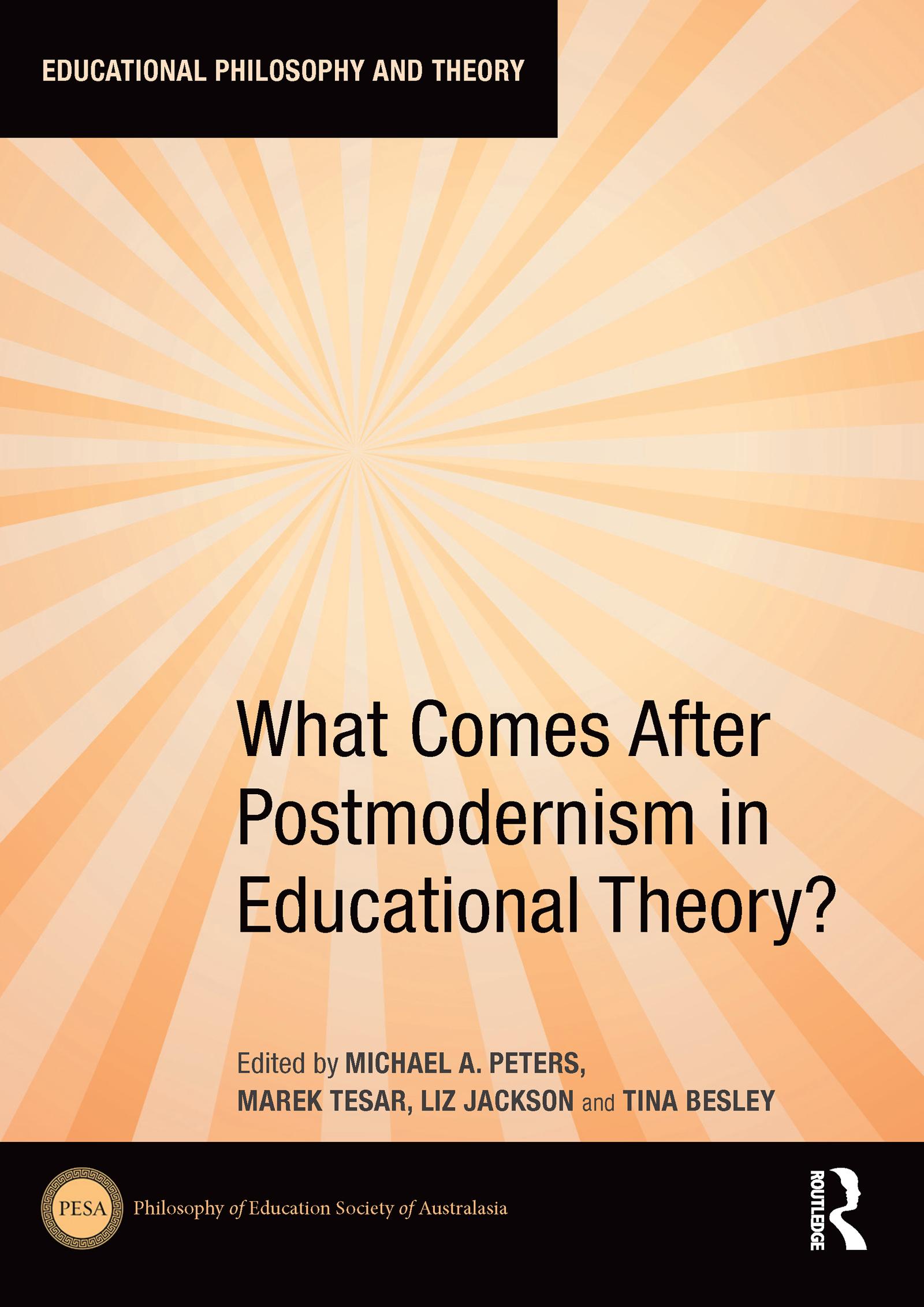
Marking the fiftieth anniversary of the Educational Philosophy and Theory journal, this book brings together the work of over 200 international scholars, who seek to address the question: ‘What happened to postmodernism in educational theory after its alleged demise?’.
Declarations of the death knell of postmodernism are now quite commonplace. Scholars in various disciples have suggested that, if anything, postmodernism is at an end and has been dead and buried for some time. An age dominated by playfulness, hybridity, relativism and the fragmentary self has given way to something else—as yet undefined. The lifecycle of postmodernism started with Derrida’s 1966 seminal paper ‘Structure, Sign and Play in the Discourse of the Human Sciences’; its peak years were 1973–1989; followed by uncertainty and reorientation in the 1990s; and the aftermath and beyond (McHale, 2015). What happened after 2001? This collection provides responses by over 200 scholars to this question who also focus on what comes after postmodernism in educational theory.
This book was originally published as a special issue of the journal Educational Philosophy and Theory.
Maksa helposti kortilla, Klarnalla, Apple Paylla tai Google Paylla. Etkö ole tyytyväinen? Sinulla on aina 14 päivän palautusoikeus. Lue lisää ehdoistamme. Jos sinulla on kysyttävää, lähetä meille sähköpostia osoitteeseen hello@memmo.org.
Memmo tekee opiskelusta helpompaa – missä päin maailmaa ikinä oletkin. Meillä yhdistät kurssikirjat ja fiksut opiskelutyökalut yhteen paikkaan: tiivistelmät, visat, podcastit ja muistikortit. Ja sitten Ted, opiskelukaverisi, joka vastaa kaikkeen, mitä ikinä mietitkin. Yli 50 000 opiskelijaa opiskelee jo täällä – rakennettu auttamaan sinua oppimaan nopeammin ja stressaamaan vähemmän.