
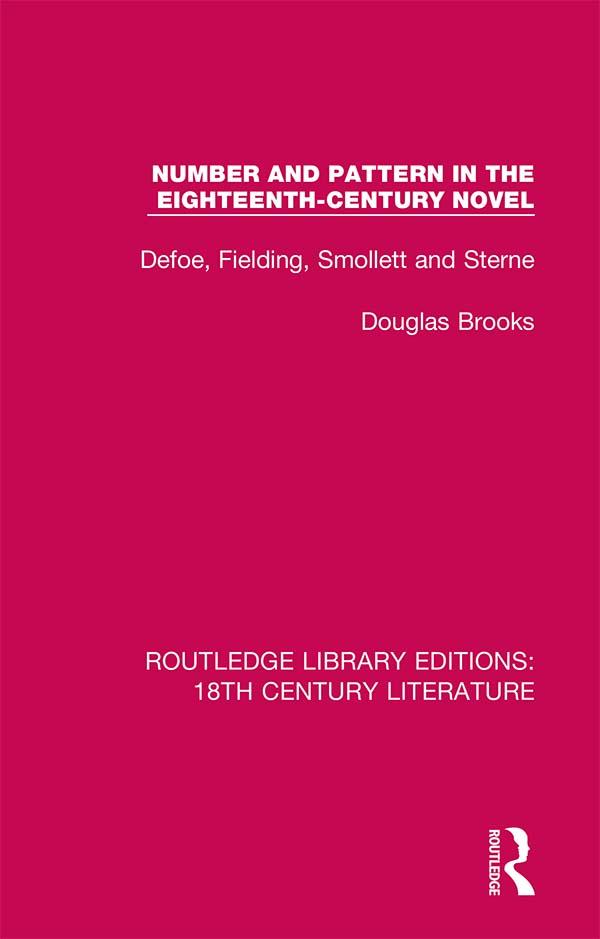
Numerological patterning in literature, where structural details of a literary work are symbolically related to its meaning on the verbal level, was particularly common from the Middle Ages up to the seventeenth century. Originally published in 1973, the author breaks new ground in revealing that familiarity with this technique lived on into the eighteenth century, supplying the more artistically aware of the early British novelists with meaningful formal guidelines.
An account is given of the origins and continuity of the numerological tradition in Western European – and particularly English – thought as it affected literary structure. The careful structural patterning in the novels of Defoe and in Fielding’s Joseph Andrews and Tom Jones is examined in detail. Smollett, too, is shown to have been interested in exploring the possibilities of number and pattern, and the clear-cut numerological framework of Sterne’s Tristram Shandy is revealed.
This original and controversial study combines structural analysis with fresh interpretative insights, and draws parallels with painting, music and architecture. It also has an important bearing on the history of ideas in the first half of the eighteenth century.
Maksa helposti kortilla, Klarnalla, Apple Paylla tai Google Paylla. Etkö ole tyytyväinen? Sinulla on aina 14 päivän palautusoikeus. Lue lisää ehdoistamme. Jos sinulla on kysyttävää, lähetä meille sähköpostia osoitteeseen hello@memmo.org.
Memmo tekee opiskelusta helpompaa – missä päin maailmaa ikinä oletkin. Meillä yhdistät kurssikirjat ja fiksut opiskelutyökalut yhteen paikkaan: tiivistelmät, visat, podcastit ja muistikortit. Ja sitten Ted, opiskelukaverisi, joka vastaa kaikkeen, mitä ikinä mietitkin. Yli 50 000 opiskelijaa opiskelee jo täällä – rakennettu auttamaan sinua oppimaan nopeammin ja stressaamaan vähemmän.