
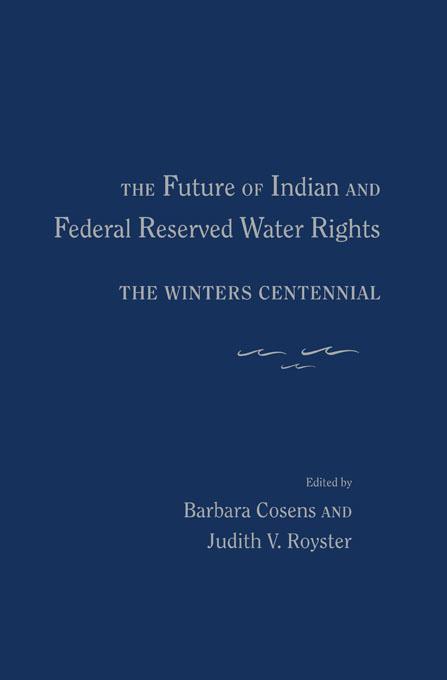
On January 6, 1908, the Supreme Court ruled that when land is set aside for the use of Indian tribes, that reservation of land includes reserved water rights. The Winters Doctrine, as it has come to be known, is now a fundamental principle of both federal Indian law and water law and has expanded beyond Indian reservations to include all federal reservations of land.
<br><br>
Ordinarily, there would not be much to say about a one hundred-year-old Supreme Court case. But while its central conclusion that a claim to water was reserved when the land was reserved for Indians represents a commitment to justice, the exact nature of that commitment-its legal basis, scope, implications for non-Indian water rights holders, the purposes for and quantities of water reserved, the geographic nexus between the land and the water reserved, and many other details of practical consequence-has been, and continues to be, litigated and negotiated. In this detailed collection of essays, lawyers, historians, and tribal leaders explore the nuances of these issues and legacies.
Maksa helposti kortilla, Klarnalla, Apple Paylla tai Google Paylla. Etkö ole tyytyväinen? Sinulla on aina 14 päivän palautusoikeus. Lue lisää ehdoistamme. Jos sinulla on kysyttävää, lähetä meille sähköpostia osoitteeseen hello@memmo.org.
Memmo tekee opiskelusta helpompaa – missä päin maailmaa ikinä oletkin. Meillä yhdistät kurssikirjat ja fiksut opiskelutyökalut yhteen paikkaan: tiivistelmät, visat, podcastit ja muistikortit. Ja sitten Ted, opiskelukaverisi, joka vastaa kaikkeen, mitä ikinä mietitkin. Yli 50 000 opiskelijaa opiskelee jo täällä – rakennettu auttamaan sinua oppimaan nopeammin ja stressaamaan vähemmän.