
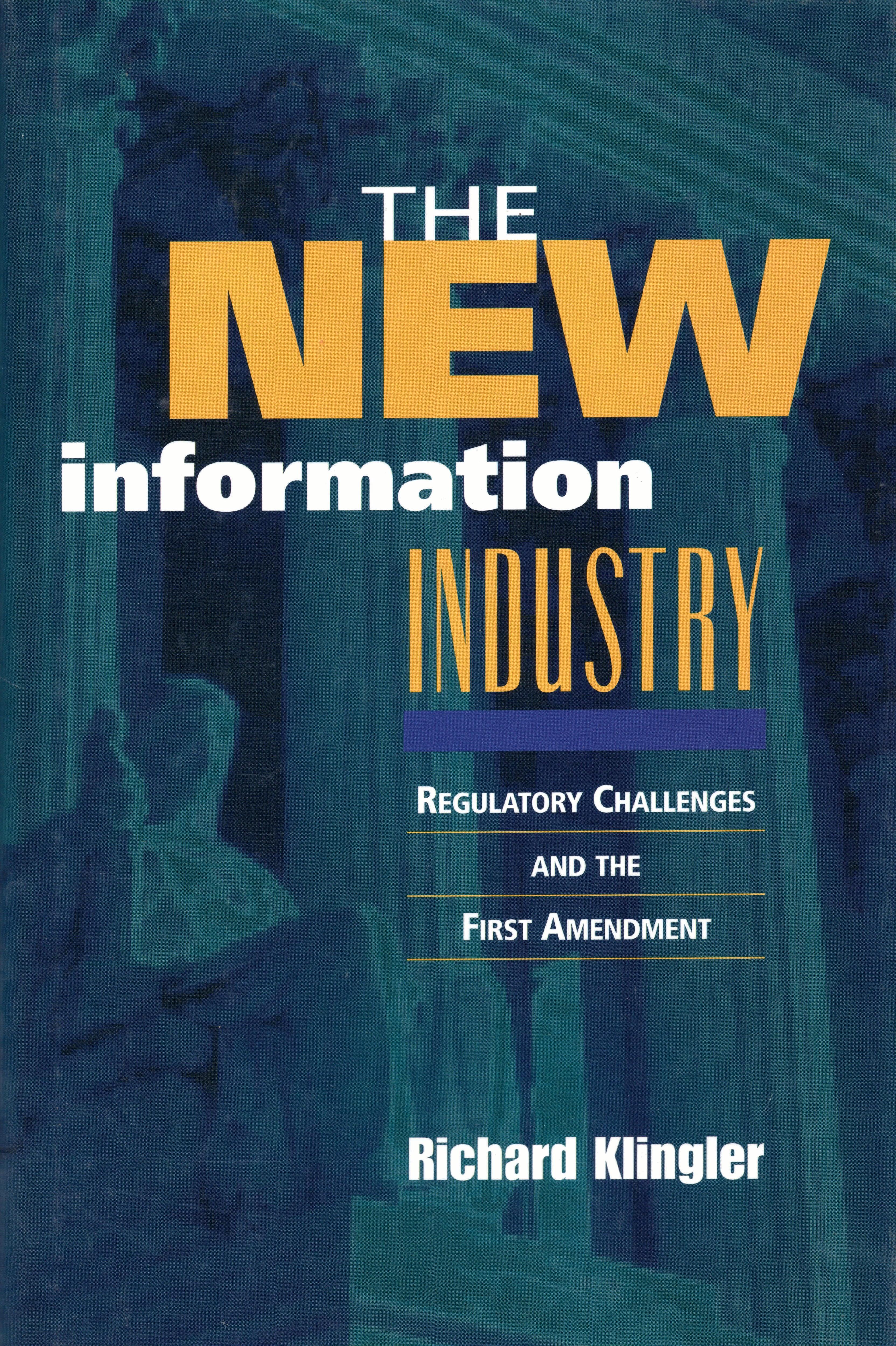
Rapid developments in technology are reshaping how citizens receive and use information electronically. At the same time, government regulation limits the services that may be offered by the industries that transmit information, and will determine how interactive and other advanced video services are able to develop. In this book, Richard Klingler traces the evolution of regulatory regimes that constrain the broadcasting, telephone, and cable television industries, as well as emerging information services. He also examines new information delivery systems and the integration of electronic carriage with provision of content and information services, including services that resemble printed products.
Klingler describes two basic challenges to current regulation of these industries. First, established regulatory regimes often harm competition and the development of services in industries that are increasingly interrelated and rapidly changing. He outlines how recent developments contradict basic assumptions underlying the structure of current regulation and how regulation might better respond to those developments. Second, the Constitution limits regulation of these industries as they increasingly engage in activities protected by the First Amendment. Klingler shows how the First Amendment, as recently elaborated, applies to electronic transmission of information and likely precludes certain forms of regulation, including established regulation of the content of communications. The book also examines how regulation designed to limit market power in these industries can be reconciled with the First Amendment.
Klingler describes two basic challenges to current regulation of these industries. First, established regulatory regimes often harm competition and the development of services in industries that are increasingly interrelated and rapidly changing. He outlines how recent developments contradict basic assumptions underlying the structure of current regulation and how regulation might better respond to those developments. Second, the Constitution limits regulation of these industries as they increasingly engage in activities protected by the First Amendment. Klingler shows how the First Amendment, as recently elaborated, applies to electronic transmission of information and likely precludes certain forms of regulation, including established regulation of the content of communications. The book also examines how regulation designed to limit market power in these industries can be reconciled with the First Amendment.
Maksa helposti kortilla, Klarnalla, Apple Paylla tai Google Paylla. Etkö ole tyytyväinen? Sinulla on aina 14 päivän palautusoikeus. Lue lisää ehdoistamme. Jos sinulla on kysyttävää, lähetä meille sähköpostia osoitteeseen hello@memmo.org.
Memmo tekee opiskelusta helpompaa – missä päin maailmaa ikinä oletkin. Meillä yhdistät kurssikirjat ja fiksut opiskelutyökalut yhteen paikkaan: tiivistelmät, visat, podcastit ja muistikortit. Ja sitten Ted, opiskelukaverisi, joka vastaa kaikkeen, mitä ikinä mietitkin. Yli 50 000 opiskelijaa opiskelee jo täällä – rakennettu auttamaan sinua oppimaan nopeammin ja stressaamaan vähemmän.