
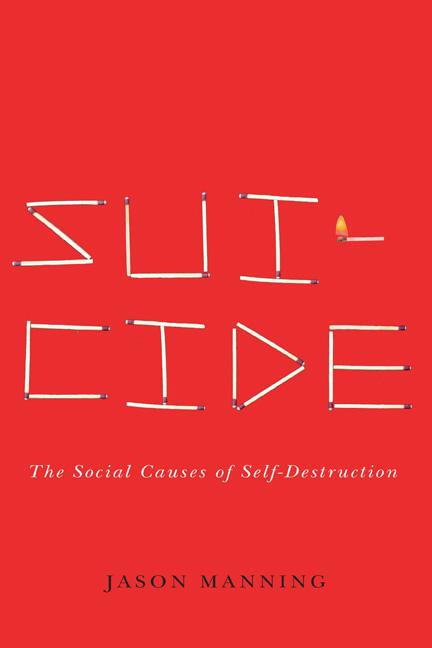
The conventional approach to suicide is psychiatric: ask the average person why people kill themselves, and they will likely cite depression. But this approach fails to recognize suicide’s social causes. People kill themselves because of breakups and divorces, because of lost jobs and ruined finances, because of public humiliations and the threat of arrest. While some psychological approaches address external stressors, this comprehensive study is the first to systematically examine suicide as a social behavior with social catalysts.
Drawing on Donald Black’s theories of conflict management and pure sociology, Suicide presents a new theory of the social conditions that compel an aggrieved person to turn to self-destruction. Interpersonal conflict plays a central but underappreciated role in the incidence of suicide. Examining a wide range of cross-cultural cases, Jason Manning argues that suicide arises from increased inequality and decreasing intimacy, and that conflicts are more likely to become suicidal when they occur in a context of social inferiority. As suicide rates continue to rise around the world, this timely new theory can help clinicians, scholars, and members of the general public to explain and predict patterns of self-destructive behavior.
Maksa helposti kortilla, Klarnalla, Apple Paylla tai Google Paylla. Etkö ole tyytyväinen? Sinulla on aina 14 päivän palautusoikeus. Lue lisää ehdoistamme. Jos sinulla on kysyttävää, lähetä meille sähköpostia osoitteeseen hello@memmo.org.
Memmo tekee opiskelusta helpompaa – missä päin maailmaa ikinä oletkin. Meillä yhdistät kurssikirjat ja fiksut opiskelutyökalut yhteen paikkaan: tiivistelmät, visat, podcastit ja muistikortit. Ja sitten Ted, opiskelukaverisi, joka vastaa kaikkeen, mitä ikinä mietitkin. Yli 50 000 opiskelijaa opiskelee jo täällä – rakennettu auttamaan sinua oppimaan nopeammin ja stressaamaan vähemmän.