
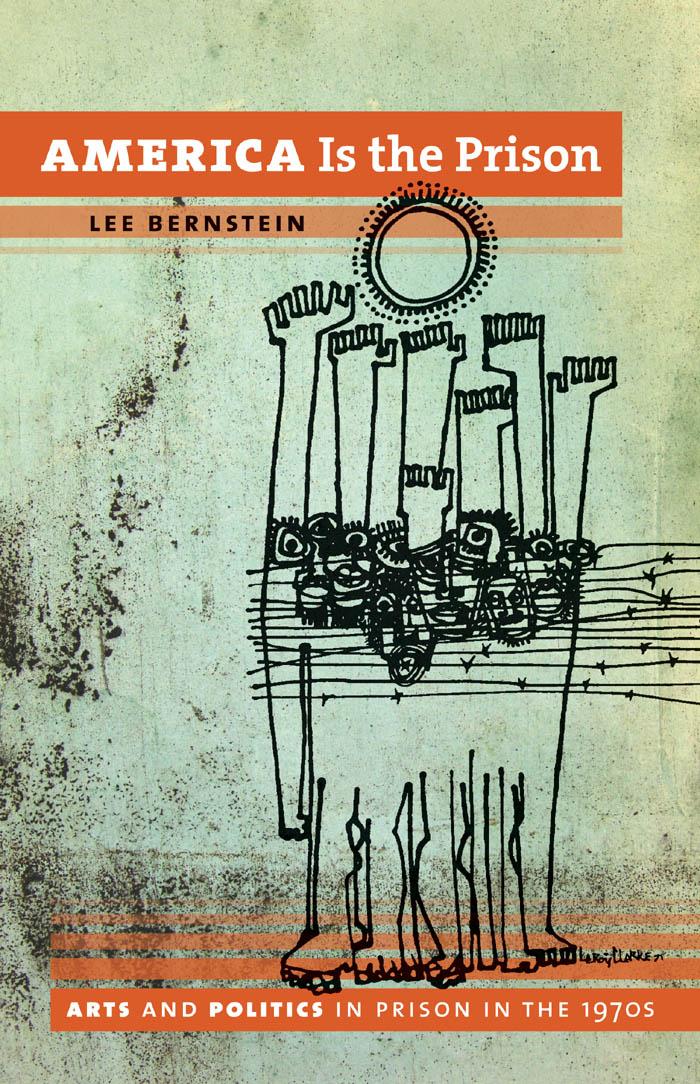
In the 1970s, while politicians and activists outside prisons debated the proper response to crime, incarcerated people helped shape those debates though a broad range of remarkable political and literary writings.
Lee Bernstein explores the forces that sparked a dramatic “prison art renaissance,” shedding light on how incarcerated people produced powerful works of writing, performance, and visual art. These included everything from George Jackson’s revolutionary Soledad Brother to Miguel Piñero’s acclaimed off-Broadway play and Hollywood film Short Eyes. An extraordinary range of prison programs — fine arts, theater, secondary education, and prisoner-run programs — allowed the voices of prisoners to influence the Black Arts Movement, the Nuyorican writers, “New Journalism,” and political theater, among the most important aesthetic contributions of the decade.
By the 1980s and '90s, prisoners' educational and artistic programs were scaled back or eliminated as the “war on crime” escalated. But by then these prisoners' words had crossed over the wall, helping many Americans to rethink the meaning of the walls themselves and, ultimately, the meaning of the society that produced them.
Lee Bernstein explores the forces that sparked a dramatic “prison art renaissance,” shedding light on how incarcerated people produced powerful works of writing, performance, and visual art. These included everything from George Jackson’s revolutionary Soledad Brother to Miguel Piñero’s acclaimed off-Broadway play and Hollywood film Short Eyes. An extraordinary range of prison programs — fine arts, theater, secondary education, and prisoner-run programs — allowed the voices of prisoners to influence the Black Arts Movement, the Nuyorican writers, “New Journalism,” and political theater, among the most important aesthetic contributions of the decade.
By the 1980s and '90s, prisoners' educational and artistic programs were scaled back or eliminated as the “war on crime” escalated. But by then these prisoners' words had crossed over the wall, helping many Americans to rethink the meaning of the walls themselves and, ultimately, the meaning of the society that produced them.
Maksa helposti kortilla, Klarnalla, Apple Paylla tai Google Paylla. Etkö ole tyytyväinen? Sinulla on aina 14 päivän palautusoikeus. Lue lisää ehdoistamme. Jos sinulla on kysyttävää, lähetä meille sähköpostia osoitteeseen hello@memmo.org.
Memmo tekee opiskelusta helpompaa – missä päin maailmaa ikinä oletkin. Meillä yhdistät kurssikirjat ja fiksut opiskelutyökalut yhteen paikkaan: tiivistelmät, visat, podcastit ja muistikortit. Ja sitten Ted, opiskelukaverisi, joka vastaa kaikkeen, mitä ikinä mietitkin. Yli 50 000 opiskelijaa opiskelee jo täällä – rakennettu auttamaan sinua oppimaan nopeammin ja stressaamaan vähemmän.
Saatat pitää myös näistä
Osta kirja0