
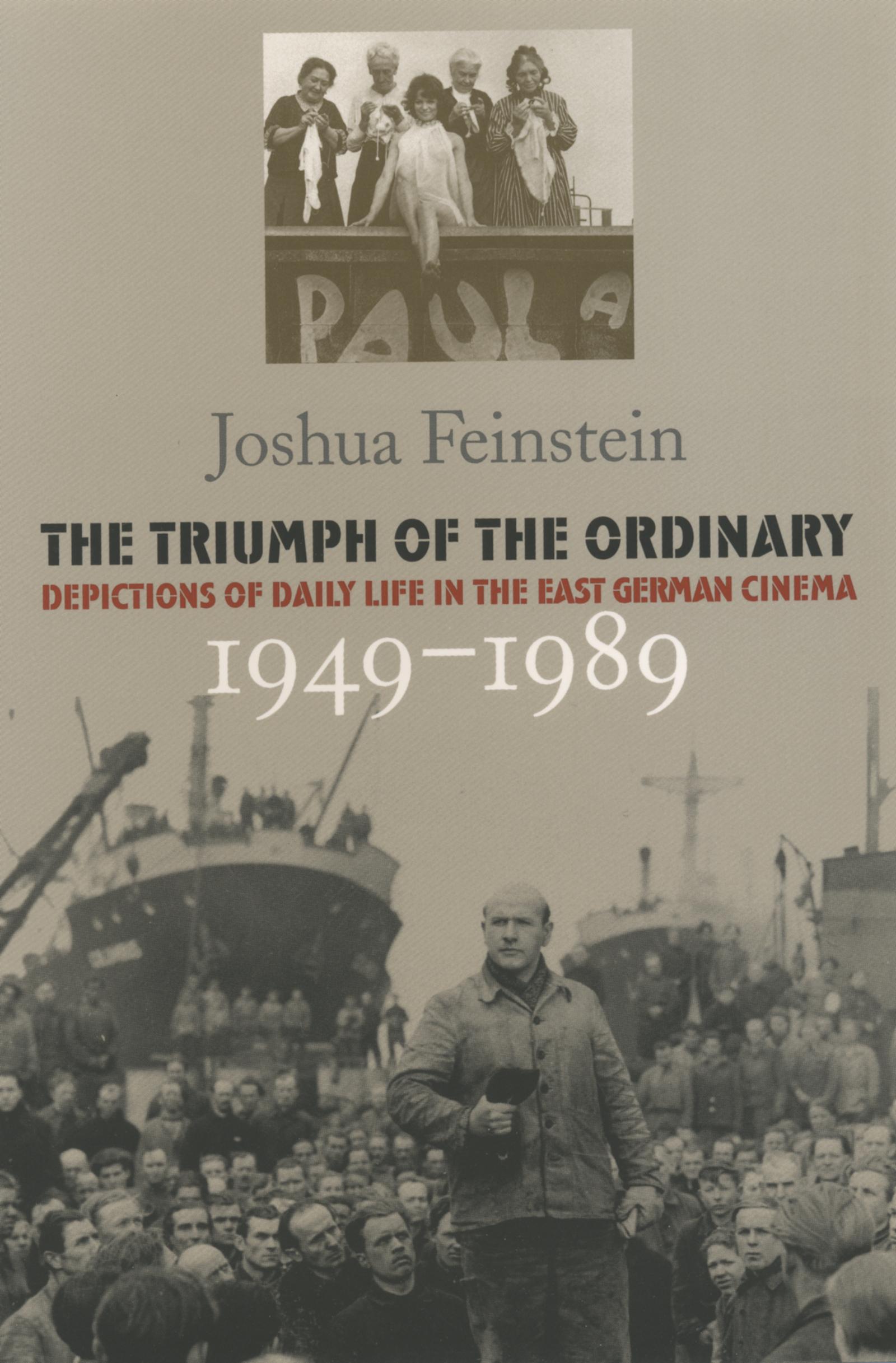
Were movies in the East Bloc propaganda or carefully veiled dissent? In the first major study in English of East German film, Joshua Feinstein argues that the answer to this question is decidedly complex.
Drawing on newly opened archives as well as interviews with East German directors, actors, and state officials, Feinstein traces how the cinematic depiction of East Germany changed in response to national political developments and transnational cultural trends such as the spread of television and rock 'n' roll. Celluloid images fed a larger sense of East German identity, an identity that persists today, more than a decade after German reunification. But even as they attempted to satisfy calls for “authentic” images of the German Democratic Republic that would legitimize socialist rule, filmmakers challenged the regime’s self-understanding. Beginning in the late 1960s, East German films dwelled increasingly on everyday life itself, no longer seeing it merely as a stage in the development toward communism. By presenting an image of a static rather than an evolving society, filmmakers helped transform East German identity from one based on a commitment to socialist progress to one that accepted the GDR as it was.
Drawing on newly opened archives as well as interviews with East German directors, actors, and state officials, Feinstein traces how the cinematic depiction of East Germany changed in response to national political developments and transnational cultural trends such as the spread of television and rock 'n' roll. Celluloid images fed a larger sense of East German identity, an identity that persists today, more than a decade after German reunification. But even as they attempted to satisfy calls for “authentic” images of the German Democratic Republic that would legitimize socialist rule, filmmakers challenged the regime’s self-understanding. Beginning in the late 1960s, East German films dwelled increasingly on everyday life itself, no longer seeing it merely as a stage in the development toward communism. By presenting an image of a static rather than an evolving society, filmmakers helped transform East German identity from one based on a commitment to socialist progress to one that accepted the GDR as it was.
Sivuja: 352
Kategoria: Film- & Medievetenskap
e-ISBN: 9780807861455
Lähetyspaino: 1.2 kg
Toimitusaika: 1-2 päivää
Maksa helposti kortilla, Klarnalla, Apple Paylla tai Google Paylla. Etkö ole tyytyväinen? Sinulla on aina 14 päivän palautusoikeus. Lue lisää ehdoistamme. Jos sinulla on kysyttävää, lähetä meille sähköpostia osoitteeseen hello@memmo.org.
Memmo tekee opiskelusta helpompaa – missä päin maailmaa ikinä oletkin. Meillä yhdistät kurssikirjat ja fiksut opiskelutyökalut yhteen paikkaan: tiivistelmät, visat, podcastit ja muistikortit. Ja sitten Ted, opiskelukaverisi, joka vastaa kaikkeen, mitä ikinä mietitkin. Yli 50 000 opiskelijaa opiskelee jo täällä – rakennettu auttamaan sinua oppimaan nopeammin ja stressaamaan vähemmän.
Saatat pitää myös näistä
Osta kirja0