
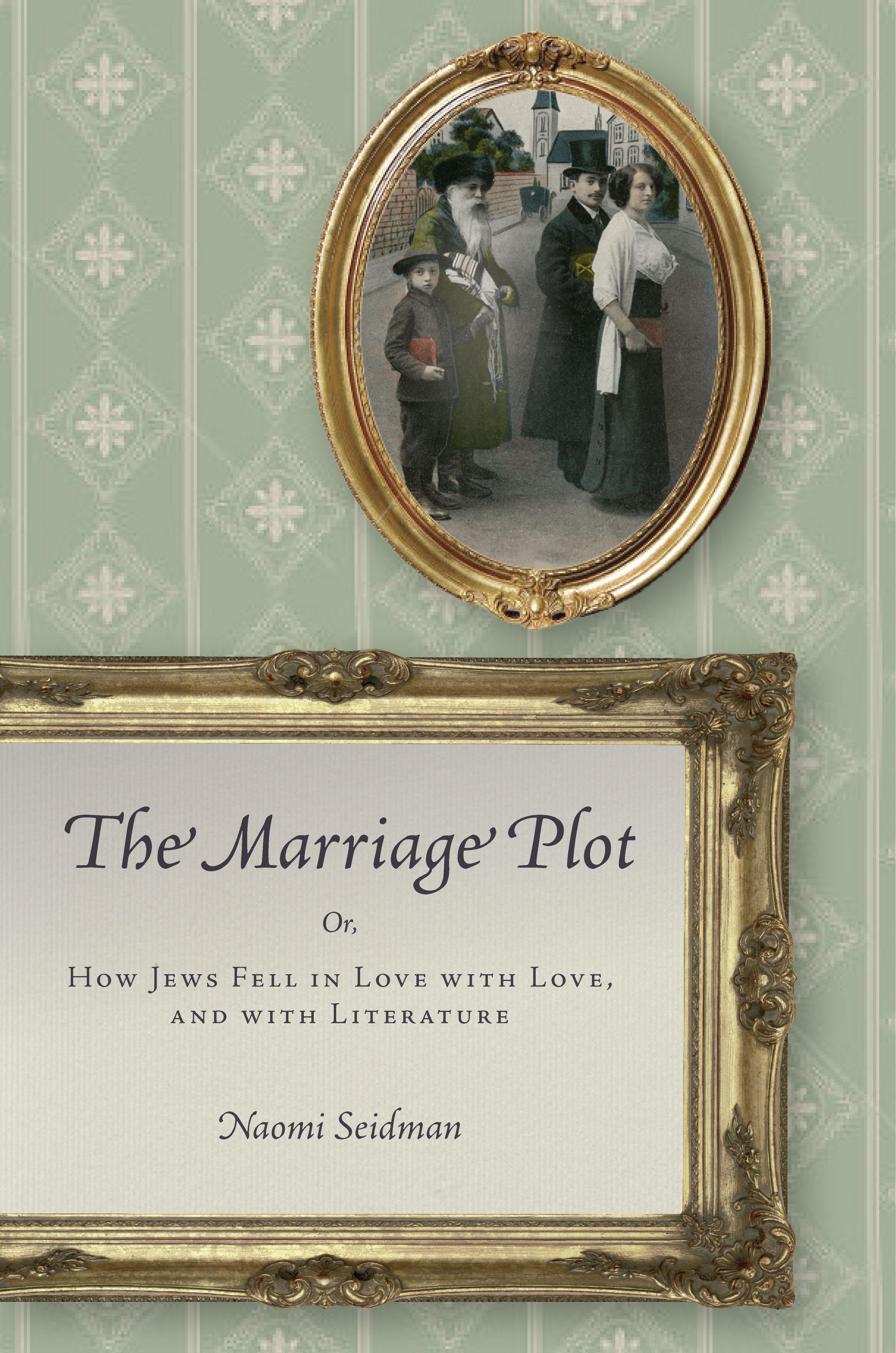
For nineteenth-century Eastern European Jews, modernization entailed the abandonment of arranged marriage in favor of the "love match." Romantic novels taught Jewish readers the rules of romance and the choreography of courtship. But because these new conceptions of romance were rooted in the Christian and chivalric traditions, the Jewish embrace of "the love religion" was always partial.
In The Marriage Plot, Naomi Seidman considers the evolution of Jewish love and marriage though the literature that provided Jews with a sentimental education, highlighting a persistent ambivalence in the Jewish adoption of European romantic ideologies. Nineteenth-century Hebrew and Yiddish literature tempered romantic love with the claims of family and community, and treated the rules of gender complementarity as comedic fodder. Twentieth-century Jewish writers turned back to tradition, finding pleasures in matchmaking, intergenerational ties, and sexual segregation. In the modern Jewish voices of Sigmund Freud, Erica Jong, Philip Roth, and Tony Kushner, the Jewish heretical challenge to the European romantic sublime has become the central sexual ideology of our time.
Maksa helposti kortilla, Klarnalla, Apple Paylla tai Google Paylla. Etkö ole tyytyväinen? Sinulla on aina 14 päivän palautusoikeus. Lue lisää ehdoistamme. Jos sinulla on kysyttävää, lähetä meille sähköpostia osoitteeseen hello@memmo.org.
Memmo tekee opiskelusta helpompaa – missä päin maailmaa ikinä oletkin. Meillä yhdistät kurssikirjat ja fiksut opiskelutyökalut yhteen paikkaan: tiivistelmät, visat, podcastit ja muistikortit. Ja sitten Ted, opiskelukaverisi, joka vastaa kaikkeen, mitä ikinä mietitkin. Yli 50 000 opiskelijaa opiskelee jo täällä – rakennettu auttamaan sinua oppimaan nopeammin ja stressaamaan vähemmän.