
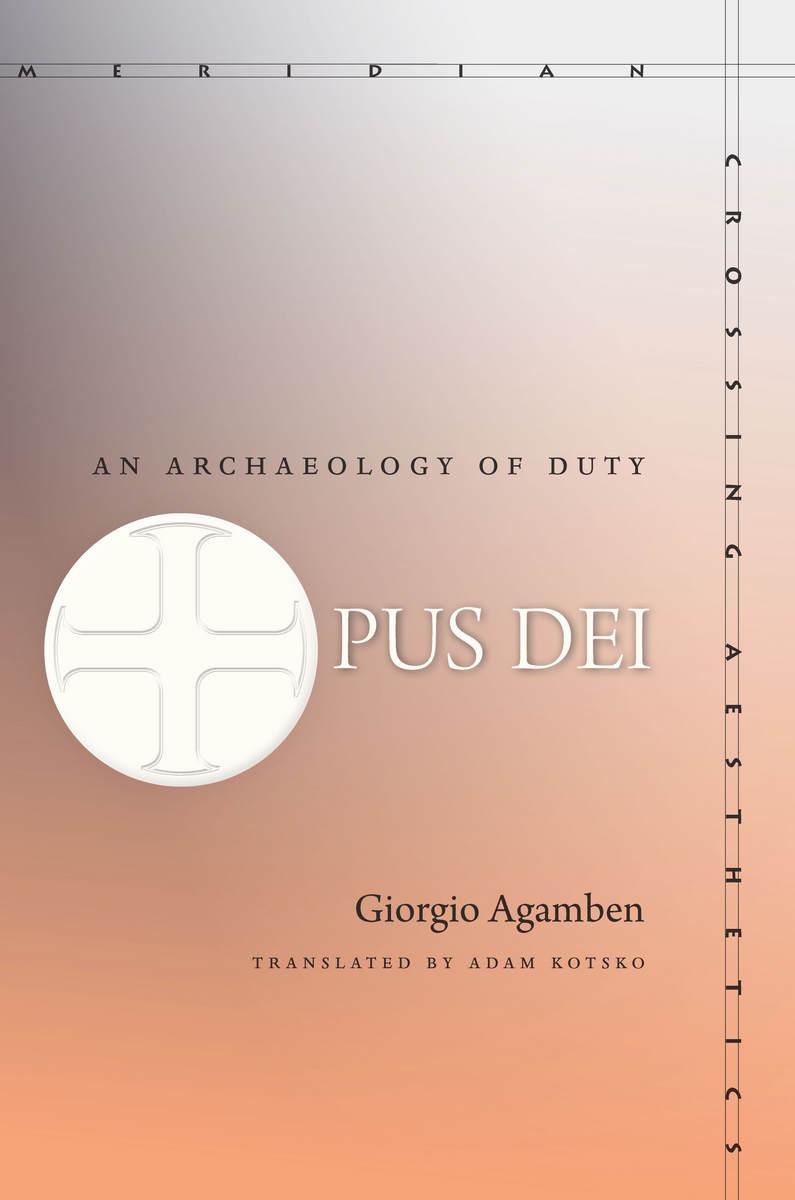
In this follow-up to The Kingdom and the Glory and The Highest Poverty, Agamben investigates the roots of our moral concept of duty in the theory and practice of Christian liturgy. Beginning with the New Testament and working through to late scholasticism and modern papal encyclicals, Agamben traces the Church's attempts to repeat Christ's unrepeatable sacrifice. Crucial here is the paradoxical figure of the priest, who becomes more and more a pure instrument of God's power, so that his own motives and character are entirely indifferent as long as he carries out his priestly duties. In modernity, Agamben argues, the Christian priest has become the model ethical subject. We see this above all in Kantian ethics. Contrasting the Christian and modern ontology of duty with the classical ontology of being, Agamben contends that Western philosophy has unfolded in the tension between the two. This latest installment in the study of Western political structures begun in Homo Sacer is a contribution to the study of liturgy, an extension of Nietzsche's genealogy of morals, and a reworking of Heidegger's history of Being.
Maksa helposti kortilla, Klarnalla, Apple Paylla tai Google Paylla. Etkö ole tyytyväinen? Sinulla on aina 14 päivän palautusoikeus. Lue lisää ehdoistamme. Jos sinulla on kysyttävää, lähetä meille sähköpostia osoitteeseen hello@memmo.org.
Memmo tekee opiskelusta helpompaa – missä päin maailmaa ikinä oletkin. Meillä yhdistät kurssikirjat ja fiksut opiskelutyökalut yhteen paikkaan: tiivistelmät, visat, podcastit ja muistikortit. Ja sitten Ted, opiskelukaverisi, joka vastaa kaikkeen, mitä ikinä mietitkin. Yli 50 000 opiskelijaa opiskelee jo täällä – rakennettu auttamaan sinua oppimaan nopeammin ja stressaamaan vähemmän.