
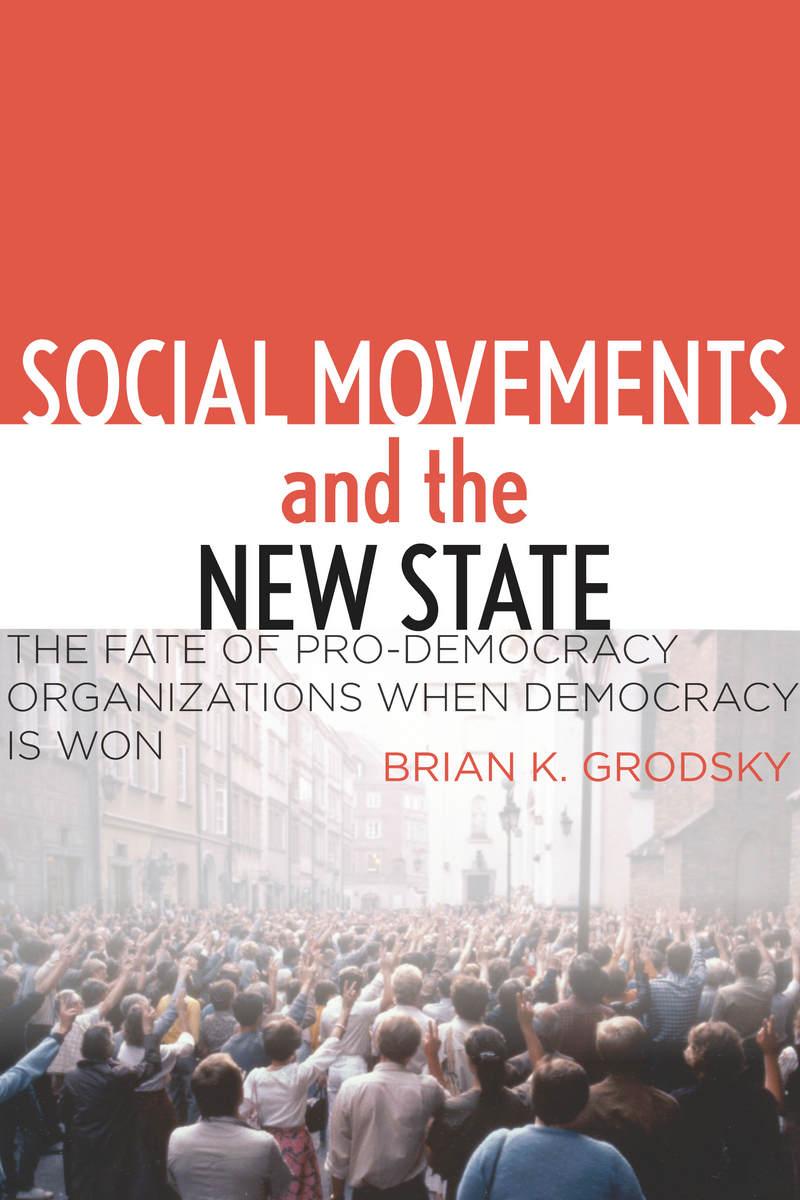
The world's democracies cheered as the social movements of the Arab Spring ended the reigns of longstanding dictators and ushered in the possibility of democracy. Yet these unique transitions also fit into a broader pattern of democratic breakthroughs around the globe, where political leaders emerge from the pro-democracy movement that helped affect change. In Social Movements and the New State, Brian Grodsky examines the relationships between new political elites and the civil society organizations that brought them to power in three culturally and geographically disparate countries—Poland, South Africa, and Georgia.
This book argues that the identities and personal networks developed during the struggle provide "movement activists" with opportunities to influence minor issues, but that new and differing institutional pressures create schisms on broader policy that can turn prior bonds into a liability rather than an asset. Drawing on media analyses and more than 150 elite interviews, Grodsky offers a rare empirical assessment of the degree to which social movement organizations shape activists' beliefs and actions over the long term.
Maksa helposti kortilla, Klarnalla, Apple Paylla tai Google Paylla. Etkö ole tyytyväinen? Sinulla on aina 14 päivän palautusoikeus. Lue lisää ehdoistamme. Jos sinulla on kysyttävää, lähetä meille sähköpostia osoitteeseen hello@memmo.org.
Memmo tekee opiskelusta helpompaa – missä päin maailmaa ikinä oletkin. Meillä yhdistät kurssikirjat ja fiksut opiskelutyökalut yhteen paikkaan: tiivistelmät, visat, podcastit ja muistikortit. Ja sitten Ted, opiskelukaverisi, joka vastaa kaikkeen, mitä ikinä mietitkin. Yli 50 000 opiskelijaa opiskelee jo täällä – rakennettu auttamaan sinua oppimaan nopeammin ja stressaamaan vähemmän.