
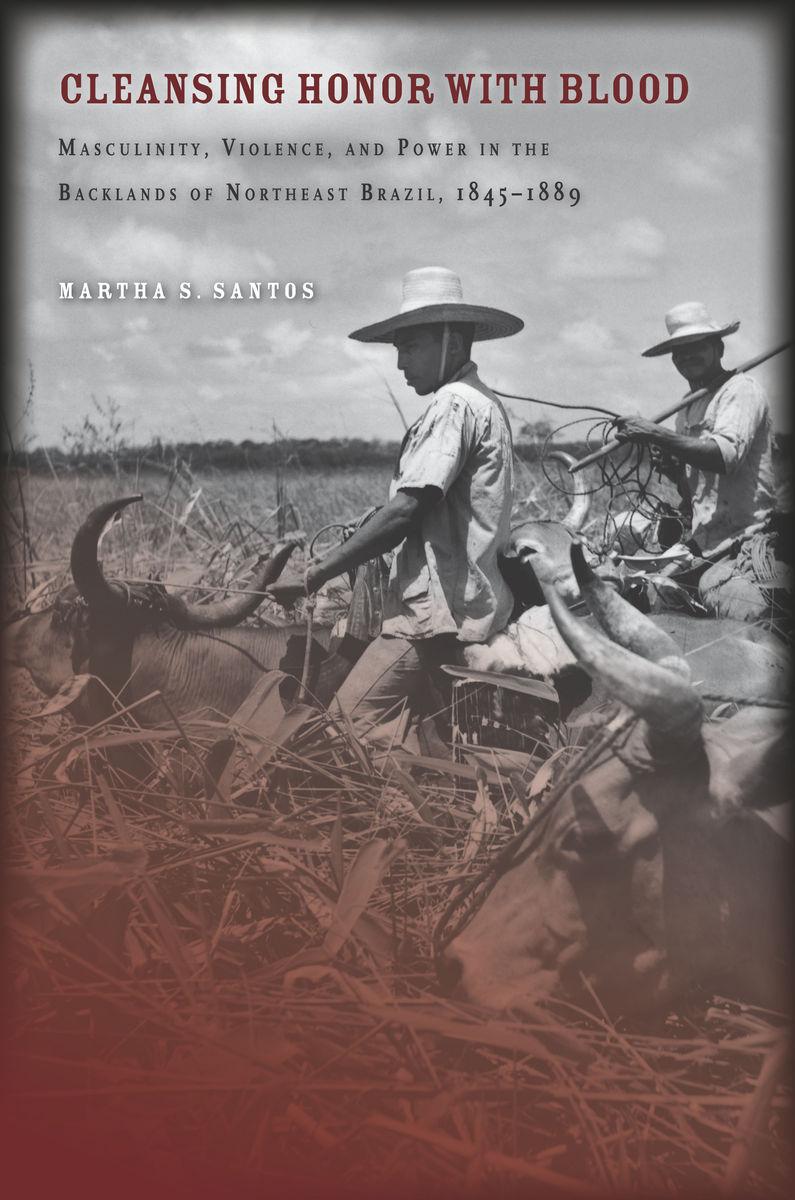
This book offers a critical reinterpretation of male violence, patriarchy, and machismo in rural Latin America. It focuses on the lives of lower-class men and women, known as sertanejo/as, in the hinterlands of the northeastern Brazilian province of Ceará between 1845 and 1889. Challenging the widely accepted depiction of sertanejos as conditioned to violence by nature, culture, and climate, Santos argues that their concern with maintaining an honorable manly reputation and the use of violence were historically contingent strategies employed to resolve conflicts over scant resources and to establish power over women and other men. She also traces a shift in the functioning of patriarchy that coincided with changes in the material fortunes of sertanejo families. As economic dislocation, environmental calamity, and family separation led to greater female autonomy and an erosion of patriarchal authority in the home, public—and often violent—enforcement of male power maintained patriarchal order in these communities.
Maksa helposti kortilla, Klarnalla, Apple Paylla tai Google Paylla. Etkö ole tyytyväinen? Sinulla on aina 14 päivän palautusoikeus. Lue lisää ehdoistamme. Jos sinulla on kysyttävää, lähetä meille sähköpostia osoitteeseen hello@memmo.org.
Memmo tekee opiskelusta helpompaa – missä päin maailmaa ikinä oletkin. Meillä yhdistät kurssikirjat ja fiksut opiskelutyökalut yhteen paikkaan: tiivistelmät, visat, podcastit ja muistikortit. Ja sitten Ted, opiskelukaverisi, joka vastaa kaikkeen, mitä ikinä mietitkin. Yli 50 000 opiskelijaa opiskelee jo täällä – rakennettu auttamaan sinua oppimaan nopeammin ja stressaamaan vähemmän.